Traditional Medicine Courses Become Mandatory for Iranian Medical Students
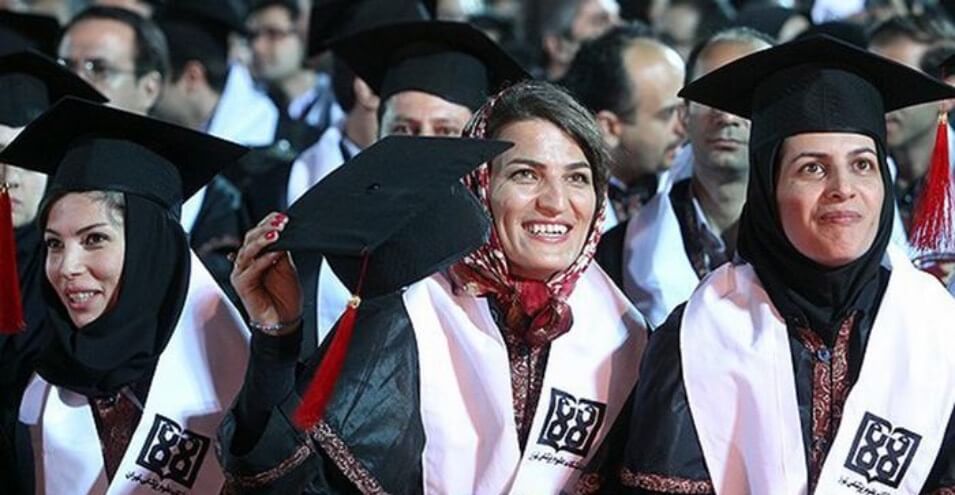
The Deputy Minister of Education at the Ministry of Health announced that all doctoral students in general medicine are now required to complete traditional medicine courses. Since the outbreak of coronavirus in Iran, discussions about traditional medicine and “Islamic medicine” have occasionally become controversial.
The Deputy Minister of Health, Treatment, and Medical Education says that all doctoral students in general medicine programs (medicine, dentistry, and pharmacy), regardless of their enrollment year, are now required to complete traditional medicine courses.
According to the ISNA news agency, Ali Akbar Haqdoost made this announcement on Monday, the 19th of Khordad, in response to universities’ inquiries about presenting two units of courses on familiarity with the foundations of traditional and complementary medicine for general medicine doctoral students.
The Deputy Minister of Health stated that since new educational programs for general medicine doctoral students and new educational programs for pharmacy doctoral students include traditional medicine courses and are being taught according to these programs, there is no need to retake them.
He added that if pharmacy doctoral students following the old educational program have already completed two units of traditional and complementary medicine courses from the optional courses table, they are not required to retake them; otherwise, they must complete these two units.
Haqdoost said: “Likewise, general medicine doctoral students following the old educational program and general dentistry doctoral students whose educational programs do not include this course are required to take this course in addition to the approved credit ceiling of the program throughout their study period.”
The Deputy Minister of Education at the Ministry of Health states that to prevent extension of medical students’ study periods, those whose current semester is their last and who have not successfully completed the traditional medicine course are not required to take it.
This senior official of the Ministry of Health stated: “Given the coronavirus situation and its impact on the current and future academic progress, all students graduating by the end of this year will not be required to complete the aforementioned courses.”
Following the official confirmation of the coronavirus outbreak in Iran in the final days of Esfand, various discussions emerged about the use of traditional medicine to combat and treat COVID-19. The use of traditional medicine predates coronavirus and has been common in Iran and other countries, but recommendations from those claiming to be specialists and promoters of “Islamic medicine” have been highly controversial.
The coronavirus recommendations from “Islamic medicine” specialists, particularly statements by Abbas Tabrizian, who is considered the father of this medicine in Iran, surfaced on social media and became the subject of ridicule and mockery by users for some time.
“Islamic Medicine” and Corona; From Violet Oil to Camel Urine
Tabrizian, who had previously sparked controversy by burning a copy of “Harrison’s Principles of Internal Medicine,” one of the most important international references in medical science, recommended that coronavirus patients insert cotton soaked in violet oil into their rectum for treatment.
Before this controversy had subsided, “Hekim Mehdi Sabili,” another claimant of “Islamic medicine” and director of the “Al-Sadiq Scientific and Educational Medicine Association,” presented his purported coronavirus treatment in a video and drank camel urine on camera.
There is no shortage of such “medicines” and strange recommendations for combating coronavirus in other countries; however, few countries have seen senior officials such as the Commander-in-Chief of the Islamic Revolutionary Guard Corps and other senior commanders participate in a ridiculous display like introducing the “Mostaaan 110” device and claiming it can detect the coronavirus from a hundred meters away within the human body.
Despite the Guard’s virus detection device, the number of COVID-19 diagnostic tests in Iran was averaging no more than approximately 11,000 daily until a few weeks ago.
Continued Decline in Cases and Relative Increase in Coronavirus Deaths
The number of tests began increasing from the beginning of Khordad and has now exceeded 22,000. Apparently, the increase in tests, along with the easing of restrictions and the reopening of most businesses, was among the reasons for the sharp rise in confirmed cases of infection in the first half of Khordad, a trend that has shown a downward trajectory in recent days.
In the last three days of the first half of Khordad, the number of new coronavirus cases exceeded 3,000 people daily. This rate of new infections had only been recorded during the peak of the COVID-19 outbreak in Iran in the first half of Farvardin.
This trend has declined slightly over the past few days with minor fluctuations. According to the Ministry of Health spokesperson, in the 24 hours ending at noon on Monday, the 19th of Khordad, 2,043 new cases of coronavirus infection were identified. This is more than 300 cases fewer than the previous day.
Kianosh Jahanpour said on Monday in his daily press briefing that 70 people died from COVID-19 in the past day.
On the 5th of Khordad, the number of deaths was 34 people, the lowest in the past three months. Since that day until now, the number of deaths has increased with fluctuations, and over the past three days has been 70 or more. From the beginning of the coronavirus outbreak in Iran until now, the total number of cases has been 173,832 and the number of deaths has been 8,351.
Source: DW