Amnesty International Concerned About Secret Executions of Four Prisoners in Iran
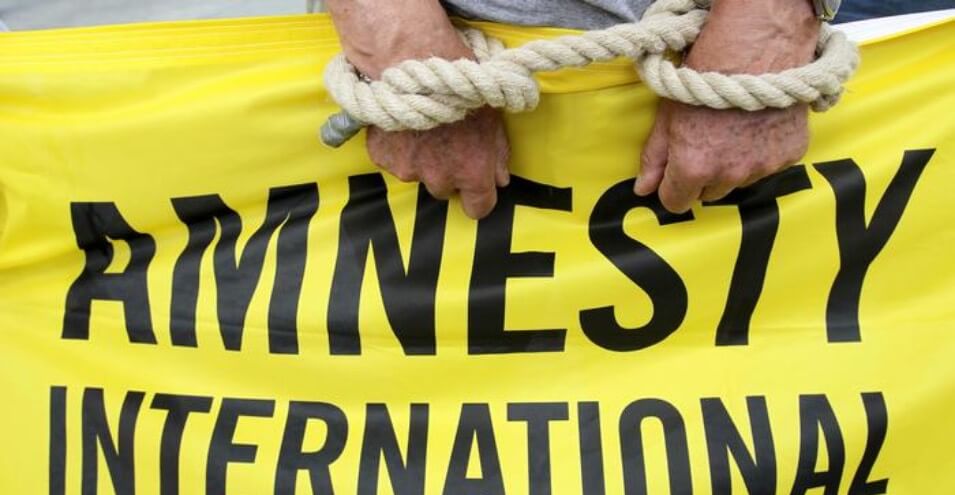
Amnesty International expressed concern in a statement about the unclear fate of four prisoners sentenced to death in Iran. The organization says keeping the families of these four people uninformed increases concerns about their torture or secret execution.
Amnesty International stated in a statement released on May 12 that Iranian Islamic Republic officials “must urgently” clarify the truth about the fate and whereabouts of four death row inmates in Ahvaz and Urmia prisons.
The organization says these prisoners are Hossein Silawi, Ali Khosraji, and Nasser Khafajian from the Arabic-speaking minority of Khuzestan, and Heydar Abdullahpur from the Kurdish minority.
According to the report, three prisoners from Shiban Prison in Ahvaz were transferred on April 1 and a prisoner from Urmia Prison in West Azerbaijan was transferred on May 12 to unknown locations.
According to Amnesty International, since the transfer of these prisoners, Iranian Islamic Republic officials have provided no information about their condition to their families and relatives, which has increased concerns about their torture and secret execution.
Apparently, from about a month ago and ahead of the beginning of Ramadan, the number of executions in Iranian prisons, including those holding ethnic and religious minorities, has increased; a development that has heightened concerns about the safety of three Ahvaz prisoners and the Kurdish prisoner in Urmia Prison.
According to Islamic Republic laws, officials are obligated to inform the lawyers of those sentenced to death 48 hours before the execution and allow final visits by their relatives.
Amnesty International says that in practice, for a long time, especially regarding ethnic and religious minorities, it has become routine for authorities to transfer death row inmates to unknown locations and keep news of their executions hidden for months and in some cases years.
The organization described the trial of the four Ahvaz and Kurdish prisoners as unfair and accused government officials of torturing and abusing them, including to extract forced confessions.
Ali Khosraji, Hossein Silawi, and Nasser Khafajian have been accused of participating and collaborating in an armed attack on the Koye Mujahid Police Station in Ahvaz in late May 2017.
Heydar Abdullahpur was also arrested in late June 2016 along with a number of other citizens from Asnuye by the Islamic Revolutionary Guards intelligence forces and was tried on charges of cooperating with the Kurdistan Democratic Party and participating in armed clashes with Guards forces, and was sentenced to death.
The Revolutionary Court of Urmia Province convicted Abdullahpur on charges of “armed rebellion” against the government and sentenced him to death. Abdullahpur denied membership in the Kurdistan Democratic Party and participation in armed struggle.
He had told the court that his confession to the prosecutor’s charges was extracted after exhausting torture during 78 days in solitary confinement in one of the Guards’ prisons. Amnesty International stated in its statement that the court did not pursue the issue of Abdullahpur’s torture.
In the Islamic Republic, torturing prisoners to extract forced confessions and forcing prisoners to repeat interrogators’ scenarios is not uncommon.
There are many documented written accounts showing that psychological pressure, torture, and abuse of prisoners in the Islamic Republic is a routine that began in the earliest months of this government’s formation and has continued uninterruptedly over the past four decades.
Source: DW