Narges Mohammadi: They Made Me Stand with an IV to Film Me

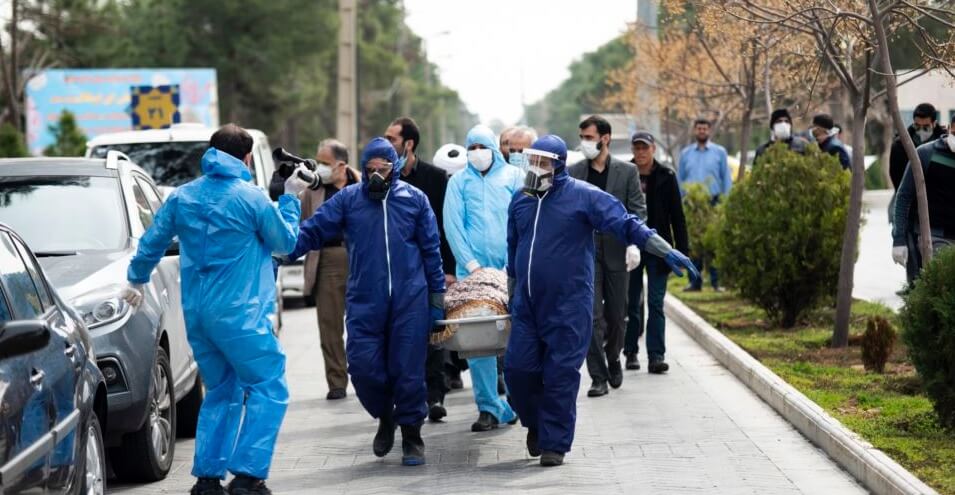
United Nations reporters have described the broadcast of a medical examination video of Narges Mohammadi at Zanjan Prison as a “violation of her privacy” and lacking in credibility. In a revealing account, this political prisoner states that she was filmed while severely coughing, with the aid of an IV line and ampoules.
The vice-chair and spokesperson of the Center for Defenders of Human Rights, in an account of conditions at Zanjan Prison, describes the sanitary and general facilities of the ward, her own physical condition, and details of a film that was broadcast from her medical examination at the prison clinic.
This note describes the medical and sanitary conditions of the prison from the second half of Tir to the beginning of Mordad in a day-by-day account. Ms. Mohammadi wrote that there were 12 coronavirus-infected prisoners on 15 Tir in the ward, while there was no hand-washing gel and no care or facilities whatsoever, and after correspondence, they gave each person one mask.
She continues that on 24 Tir, she was taken to the doctor while in poor condition, and when the doctor recommended deep breathing, she fell into a coughing fit and received a prescription containing an IV, vitamins, and an ampoule. One day later, she was taken to the doctor again under the title of “forced”: “The doctor asked how I was feeling, I said I was fine…”
Ms. Mohammadi writes that in the evening she watched the television news in the ward and understood there why the forced doctor visit had been: “…The previous film was not suitable for broadcast because I was in bad condition. They made me stand with an IV and ampoule so they could film me… They couldn’t even broadcast it completely. The coughing wouldn’t stop. The prison guard’s own words weren’t suitable for broadcast either.”
Previously, Javaid Rahman, the UN Special Rapporteur on Human Rights in Iran, and 15 other UN experts described the video broadcast of Narges Mohammadi’s medical examination at Zanjan Prison as a “violation of personal privacy” and deemed its content “lacking in credibility” due to inability to verify it.
The Iranian judiciary called this film, which appeared to have been filmed covertly, a “check-up” and evidence proving the good health of this political prisoner. However, Taghi Rahmani, Narges Mohammadi’s husband, called the film another piece of evidence of the judiciary’s shameful record and tweeted: “If Misan News Agency had an ounce of integrity, it would have spoken with Narges for even 30 seconds. Why do you interview intimidated defendants for hours? We could have heard from Narges Mohammadi herself for just a few seconds about prison conditions and her illness. You have led justice to the slaughterhouse to preserve power.”
Javaid Rahman and other UN Special Rapporteurs on Human Rights, in their statement, reminded that Iranian prisons are overcrowded beyond capacity and, expressing concern about Iran’s ability to combat the spread of coronavirus in unsanitary prisons, called for the release of all political and conscience prisoners in the country.
Narges Mohammadi, vice-chair and spokesperson of the Center for Defenders of Human Rights in Iran, has been imprisoned since 15 Ordibehesht 94 to serve her 16-year sentence. Six years of this sentence was issued for propaganda against the system and 10 more years for her activities in the “Step by Step to Abolish the Death Penalty” campaign. She was forcibly transferred to Zanjan Prison in December 2019.
Narges Mohammadi, mother of two children, suffers from pulmonary embolism and muscular paralysis, and during her years in prison has been granted a three-day furlough only once. She has been asked to write a repentance letter to be released from prison alive. Shirin Ebadi, the Nobel Peace Prize laureate, has accused the Ministry of Intelligence of intending to kill Narges Mohammadi.
Beyond UN Special Rapporteurs on Human Rights, Amnesty International has also criticized the detention of Ms. Mohammadi in “inhumane conditions.” 500 political and civil activists inside and outside Iran have asked Ebrahim Raisi to grant this political prisoner medical furlough as soon as possible.
Three days ago, Narges Mohammadi’s children, in a video message on social media, stated that prison guards have not allowed their mother to make phone calls with them for 11 months and asked the audience to be their voice so they could hear their mother’s voice.
Meanwhile, Narges Mohammadi, in her own account of Zanjan Prison conditions, wrote: “Some say go on a hunger strike so they’ll give you phone calls to Ali and Kiana. But I don’t want to go on a hunger strike for a personal demand. I told the officer, just cut off the remaining water from me too. You made me a prisoner, took my children, beat me, exiled me, and spared me no torture. Cut off the water too. I’m not worried about these things. I have no personal demands. Since the murders of December 2017 and November 2019, I stand in a different place. Reform was not our covenant; it was our solution for a different era. I am faithful to that covenant. And I have no reconciliation.”
Source: DW