Coronavirus Outbreak and Its Consequences for Iranian Women Without Necessary Support
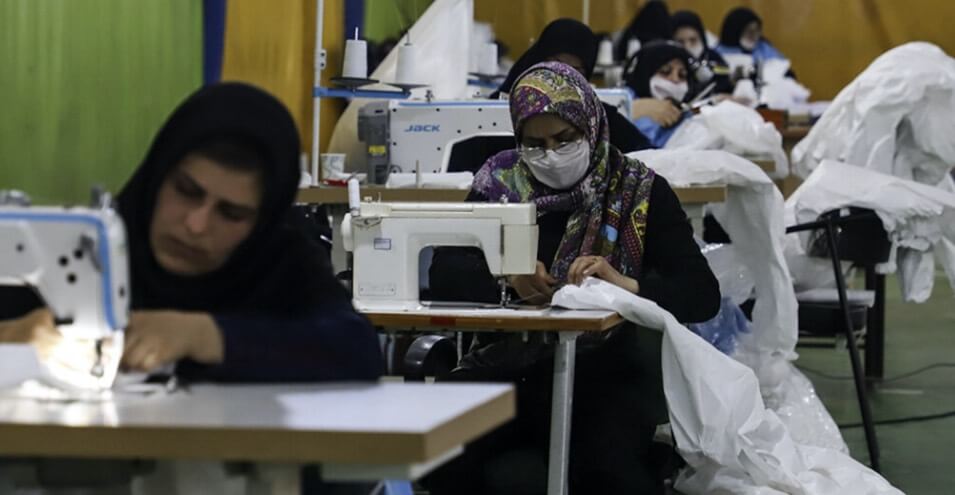
According to statistics announced by Iranian media, there are currently approximately 3 million female-headed households throughout Iran. This statistic shows that over the past 10 years, the number of female-headed families has increased by 58 percent compared to male-headed families. A figure that, with the outbreak of coronavirus and the lockdown of the upper class of Iranian society, has been accompanied by many concerns and reactions from women’s activists.
Giti Pourfazel, a lawyer and women’s rights activist, said on Thursday, April 18 in a conversation with Voice of America, referring to the dire situation created for female-headed households with the outbreak of coronavirus in Iran, that Iranian female heads of household who, before the outbreak of this virus, had meager incomes from selling handicrafts or working as daily laborers in factories and workshops and made a living from that, have faced many problems including meeting their daily needs and those of their families since the beginning of quarantine and lockdown.
With the widespread outbreak of coronavirus and the beginning of quarantine in various Iranian cities, a large number of Iranian citizens were forced to stay at home and leave their jobs to prevent infection with this virus. This matter, because the Islamic Republic authorities had not prioritized any financial support for the people from the very beginning, has confronted the lives of many people with difficulties.
According to Giti Pourfazel, the outbreak of coronavirus has not only affected the lives of female-headed households; rather, coronavirus in Iran has more affected those who, due to poverty, do not have access to proper nutrition, and these people, due to weakened immunity, lose their lives if infected with this virus.
Previously, the CEO of Imam Ali Society had reported in a report that the average age of female heads of household in Iran was 18 to 60 years; a statistic that differed in some Iranian provinces where child marriage is common, and in these provinces women aged 14 to 15 also bear the responsibility of heading households. This statistic, which results from occurrences such as underage marriages and consequent divorces at a young age, is considered a major problem in Iran.
Currently, based on official statistics in Iran, which is of course questionable in its accuracy, the death toll from coronavirus in the country has reached 4,869 people and the number of cases is reported to be 77,995 people. According to this report, 1,606 new COVID-19 patients were identified in the country in the past 24 hours and during this period 92 COVID-19 patients lost their lives.
This is while the official statistics of Iran, China, Russia are not verifiable by independent experts and cannot be considered reliable and final. A WHO official also said that the figure announced by Iranian authorities about coronavirus cases is only one-fifth of the actual number of cases.
Meanwhile, public opinion in Iran and around the world is concerned about the cover-up by Islamic Republic officials regarding the spread of coronavirus. The U.S. State Department’s representative for Iran on Thursday, March 6 accused Islamic Republic officials of lying to the Iranian people about the extent of the coronavirus spread in the country. Brian Hook told reporters: “The regime initially told people there was no reason to be concerned about the spread of this virus. But at the same time, the virus was spreading throughout Iran.”
Previously, Mike Pompeo, U.S. Secretary of State, on Friday, February 28 at a meeting in the Foreign Affairs Committee of the House of Representatives, given the history of cover-ups by Islamic Republic officials, said the Iranian regime does not want to provide information about the spread of coronavirus and “I am concerned they have concealed important information.”
Source: Voice of America