Call for Release of Imprisoned Environmental Activists in Iran on Eve of Glasgow Climate Conference
The Committee for the Liberation of Political Prisoners, in recent days and on the eve of the Glasgow Climate Conference, sent a letter to Alok Sharma, the conference president, with copies sent to Greta Thunberg, a prominent environmental activist, and participating governments in the conference, calling on governments to pressure the Islamic Republic to release imprisoned environmental activists.
In this letter, a copy of which was also sent to Voice of America, people around the world were asked to send messages to the Glasgow climate conference and their own governments to make the voices of imprisoned environmental activists heard globally and to demand their immediate and unconditional release.
Shiva Mahboubi, spokesperson for the Committee for the Liberation of Political Prisoners, referring to the importance of sending this letter to the conference and participating governments, told Voice of America that the purpose of sending this letter is to inform governments and the United Nations about the torture and imprisonment of environmental activists in Iran so that they pressure the Islamic Republic authorities to end the “harassment” of these activists’ families and release the imprisoned environmental activists.
Ms. Mahboubi cited government profiteering as the main cause of the environmental crisis and climate change, adding that the Islamic Republic considers environmental activists’ awareness campaigns as propaganda against itself and, to prevent the exposure of “embezzlement and profiteering,” not only does it not support these activists but considers them as opponents.
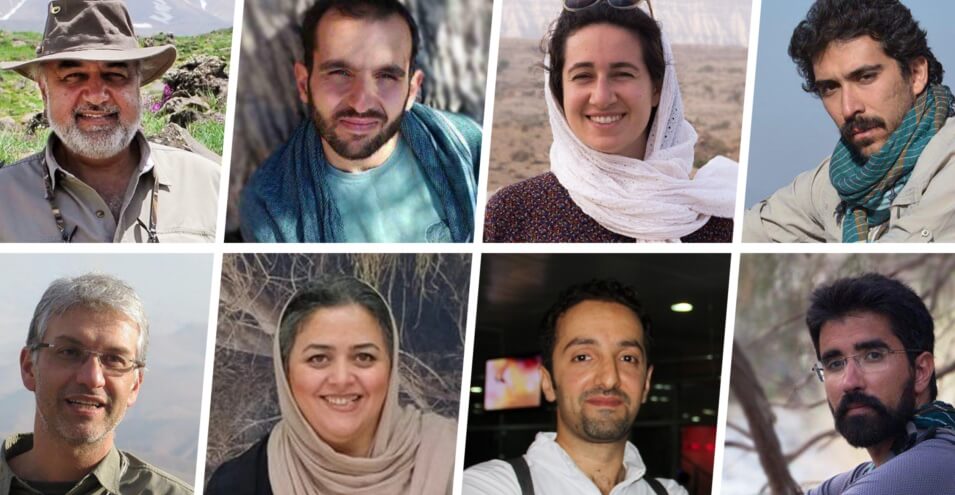
The Committee for the Liberation of Political Prisoners, in this letter, referring to long-term prison sentences issued for 8 imprisoned environmental activists in Iran, wrote: “While important issues related to climate change are being discussed in this conference and representatives of the Islamic regime are also invited to this conference, environmental activists who raise awareness about the impact of climate change on Iran are being arrested and tortured.”
The committee’s spokesperson, referring to the conviction of these activists, added that the situation of these activists in Iran and the issue of their freedom should be highlighted by linking the issue of imprisoned environmental activists to the ongoing environmental and climate change protests in different countries.
In late February 2020, after more than two years of temporary detention of Homan Jowkar, Sam Rajabi, Sepideh Kashani, Amir Hossein Khaleghi Hamidi, Taher Ghadiryan, Abdolreza Kohpayeh, Morad Tahbaz, and Niloufar Bayani, eight environmental activists in Iran, Gholamhossein Esmaili, spokesman for the Judiciary, announced a total of 58 years of prison sentences for these environmental activists and described the charges against some of them as “cooperation with America” and others as “espionage” and “gathering and conspiracy with the intent to act against national security.”
Following the announcement of these activists’ convictions, Niloufar Bayani, in a letter to several Islamic Republic officials, spoke of “the most severe psychological and mental torture, threats of physical torture, and sexual threats,” a letter that generated numerous reactions on social networks.
The twenty-sixth Climate Change Conference is set to be held from Sunday, October 31 to Friday, November 12 in Glasgow, Scotland, while Ibrahim Raisi, the President of Iran, will not participate in the conference despite being invited.
Earlier, Voice of America reported, citing the London Times newspaper, a request by a former Scottish Parliament representative and families of several prisoners executed by the Islamic Republic to the Scottish police to issue an arrest warrant for Ibrahim Raisi, the President of the Islamic Republic of Iran, upon his arrival at the “Glasgow Climate Change Conference.”
In recent years, forest fires, water scarcity, excessive extraction from groundwater resources, land subsidence, and vegetation-related problems in some Iranian provinces have been among the issues that civil and environmental activists, both inside and outside Iran, have warned about—issues that appear to have received no serious action from Islamic Republic authorities, and Iran’s environmental situation remains critical and unfavorable.