International Court of Justice Confirms Jurisdiction to Review Iran’s Complaint Against the United States
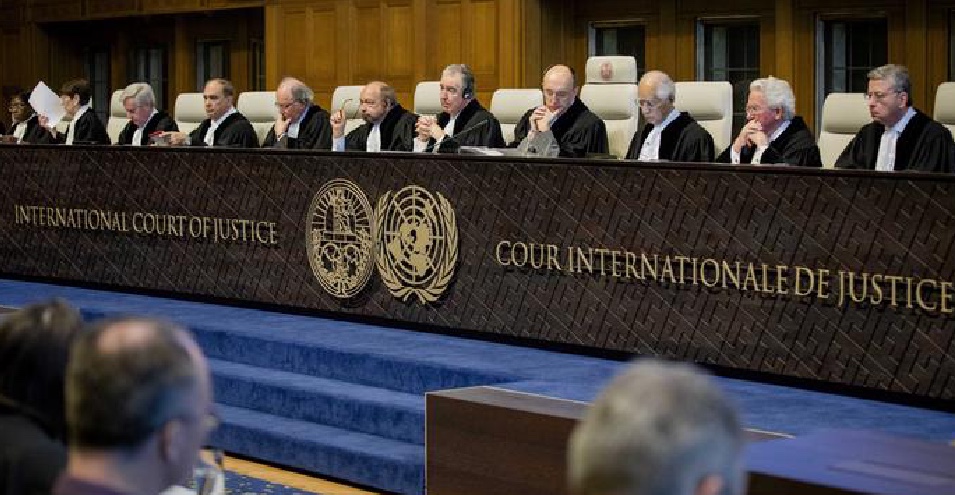
A majority of judges at the International Court of Justice believe the court has jurisdiction to review Iran’s complaint against American sanctions. The United States had previously stated that the court does not have jurisdiction to hear the Islamic Republic’s complaint.
In June 2018, two months after the United States withdrew from the nuclear agreement and reimposed sanctions, the Islamic Republic filed a complaint at the UN’s highest court located in The Hague (International Court of Justice), accusing the United States of violating the “Treaty of Amity.”
This treaty is a bilateral friendship and commercial agreement signed between the Iranian government and the U.S. government two decades before the establishment of the Islamic Republic (1334/1955).
The United States stated at that time that the International Court of Justice in The Hague does not have jurisdiction to hear this complaint and had objected to the case’s formation.
According to Reuters news agency, a majority of judges at the International Court of Justice in a session held on Wednesday evening, February 15 (February 3) found the United States’ objection invalid and confirmed the court’s jurisdiction to review Iran’s complaint. This ruling is not final.
Several officials from the U.S. government, including Secretary of State Mike Pompeo, announced sometime after the United States’ withdrawal from the nuclear agreement that Washington had withdrawn from the Treaty of Amity.
The International Court of Justice had also issued a preliminary ruling in September 2018 based on a complaint by Iran, citing the Treaty of Amity.
In this ruling, based on the aforementioned treaty, the United States must remove obstacles to the export of humanitarian items such as medicine, medical equipment, and food.
These items are not subject to U.S. sanctions; however, in some cases, banking and financial sanctions against the Islamic Republic complicate their trade.
The nuclear agreement was signed in 2015 during Barack Obama’s presidency between representatives of the Islamic Republic and six world powers, but Donald Trump, who has consistently described the agreement as flawed and one-sided, signed an order to withdraw from it.
Rulings Without Enforcement Guarantee
The International Court of Justice’s ruling has no enforcement guarantee. Nevertheless, Mohammad Javad Zarif, the Islamic Republic’s Foreign Minister, described this ruling as a “major legal victory” for Iran in a Twitter message. Zarif states in this message that Iran has always fully respected international law and that the time has now come for the United States to fulfill its international obligations.
The Hague court’s ruling is not final, and some observers and media outlets believe that issuing a final ruling could take several years. So far, the new U.S. administration under President Joe Biden has shown no reaction to today’s ruling by the judges of the International Court of Justice.