Soheil Arabi, Political Prisoner in Iran, Ends His Hunger Strike
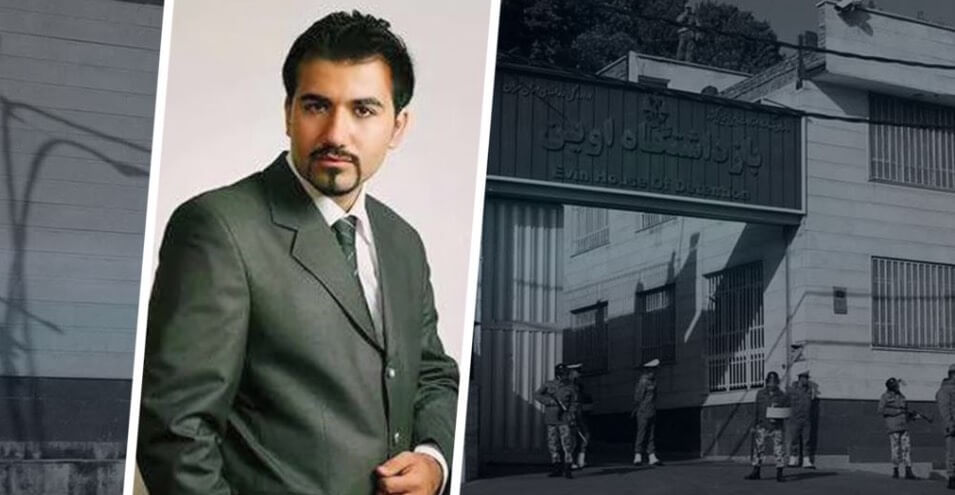
Soheil Arabi, a political prisoner in Iran, ended his hunger strike at the request of his mother.
Frangis Mazloom, Soheil Arabi’s mother, said that this political prisoner, who had repeatedly gone on hunger strike in prison since March 16 of last year, announced in an open letter that while thanking the support of the people and activists, he ended his hunger strike as of Wednesday, May 6.
Soheil Arabi also stated in part of his letter, referring to the beginning of a treatment process in prison: “The hunger strike was the last way to reach our legal demands, and now that conditions have improved through your efforts and support, it is better that I focus my efforts on the main mission, which is fighting injustice, corruption, and inequality.”
Frangis Mazloom also told Voice of America regarding the treatment process of Mr. Arabi that this political prisoner, who suffers from intestinal problems, underwent surgery last week at a hospital or medical facility outside the prison; he is in appropriate physical condition and currently can only be nourished with water, salt, and sugar, nothing else.
This political prisoner, detained in Tehran’s large prison, began a hunger strike on March 16 of last year in protest of being denied his right to treatment, poor prison conditions, and the continuation of his detention; a hunger strike that ended on March 27 following promises by officials. However, it was not long before he resumed his strike in the middle of the month of Farvardin.
Soheil Arabi, a photographer, blogger, and civil activist, was arrested in December 2013 by the Islamic Revolutionary Guards Corps and was initially sentenced to death on charges of “insulting the Prophet and desecrating sanctities.” His death sentence was overturned in June 2015 by one of the branches of the Supreme Court, and after a retrial, he was sentenced to seven and a half years in prison. He was again sentenced in September 2019 in another case by Branch 26 of the Revolutionary Court, headed by Judge Ahmadzadeh, to three additional years in prison and exile to Borazjan.
International human rights organizations and the United States have repeatedly accused the Islamic Republic of violating freedom of expression and suppressing civil activists.
The U.S. State Department also says that the Iranian regime has arrested thousands of protesters, civil activists, labor representatives, and other groups in the past two years.
Source: Voice of America