Representatives: Why Should Parliament Be Closed During the Coronavirus Crisis?
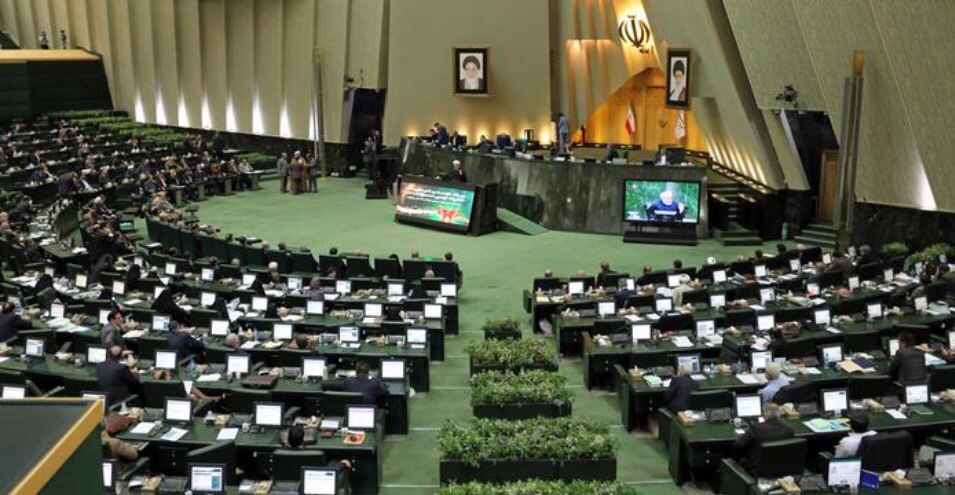
Iran’s parliament was set aside during the approval of the 1399 budget under the pretext of the coronavirus outbreak, and now it is also closed at the height of the coronavirus crisis. Some representatives have strongly protested this situation. 42 representatives have called for immediate parliamentary sessions.
Hamid Reza Hajibaba, head of the provincial representatives faction in parliament, has called the closure of parliament under the current conditions in Iran “unjustifiable” and said: “I believe that certain hands and wills, intentionally or unintentionally, are seeking to close parliament and prevent it from playing its vital role.”
The ISNA news agency reported on Monday, Farvardin 11 (March 30) that “Parliament’s closure is not ordinary.” He called for representatives to participate in decision-making and crisis management. Hamid Reza Hajibaba, addressing the Speaker of Parliament, said that the country currently has the greatest need for decision-making and voicing matters from the parliament tribune, and parliament’s closure is incompatible with “the interests of the country and rationality.”
The head of the provincial representatives faction also asked: what is the role of the Islamic Consultative Assembly at a time when the coronavirus disease “has affected people’s lives in various dimensions and created many concerns?”
The coronavirus disease has exposed the economies of many countries to bankruptcy. Iran’s economy was in disarray even before the outbreak of this disease. The livelihoods of millions of people in Iran and the economic activities of companies that are not dependent on power institutions have no prospects without government support.
Hajibaba said in this regard: “Based on the views of experts and preliminary assessments, there is a need for immediate initiatives in three areas. Support for workers in the workplace, economic activity and job creation, support for the continuation of work and people’s income, which include expanding social assistance, support for businesses (such as creating temporary and short-term jobs, paying subsidies, and paying unemployment insurance or buyback), tax exemptions for very small, small and medium-sized businesses, and financial assistance to specific sectors of the economy.”
Some representatives’ criticism is that they are not allowed to play their role in these circumstances and have become people who are merely “spectators.”
Bahram Parsaei, a reformist representative in parliament, also protested the closure of parliament in the country’s coronavirus conditions in a letter addressed to Ali Larijani, the Speaker of Parliament, and wrote that at a time when doctors and nurses are making sacrifices for the people, it is “shameful” that representatives are in quarantine. He said: “I feel ashamed that I am in a moral quarantine rather than a health quarantine.”
He also asked: “On what logic is the closure of parliament and the prevention of holding official sessions with the presence of representatives whose health is confirmed after a coronavirus test and while observing safety recommendations based? Is it not true that now, at the time of decision-making and urgent decisions, is it the wisdom of the wise? Then please clarify from the perspective of enlightening minds, what is the role of parliament in the coordinates of the political, legal, and even moral conditions of this special situation?”
Request of 42 Representatives for Parliamentary Sessions
Also, a number of members of the Omid faction in the Islamic Consultative Assembly, on Monday afternoon, in a letter to Ali Larijani, the Speaker of Parliament, called for holding parliamentary sessions urgently and as soon as possible.
In the letter of 42 representatives addressed to the Speaker of Parliament, it is stated that due to the spread of the coronavirus disease, the public session and committees of the Islamic Consultative Assembly have been closed for several weeks, and technical efforts to hold parliamentary sessions via video conference have so far been unsuccessful.
These representatives wrote in their letter that “given the unique position of the Islamic Consultative Assembly in the Constitution, as well as in view of the inherent duties of parliament, especially in the current conditions of the country, the continuation of the closure of the Islamic Consultative Assembly and the suspension of related matters will be detrimental.”
The authors of the letter requested from the head of the legislative branch to take measures so that “urgently and as soon as possible, the possibility of holding sessions of the Islamic Consultative Assembly while observing health protocols in the parliament building or another space that meets health standards be provided, so that with the resumption of parliamentary sessions, no harm is done to the performance of the duties of the legislative body of the country.”
Parliament in Iran has never had the power and decision-making authority in determining matters. The latest example is how the 1399 budget bill was passed.
Following the closure of Iran’s parliament due to increased concerns about the widespread outbreak of the coronavirus and the necessity of re-examining the 1399 budget bill by representatives before the legal deadline, the parliament’s presidium requested from Khamenei to use a “governmental decree” in this matter.
Iranian news agencies reported in the middle of the last month (Esfand) that with the governmental decree of Iran’s supreme leader, the decision of the parliament’s reconciliation commission was considered as a parliamentary decision, and thus the 1399 budget bill was sent to the Guardian Council for review and approval.
During the gasoline price increase that led to bloody protests in the past month (Aban), parliament was effectively powerless.
Source: DW