Iran’s Ministry of Health: COVID-19 Cases to Increase in Autumn
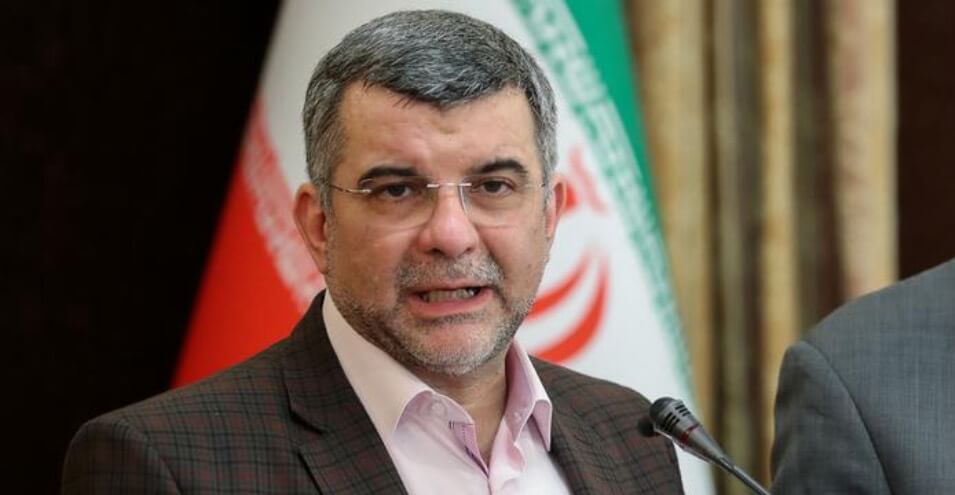
According to Harirchi, it is predicted that the trend of COVID-19 cases in most Iranian provinces will be declining, but will increase in autumn. So far, nearly one hundred thousand COVID-19 cases have been identified in Iran, and most major cities are in the red zone.
The deputy minister of health, during a visit to Bandar Abbas, stated that air temperature has no effect on slowing the spread of coronavirus, and predicted that except in a few provinces in Iran, the declining trend of COVID-19 cases will continue in the coming months until the end of summer.
According to ISNA news agency, Iraj Harirchi, during this trip on Monday, May 5th, added that according to estimates, from the beginning of autumn, especially with the reopening of schools, coronavirus infections will resume an increasing trend, but this increase will not be like the peak period of COVID-19 disease in March.
During his visit to the fish market in Bandar Abbas, while emphasizing the need to continue following health recommendations, he added that one of the positive actions taken in Hormozgan province was identifying 107 confirmed cases of COVID-19 among workers and people related to this market, and if this had not been done, the virus could have been transmitted to several thousand others.
Reopening of Bandar Abbas Fish Market Soon
The deputy health minister, stating that until a coronavirus vaccine is produced, we must live with it, said: “All people working in the fish market have been tested for coronavirus, and health improvements have been made in the market itself, and this market will be reopened in the coming days.”
The Ministry of Health has categorized different cities across Iran into white, yellow, and red zones based on the rate of COVID-19 cases and deaths. The white zone includes cities where the number of hospitalized cases per one hundred thousand people is a maximum of one per day, and the number of suspected or confirmed coronavirus cases hospitalized in them does not exceed 14 people over two weeks.
Cities where the number of daily hospitalizations exceeds three per one hundred thousand people are considered red zones (high risk), and other areas are yellow zones (moderate risk).
Of approximately 400 municipalities in Iran, 72 cities, which include provincial capitals, are in the red zone, and more than 130 municipalities are among the white zones (low risk).
The deputy minister of health says that in white zones, public transportation and productive and service activities “low and medium-risk occupations” are currently underway, and it is possible that in the next meeting of the National Coronavirus Combat Headquarters, decisions will also be made regarding the reopening of schools and sports facilities in those areas.
While according to official statistics, the trend of coronavirus cases and COVID-19 deaths in Iran has been declining with slight fluctuations for some time, the situation in cities like Tehran is still considered concerning.
Tehran’s Unstable and Fragile Conditions
AliReza Zali, commander of the coronavirus disease management operations headquarters in the metropolitan area of Tehran, announced in a television interview that the capital, like other major cities, is in an “unstable and fragile condition,” and with any change in behavior and failure to observe health considerations and recommendations, we may face a concerning situation in this city.
According to ISNA, he said in this program: “Statistical changes in people visiting health and medical centers in a city like Tehran usually become apparent after a period of 9 to 14 days, and changes in hospitalizations appear 2 to 3 weeks later. Therefore, given the increase in traffic, we may witness any changes in the coming days.”
Zali, while complaining that only 62 percent of Tehran residents follow health guidelines, expressed satisfaction that the use of masks in public transportation, which has been mandatory for some time, is increasing day by day.
Official Statistics of COVID-19 Cases and Deaths
The Ministry of Health has not been publishing statistics on COVID-19 cases and deaths in a disaggregated manner for each province and city for some time. Also, local officials have repeatedly called official statistics unrealistic and believe that due to lack of resources, coronavirus diagnostic tests are not being conducted adequately, and the cause of death of many victims is recorded as severe respiratory disease and does not appear in official statistics.
Some members of the Tehran City Council recently, citing statistics from shrouding and burial in the capital’s main cemeteries that operate under the municipality’s supervision, called the Ministry of Health’s official statistics flawed, which was met with critical reactions from government agencies and the National Coronavirus Combat Headquarters.
Kianoush Jahanpour, spokesperson for the Ministry of Health, announced in his latest daily press briefing that in the 24 hours ending at noon on May 6th, 1,323 new cases of coronavirus infection were identified and 63 infected people died.
Accordingly, during the approximately two and a half months since the official confirmation of the coronavirus outbreak in Iran, the total number of infected has approached the hundred thousand mark (99,970 people) and the number of victims has reached 6,340 people.
Source: DW