Promises of Revolutionary Leaders Have Not Been Fulfilled After 41 Years; Independence, Freedom, and a Republic That Doesn’t Exist
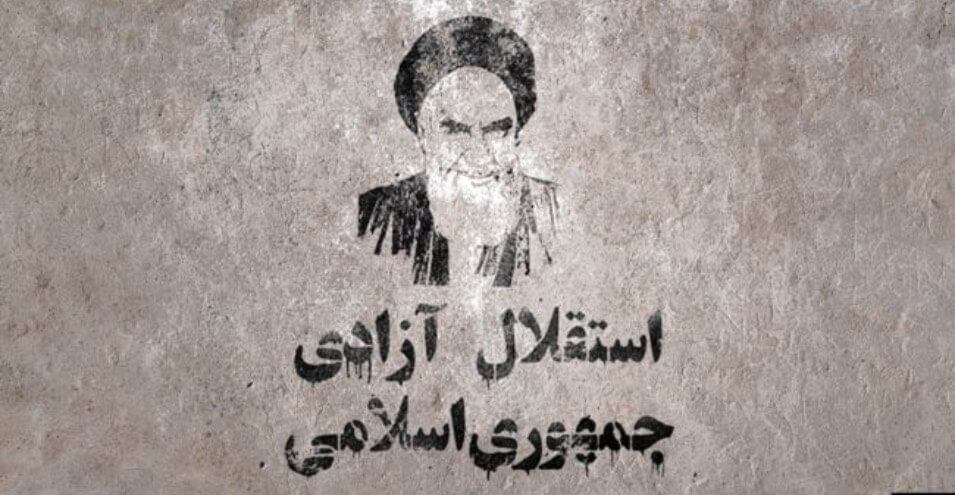
The leaders of the Islamic Revolution in 1979 made numerous promises to the people during the victory of the revolution, but after 41 years and the passage of a generation, which of Ayatollah Khomeini’s and his followers’ fundamental promises have been fulfilled?
During the height of the revolution in February 1979, the most important slogan of the revolutionaries was “Independence, Freedom, Islamic Republic,” and alongside it, promises such as eliminating corruption from the government apparatus and restoring human dignity and economic welfare to the lives of all people were made by leaders including Ayatollah Khomeini.
- Independence
The leaders of the Islamic Republic and Ayatollah Khomeini accused the Iranian monarchy of dependence on foreigners and taking orders from them. They viewed this government as economically and politically following Western policies, and promised that after the revolution’s victory, a completely independent government would be established. However, after 41 years of the Islamic Revolution, the Islamic Republic government is heavily dependent on two other superpowers, Russia and China, to advance its foreign and even regional policies. Russia, as long as its interests are not threatened, supports the Islamic Republic in the UN Security Council. In regional policies too, it intervened to save the Bashar Assad government, which is heavily supported by Tehran, sending its air force and military advisors to that country. The Islamic Republic also remains silent in the face of Russia’s domineering policies in Eastern Europe and Central Asia.
China is also considered one of the supporters of the Islamic Republic, and certainly whenever the Islamic Republic’s commercial relations with China are cut off, one should expect a financial and economic crisis in Iran; because the major buyer of Iran’s oil and petrochemicals, even during sanctions, sometimes plays a savior’s role in preventing the interruption of the Islamic Republic’s revenue stream. In return for these supports, the leaders of the Islamic Republic, who present themselves as supporters of Muslims and the oppressed of the world, have remained silent in the face of China’s severe repression of the Muslim Uyghurs. In fact, the independence they boasted about was not even achieved to the extent of protesting China’s severe repression of Muslims.
- Freedom
The great promise of the 1979 revolutionaries was freedom. The founder of the Islamic Revolution defended political and personal freedoms in his interviews and in a famous statement said that communists too are free to express their views.
However, as the months of the Islamic Revolution’s victory passed, the circle of people who had freedom of expression of their views became smaller. Communist and socialist groups were declared illegal and their members were imprisoned, tortured, and executed. Members of nationalist-religious groups and critical clergy were also severely restricted after serving prison time. In the field of media and cultural activities, censorship and bans were imposed, and even a special department was established in the Ministry of Guidance to enforce them. Many journalists and writers were either sentenced to lengthy prisons or even lost their lives in incidents such as serial killings.
The Islamic Republic, which came to power through street protests, now does not even recognize the freedom of public gatherings. For example, the security forces of this regime in recent years, by attacking people’s gatherings, including during this year’s November protests, left hundreds dead. Professional gatherings also faced arrests of activists, including labor activists and teachers, and their imprisonment.
In the field of religious minorities’ freedoms and freedom of activity for ethnic minorities, restrictions unprecedented before were imposed. A large number of Christian converts, Baháʼís, and some Jews were sentenced to execution and lengthy imprisonments. Baháʼís, after four decades, face even harsher restrictions, including not having the right to higher education and at some points not having the right to work. Sunni Muslims also face restrictions in performing their religious duties, and according to Maulawi Abdul Hamid, the imam of the Sunni congregation in Zahedan, Sunnis are not even allowed to have a prayer room in Iran’s capital.
The U.S. State Department in its annual reports has repeatedly considered the Islamic Republic a major violator of the rights of religious and ethnic minorities. The U.S. State Department has also protested the violation of women’s civil rights in Iran and the imposition of mandatory hijab, and condemned the imprisonment of women protesting mandatory hijab.
In fact, the Islamic Republic has not only violated citizens’ freedoms in the social and political sphere but also in the sphere of personal and civil rights.
- Islamic Republic
The leaders of the Islamic Revolution described the pre-revolutionary monarchy as dictatorial and despotic and promised the formation of a republic based on people’s votes.
However, shortly after the revolution and gradually, the circle of people who were considered eligible to be in the circle of power of the rulers became smaller. The Islamic Republic remains in the constitution, but “absolute guardianship of the jurist” and the Guardian Council filter, whose members are directly and indirectly selected by the Supreme Leader, determine the limits of this republicanism. Candidates for the Assembly of Experts, the Islamic Consultative Assembly, and the presidency must be approved by the Guardian Council, and this council disqualifies many critics of the Islamic Republic, even those who were once in the decision-making circle of the system. Even after approval, in some cases elections face strong engineering by security apparatus such as the Islamic Revolutionary Guards Corps and those close to the leader, and their results undergo changes.
The disqualification of electoral candidates and turning elections into a competition among regime-friendly candidates prompted a response from the U.S. State Department on the eve of this year’s parliamentary elections. U.S. State Department spokesperson Morgan Ortagus wrote in a tweet: The Guardian Council, whose members are appointed by Khamenei, has disqualified most of Iran’s parliamentary election candidates. It is no wonder that all remaining candidates look the same.
Mike Pompeo, U.S. Secretary of State, also said in a Twitter message: “Iran’s parliamentary elections are in two months. But the regime is already busy rigging it by disqualifying thousands of candidates.”
The promise of revolutionary leaders to achieve justice also came close to not being fulfilled. The Islamic Republic’s judicial apparatus, from its first days of establishment, sentenced its opponents to execution and lengthy prisons in very short trials and without access to lawyers. The Ministry of Intelligence and the Islamic Revolutionary Guards Corps, as judicial authorities, also coerced defendants through physical and psychological torture and threats to confess, and filed cases against them. The protests of labor activists such as Sepideh Qolian and Ismail Bakhshi against torture and pressure to confess, and the revelation of innocent people being accused and forced confessions in files of defendants in the assassination of nuclear scientists did not stop these actions.
- Fighting Corruption and Establishing Economic Welfare
Besides political slogans, the leaders of the Islamic Revolution also made numerous revolutionary promises in their speeches such as housing for all, fair distribution of economic benefits, greater welfare, and eradication of corruption under the guardianship and guidance of clergy. But did the leaders of the Islamic Republic actually bring welfare and economic equality to the people?
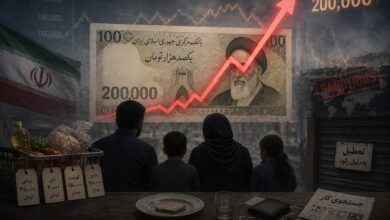
These slogans changed, of course, only a few years after the revolution’s victory, when revolutionaries found that they were not even capable of restoring economic welfare to pre-revolution levels. The new rulers called their revolution the revolution of the oppressed, whose goal was exporting the revolution, the victory of the world’s oppressed, and fighting superpowers. Iran’s economic dependence on oil has remained after 41 years; most factories are either unprofitable without government subsidies or are practically shut down. Economic growth is negative, inflation is always above 20 percent, people’s purchasing power, especially for goods such as housing, has sharply decreased, and unemployment has exceeded 12 percent. Even the Islamic Republic’s infrastructure projects, including dam-building and road-building, which took place with the help of rising oil prices, have in some cases damaged the environment and ultimately the country’s resources.
Brian Hook, a special U.S. envoy for Iran, announced in March this year, while accusing Iran’s leaders of corruption, that the Islamic Republic regime has destroyed the country’s water resources through mismanagement over the past forty years. He pointed to reckless dam construction, mostly built by Revolutionary Guards companies and government-affiliated institutions, and considered it a cause of environmental disasters.
In the field of eliminating economic corruption, the leaders of the Islamic Republic not only failed to live up to their promises but also, gradually, and especially in the past decade, left behind very heavy files of corruption by people connected to themselves. From the astronomical salaries of government officials to corruption by members of the judicial branch, files of corruption worth thousands of billions of tomans that occurred through connections with officials and rent-seeking are occasionally raised in the media.
Even in the past year, two former heads of the judicial branch, both of whom are now members of the jurisprudents of the Guardian Council, accused each other of financial corruption. A member of parliament also reported bribery by the Guardian Council for approving the qualifications of candidates.
In the latest report by Transparency International on the index of administrative and economic corruption in 2019, Iran ranked 146th among 180 countries.
Meanwhile, the leader of the Islamic Republic also governs a “$95 billion empire” through the “Headquarters for the Implementation of the Imam’s Orders” and his office, which is not subject to oversight except by his own office.
Mike Pompeo, U.S. Secretary of State, had said in several tweets about Islamic Republic officials that instead of helping the people, they have engaged in corruption.
In sum, the important slogans and promises of the revolutionary leaders 41 years ago were not only unfulfilled, but their performance after four decades caused people in November of this year to take to the streets in protest of economic and political pressures and demand that the rulers step down from power.
Source: Voice of America