Upward Trend of Corona in Tehran; Proposal for Stricter Quarantine
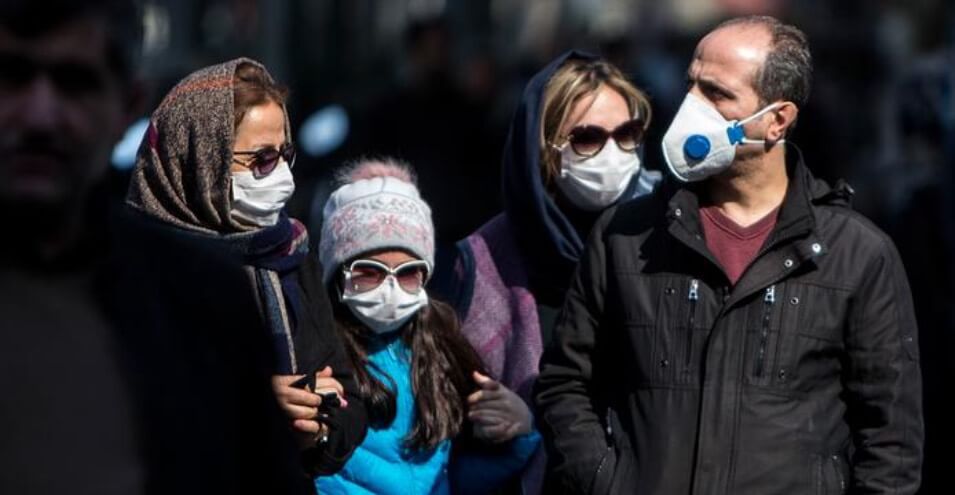
An official from Iran’s coronavirus management headquarters warned about the increasing trend of virus infections in some cities, including the capital. He said that statistics in many cities are returning to peak levels and the country should move toward stricter quarantine conditions.
Social restrictions resulting from the coronavirus outbreak in Iran have been gradually lifted since early Ordibehesht (April), with the assumption that the country has passed the peak or crisis point and the spread of coronavirus and COVID-19 has been brought under control.
However, the deputy planning officer of the coronavirus disease management operations headquarters in Tehran announced on Sunday, May 21 (May 10) that the coronavirus outbreak in some cities, including the capital, has shown an upward trend again.
Ali Maher told ISNA news agency that many people, despite warnings, have ignored this disease and statistics in many cities are returning to peak levels.
He warned of a spike in death rates in the coming weeks and said: “If we were following the 86 protocols that were issued, naturally the infection rate should not have increased, but apparently the protocols are not implementable. These protocols don’t work within urban areas like the metro and people are still moving in very close proximity to each other.”
With the start of business activities from early Ordibehesht, compliance with guidelines such as maintaining distance and using masks on metro and buses and other health protocols was made mandatory, but reports from Iranian media in recent days showed that these guidelines are either not being followed or their implementation, especially on metro and buses, is essentially impossible.
Ali Maher, stating that “it seems we should move toward stricter quarantine conditions,” emphasized: “The current situation is by no means desirable. Reducing hospitalizations from a thousand people to less than 300 per day was due to quarantine, strict measures and public compliance, which continued until April 13. With the issuance of protocols and reopening of businesses, people have forgotten the protocols.”
The deputy planning officer of the coronavirus crisis management headquarters in Tehran added: “Perhaps it was too early for people to return to society.”
He attributed the reopenings to requests from a segment of the affected people and business owners and said: “The Tehran coronavirus headquarters proposed floating office hours and we have transferred this proposal to the city council, which will certainly help and we hope it will be approved.”
Number of Infected Exceeds 107,000; Alert Status in Khuzestan
Meanwhile, Kianoush Jahanpour, spokesman for the Ministry of Health, announced the latest statistics of coronavirus cases in Iran on Sunday afternoon.
Jahanpour reported the identification of 1,383 new COVID-19 patients in the past 24 hours and said that with this new number, the total number of identified cases in the country has reached 107,603 people.
Jahanpour said: “Unfortunately, in the past 24 hours, 51 COVID-19 patients have died. Thus, the total number of deaths from this disease reached 6,640 people.” According to him, 86,143 patients have so far recovered and been discharged.
The Ministry of Health spokesman described the condition of the entire country except Khuzestan as “stable” in terms of coronavirus infection rates and said: “Except for Khuzestan, which is in an alert status, the remaining provinces are in a state of stability and even a declining trend in new COVID-19 cases.”
He continued: “We are witnessing a critical situation in Khuzestan province as well as Tehran, and in these provinces, especially in Khuzestan, we need public participation to move toward managing the disease in these provinces in the coming days.”
We Don’t Know Which Direction the Virus is Moving
Meanwhile, Saeed Namaki, the Minister of Health, called on people in an interview with Iranian state television to be cautious, saying he does not know which direction the coronavirus is moving.
Namaki said: “Neither I nor anyone in the world can answer what this virus will do. We observe new conditions from this virus every day and we don’t know which direction the virus is moving. People should be careful but not in a way that creates panic and fear; I have always tried to give people hope while requesting compliance with health guidelines.”
The Minister of Health, referring to the fact that “we must spend a relatively long period with coronavirus,” added: “The simultaneous occurrence of coronavirus and influenza in the fall may catch us off guard. Public opinion should be directed in a way that does not lead to distress.”
Referring to the fact that “this virus does not behave like its ancestors,” he clarified: “We know two types of this virus’s predecessors named SARS and MERS, both of which weakened in hot weather. However, now regarding coronavirus, we see that we observe the peak of the disease in hot provinces like Khuzestan. At present, it is still too early to say which direction the virus will go.”
The Minister of Health regarding the production of coronavirus vaccine and medicine said: “Regarding the vaccine for this year, any claim by anyone is an exaggerated claim while we are working on it, regarding medicine, large teams in the world and Iran are working, but so far no effective medicine has been reported for it.”
Saeed Namaki also clarified in this interview that out of one billion euros that was supposed to be allocated from the National Development Fund to fight coronavirus to the Ministry of Health, 300,000 euros are to be provided to the Ministry of Health.
Referring to the fact that “this virus does not behave like its ancestors,” he clarified: “We know two types of this virus’s predecessors named SARS and MERS, both of which weakened in hot weather. However, now regarding coronavirus, we see that we observe the peak of the disease in hot provinces like Khuzestan. At present, it is still too early to say which direction the virus will go.”
The Minister of Health regarding the production of coronavirus vaccine and medicine said: “Regarding the vaccine for this year, any claim by anyone is an exaggerated claim while we are working on it, regarding medicine, large teams in the world and Iran are working, but so far no effective medicine has been reported for it.”
Saeed Namaki also clarified in this interview that out of one billion euros that was supposed to be allocated from the National Development Fund to fight coronavirus to the Ministry of Health, 300,000 euros are to be provided to the Ministry of Health.
Source: DW