Severe Criticism of Rouhani Following Order to Resume Economic Activities
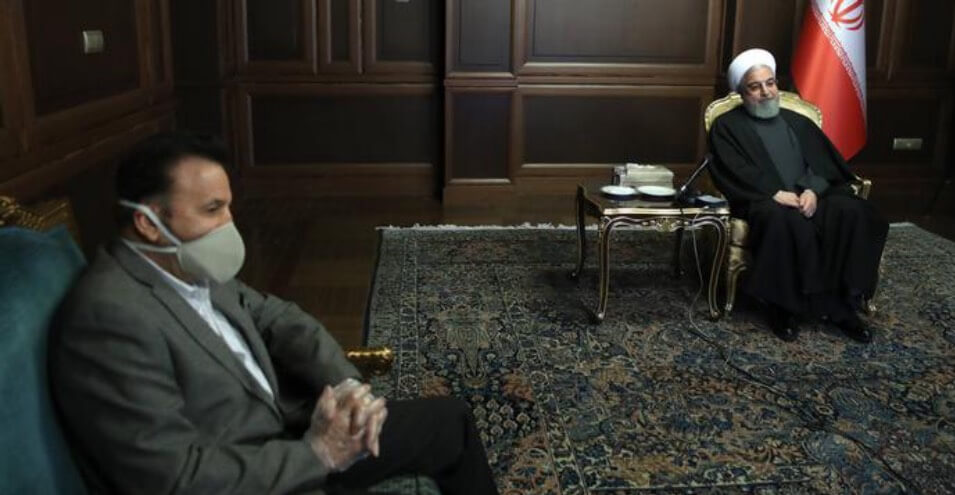
Despite the coronavirus crisis, Hassan Rouhani has ordered the resumption of “low-risk” business activities. This policy has faced severe criticism from parliament representatives and some government officials, who view this decision as a major risk in controlling coronavirus.
Hassan Rouhani, President of Iran, on Monday, 18 Farvardin (March 6), during a government economic session, spoke about rising unemployment and closure of small workshops, saying “some single-person and small workshops as well as workshops with over 50 employees have been closed, affecting approximately 3.2 million people whose livelihoods have been disrupted.” He referred to three million “households under pressure” and low-income groups in society, saying: “We have provided support packages for them in four phases, with the first phase of 200 to 600 thousand tomans already paid, the second phase will be paid by the end of Farvardin, and two more months of payments will follow.”
The coronavirus crisis has pushed the government, which was already facing reduced revenues before the pandemic, into a major challenge. Now the government must decide between controlling the disease and protecting people’s health on one hand, and restarting certain sectors of the economy on the other.
Hassan Rouhani claimed yesterday that “the situation in some provinces is clear.” With this claim, on Sunday, 17 Farvardin, he decided that “low-risk businesses” should resume their activities starting 23 Farvardin, which represents two-thirds of occupations. However, before this date arrived, and effectively from Saturday, 16 Farvardin, the appearance of Iranian cities changed, and the movement of people and vehicles across cities increased concerns among the public and some officials.
Kianosh Jahanpour, spokesperson for the Ministry of Health, in response to Rouhani’s claims, described the situation as “red.” He announced “no province is in a clear situation” and “failure to observe restrictions after 23 Farvardin will create problems.” Referring to statistics provided by China regarding coronavirus, he called them “dark humor.”
Minoo Mohraz, a member of Iran’s National Committee to Combat COVID-19, also on Monday, 18 Farvardin, confirming Kianosh Jahanpour’s remarks about China’s statistics, told ILNA news agency: “The disease has proven that its mortality rate and transmissibility are horrifyingly higher than China’s claims.” He added: “It is unclear whether the spread was confined only to Wuhan. We do not know whether the disease has been controlled in China. Based on our experience with their scientific studies, we know we cannot rely on their statistics.”
“The President’s Decision and Reasoning is One Hundred Percent Wrong”
Ahmadi Moradi, representative of Bandar Abbas, on Monday told ILNA: “When I heard the President’s statements about Hormozgan Province’s situation being clear, two hypotheses came to mind; either incorrect information was given to him, or the President raised this matter out of negligence.”
He considered the second option closer to reality and asked: “How can the President divide provinces into categories, calling one gray, one clear, and another red? When the virus has become global, it means everywhere is red, and different countries are planning to contain it.”
Ahmadi Moradi called Hassan Rouhani’s “decision and reasoning” “one hundred percent wrong” and called for giving full authority to governors so they could quarantine certain areas or impose travel restrictions. He told ILNA: “On the matter of declaring a clear situation, we clearly say no – the situation is one hundred percent red, and the Ministry of Health and Medical Services has officially announced that we have no clear situation anywhere.”
Likewise, Ahmad Hossein Ghorbani, representative of Gilan Province and member of the parliament’s health commission, referring to the downward trend in that province, told ILNA: “In China, after they lifted quarantine, following a new outbreak and peak, they reimposed quarantine again. The issue we are concerned about is that if this announced procedure is considered normal by ordinary people, it could be a factor of crisis and danger.”
He also believes regarding the announced date for reopening economic units and businesses that “this virus still does not have a specific protocol and timeline anywhere in the world, even in developed countries, and the World Health Organization has not announced such a program.”
However, even before the announced date for starting allegedly “low-risk” businesses arrived, the appearance of Iranian cities changed.
Mohammad Javad Jamali Nobandegani, representative of Fas, told ILNA: “Unfortunately, after the holidays ended, we witnessed heavy traffic in the city and some merchants returned to their workplaces, which I must emphasize happened at the worst possible time, as many people had returned from their trips to Tehran, and may have become carriers of this disease during their travels.”
The Iranian parliament is currently closed and plays no practical role in policymaking for overcoming the coronavirus crisis. Fateme Saidi, a parliament representative, referring to parliament’s prolonged closure, wrote in a tweet that representatives would demand a one-month shutdown in Iran at their first session. She described indifference to people’s health as “an unforgivable error.”
“The Government Could Not Even Manage Issues Less Important Than Coronavirus”
Criticism of the government is not limited to parliament representatives and government officials. Abdullah Naseri, member of the Reform Coordination Council, referring to economic constraints resulting from reduced government revenues and increased costs on one hand, and the “society’s legitimate expectation for measures consistent with expert opinions in health and medical fields” on the other, told the newspaper “Jahan-e Sanat” regarding Rouhani’s performance that Rouhani “in recent years has not been able to manage even issues less important than coronavirus.”
Naseri described Rouhani’s performance as passive and “haphazard,” saying that expecting management from him during the coronavirus crisis “is fundamentally a vain expectation because he has for some time seriously shown he has no plan and suffers from severe negligence.”
Abdullah Naseri has also heavily criticized Rouhani’s ministers. “Nameh News” reported on Monday from him that if Rouhani “removes weak and incompetent ministers from around him and brings experienced people to manage coronavirus, even under these sanctions conditions and with these limited resources, good decisions can be made. But people should know that desired anti-coronavirus decisions are not possible with gentlemen Rahmani, Namaki, and Nobakht, and unfortunately, Mr. Rouhani is going down the well with their rope.”
According to this reform-minded figure and many experts, although the government in Iran should also pursue a path that many countries have taken to control the disease, the economic conditions in Iran are a major obstacle to implementing necessary restrictions. Abdullah Naseri stated in this regard: “The reality is that the country’s salvation in fighting coronavirus is complete quarantine, and this complete quarantine requires financial resources so the government can manage people’s lives. However, the government neither has such incentive nor the necessary financial resources for this.”
To Lift Sanctions, Iran Must Pursue a Path of Engagement with the World
In recent weeks, the Iranian government has repeatedly complained about sanctions as the main obstacle to fighting coronavirus. Iran’s Foreign Minister has even called it a “crime.” This is while he previously claimed regarding sanctions and the problems they have created for Iranians that the Iranian people themselves have “chosen” to live under these conditions.
Abdullah Naseri’s recommendation, like that of many reform-minded political figures, to Iran’s government in these difficult and very special circumstances, is to “take the initiative to resolve international issues and settle the sanctions dispute,” as only then “can one hope that in the current emotional conditions and world sentiment, it could partially rebuild its oil market and plan for the future.”
Naseri warns that Iran should not follow the path of countries like North Korea because “countries facing international sanctions at this time, like Iran, Syria, and North Korea, will seriously not be able to manage coronavirus in accordance with global protocols.”
Both he and many health and medical experts are concerned about the consequences of Hassan Rouhani’s decision and believe that he “may somewhat reduce economic pressure on his government with this action, but will certainly face a wave of dissatisfaction and protest.”
Source: DW