Political Prisoners Protest Against Beatings of Narges Mohammadi
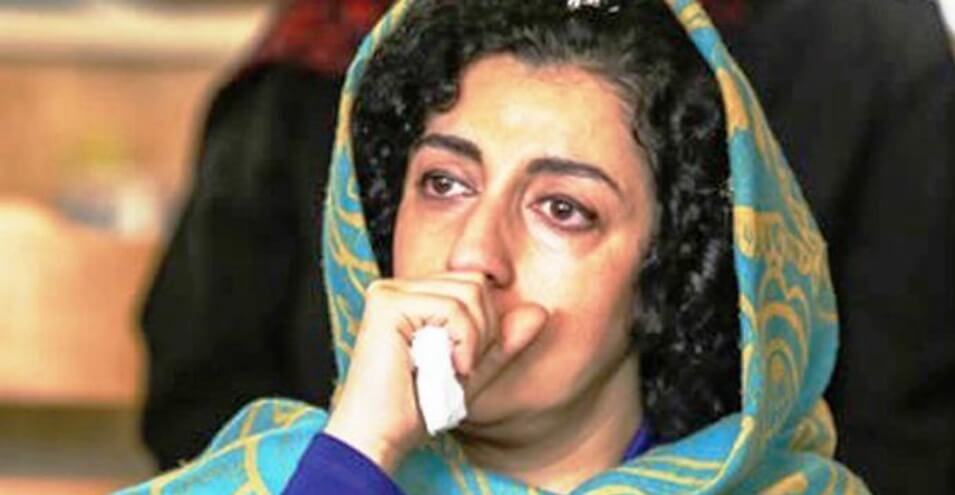
A number of political prisoners in a letter addressed to the officials of the judiciary condemned the treatment of political prisoners, especially Narges Mohammadi in recent days, and warned about the continuation of violence against political prisoners.
A letter from a number of political prisoners held in Evin Prison was released on Saturday evening, December 28 on several Telegram channels, including the “New Society” channel.
The letter states: “During the five months of Ziayee’s leadership of Evin Prison, we have witnessed the creation of many problems for political prisoners and the emergence of some tensions in this prison. The latest example of this is the brutal treatment of the head of Evin Prison towards Ms. Narges Mohammadi, her beating, and her exile to Zanjan Prison.”
According to the letter’s authors, “Before that, the current management of this prison, ignoring the requests of political prisoners and failing to pursue their legitimate demands, has attempted to impose iron-fisted management on this prison. Neglect of the health situation of some political prisoners and the exile of Farhad Meisami to Rajaishahr Prison following his protest against the prison’s management are among these examples.”
The letter continues: “We, a group of political prisoners in Evin Prison, while condemning acts of violence against political prisoners, and in particular the brutal treatment of Ms. Narges Mohammadi, warn the officials of the judiciary that the continuation of Ziayee’s management of Evin Prison will lead to greater tensions in this prison, and responsibility for the consequences falls on them.”
The letter was signed by Majid Assari, Mohammad Habbibee, Soheil Arabi, Saeed Sherfizadeh, Mohammad Reza Moradi, Hamed Aynivand, Mohammad Karimi, Mohsen Hajimohammadi, Maysam Abbasi, Hamid Kashani, Yousef Arianmehr, and Mohammad Reza Memarzadeghi.
Narges Mohammadi, along with seven other female political prisoners, began a hunger strike from Saturday, December 20 in solidarity with the victims of November protests and their fortieth day commemoration. Evin Prison officials transferred Narges Mohammadi to Zanjan Prison to break this strike. After her transfer to Zanjan, she announced in a letter that the head of Evin Prison, accompanied by others, beat her during the transfer.
Evin Prison officials, in addition to Narges Mohammadi, also transferred another political prisoner, Atena Daemi, to solitary confinement. Atena Daemi, along with Narges Mohammadi, Manizheh Arabshahi, Yasaman Aryani, Saba Kordafshari, Mojgan Keshavarz, Shohila Hijab, and Samane Norouzzadeh Moradi participated in a solidarity hunger strike with the victims of November protests.
Narges Mohammadi’s Presence at Forensic Medicine
Yesterday (Saturday, December 28), Evin Prison officials denied beating Narges Mohammadi during her transfer to Zanjan Prison. Narges Mohammadi’s brother reported that following the denial of Narges’ beating by Gholamreza Ziayee, his sister documented the injuries to her body at forensic medicine on Saturday, December 28.
In a note by Narges Mohammadi’s brother, which was published on social networks, including Shirin Ebadi’s Telegram channel, it states:
“Yesterday, the public relations of Evin Prison denied the beating and illegal exile of Narges to Zanjan Prison and said this was done with a judicial order. It seems their judicial order means Ziayee, the prison head, grabbing Narges’ throat and threatening to suffocate her. The marks of their judicial order are still on my sister’s body. Bruises, cuts, and even fingernail marks on her chest and throat, and the marks of their fingers and fists on her body.”
Ms. Mohammadi’s brother continued in his note: “Narges had requested a medical commission examination that was not followed up on. Today our parents went to the prosecutor’s office and requested that Narges be sent to forensic medicine. Two doctors, one male doctor and one female doctor, from forensic medicine were present at the prison and in the presence of the prison head documented the marks of beating, cuts, and wounds.”