Doubts and Questions Surrounding the ‘Suspicious’ Deaths of Four Students in Ahvaz
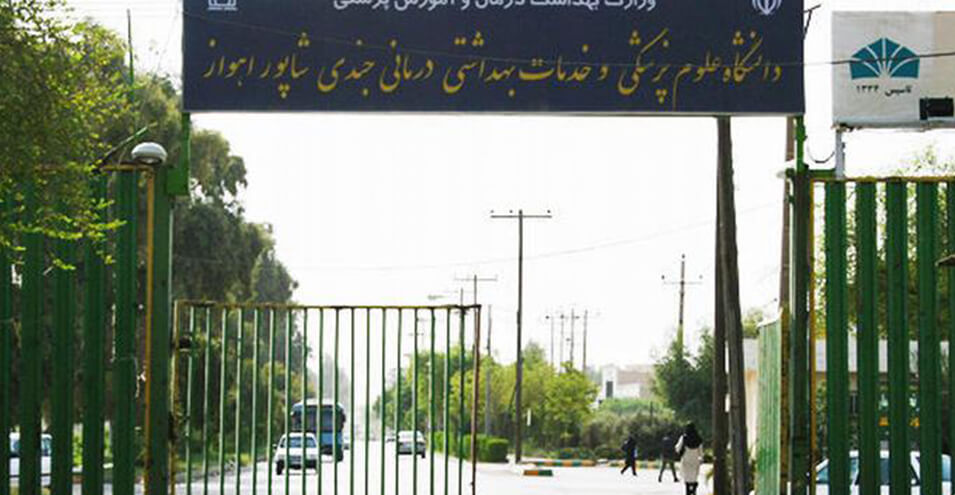
The Ministry of Health has made disclosure of information about the “suspicious” deaths of four students within just two weeks conditional on such information being “non-confidential.” However, the head of Ahvaz University of Medical Sciences says two students died of natural causes.
Since the beginning of Azar month in 1398 (late November 2019), the bodies of four male and female students have been found at two universities—Shahid Chamran and Jundi-Shapur—in the city of Ahvaz. These deaths have been declared suspicious, and three weeks after the first death, officials have still not provided transparent information about the causes. This situation appears highly questionable to social media users.
Accident, Suicide, or…?
In his latest statement, Farhad Abolnezhadian, head of Ahvaz University of Medical Sciences, said on the evening of 25 Azar (December 16) that the previous day a male pharmacy student was transferred to Golestan Hospital in Ahvaz while in class without respiratory or cardiac symptoms, and CPR (cardiopulmonary resuscitation) performed on him was unsuccessful, resulting in his death.
Abolnezhadian told the Young Journalists Club that a female medical student also died, whose family discovered her death when attempting to wake her from sleep.
The head of Ahvaz University of Medical Sciences stated that the cause of death of the students is under investigation, emphasizing that a crisis committee with a number of doctors has been formed at the university and, according to him, the matter is being reviewed and followed up.
Jundi-Shapur University of Medical Sciences in Ahvaz has over 6,000 students and 646 faculty members. The Young Journalists Club, affiliated with Iran’s state radio and television, reported that two weeks earlier, two students from Shahid Chamran University in Ahvaz had “committed suicide.”
It has also been reported that a team of psychologists was immediately dispatched by the Ministry of Science to the dormitories of Shahid Chamran University to investigate the matter.
What is the Other Version of Events?
According to IRNA, the government news agency, in early Azar month, social media networks reported the discovery of the bodies of two male students studying at Shahid Chamran University in Ahvaz. IRNA initially reported, citing an announcement from the public relations office of Shahid Chamran University in Ahvaz, that two students from this university lost their lives in two “tragic incidents.”
In this announcement, without referring to details of the incident, it was stated that on the eighth day of Azar, one of the students residing in the male dormitory (Shahid Allamah Hosseini dormitory) left the dormitory, and the next day, his lifeless body was found on a street in the Bostan Park area of Ahvaz.
Ali Reza Qadrdan, student affairs deputy of Shahid Chamran University in Ahvaz, told IRNA that this computer science student, from the city of Andimeshk, did not return to his residence three days after leaving the dormitory, and his roommates informed his family of the matter.
Meanwhile, according to ILNA, quoting Qadrdan, the student affairs deputy of Shahid Chamran University in Ahvaz, the name of this 19-year-old student from Andimeshk was announced as “R. Sh.,” who never returned to the dormitory after leaving on 9 Azar. It had previously been stated that this student left the dormitory on 8 Azar and did not return.
Two weeks after this student’s death, the cause of death remains unclear, and according to Qadrdan, the Forensic Medicine Organization and relevant authorities have begun their investigations in this matter.
The second incident concerns the death of another student residing in the Shahid Allamah Hosseini dormitory of Shahid Chamran University in Ahvaz. He was from the city of Baghmalak and a biology student who, according to media reports citing the public relations office of Shahid Chamran University in Ahvaz, hanged himself from trees behind the dormitory at four in the morning on 12 Azar.
It is reported that despite efforts by dormitory residents and his transfer to medical centers, this student also died. In this case too, police have not yet released a report on the cause of death. The names of these students were not officially announced by university officials or other authorities, and the university officials only stated that the reasons for these two incidents, whether death or “suicide,” are under investigation.
Many social media users called the deaths of these two students suspicious and demanded transparent information about the causes of death.
Bodies of Two Female Students Found in Classroom
While, according to some local media outlets in Khuzestan, the deaths of two male students in Ahvaz have raised many questions and concerns for families of students, the announcement of the suspicious deaths of two female students in Ahvaz, occurring just days after the “incident or suicide” of two male students in the same city, has intensified doubts and concerns.
The website “Asr-e Jonub” on 25 Azar 1398 (December 16) reported the deaths of two female students studying at Jundi-Shapur University in Ahvaz and, based on information released on social media, wrote: “Last night one of the female students of Jundi-Shapur University in Ahvaz, who entered in 1391, lost her life, and this morning, the lifeless body of M. Siahi, another student of this university (admitted in 1395, pharmacy major) was found in one of the classrooms.”
Further details about the names of these students, the cause and manner of their deaths have not been released.
Jahanpour, the Ministry of Health’s public relations director, regarding the deaths of two students from Jundi-Shapur University, stated that while the general aspects of this matter have been reported to the Ministry of Health and details are under investigation, “precise information” has not yet reached the Ministry of Health, but they will “certainly” follow up on the matter.
The two deceased female students were majoring in medicine and pharmacy.
Public Disclosure Conditional on Information Being “Non-Confidential”
The Ministry of Health’s public relations director, while noting that “medical records and the mental and psychological conditions and family situation” of these students should be investigated and details about their deaths subsequently disclosed, emphasized: “If there is no confidential information about these students, this matter will certainly be disclosed by the end of the week and its general aspects will be communicated to the public.”
This official at the Ministry of Health did not clarify what he meant by confidential information and whether he was referring to the results of investigation into medical records and these students’ mental conditions, which, naturally, should remain confidential based on professional ethical standards and confidentiality, or whether other exemptions could prevent disclosure.
With the beginning of protests in Aban month of 1398 (October 2019), cities in Khuzestan province, including Ahvaz, were centers of public protests. In these protests, which coincided with gatherings of workers from companies and other industries such as Haft Tappeh sugarcane factory, many citizens and students were arrested and detained.
Some eyewitnesses posted multiple videos showing uniformed and plainclothes personnel confronting protesters on social media networks.
Many social media users expressed opinions about the deaths of these four students from different angles.
A Twitter user named Alireza wrote: “Yesterday another death occurred and the university told news channels not to write anything about the cause of death. This one was admitted to pharmacy in 1395, second place winner in a competition, winner of ‘Behave Yourself’ program on Channel Three, skilled in website and app design, and proficient in twenty programming languages.”
Maryam, another user, asked Alireza: “Are these really suicides or are they being made to look like suicides?”
Source: DW