Islamic Republic of Iran Lifts All JCPOA Restrictions
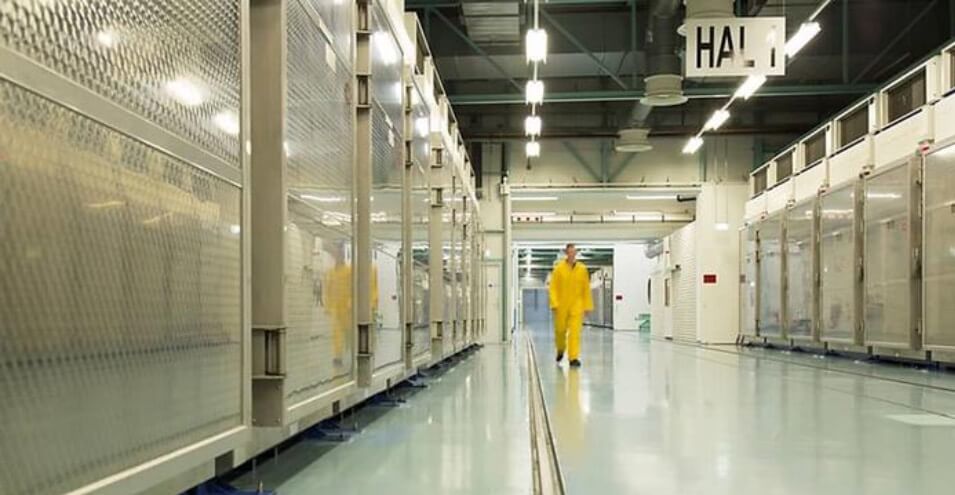
Iran formally announced the fifth and final step of reducing its JCPOA commitments. This step was taken two days after the killing of Qasem Soleimani. Iran’s lifting of all JCPOA restrictions could lead to the return of pre-JCPOA sanctions.
The Iranian government on Sunday, December 15 (January 5) formally announced its complete withdrawal from all JCPOA commitments through the issuance of a statement. According to a report from the government’s news agency: “The Islamic Republic of Iran, in the fifth step of reducing its commitments, is removing the final key operational constraint from its JCPOA limitations, namely ‘restrictions on the number of centrifuges.’ Accordingly, the Islamic Republic of Iran’s nuclear program will no longer face any restrictions in the operational domain (including enrichment capacity, enrichment percentage, the amount of enriched material, and research and development), and henceforth Iran’s nuclear program will proceed solely based on its technical requirements.”
Iranian officials announced the final step of lifting JCPOA restrictions at a time when the world’s eyes are on Iran and observers are witnessing the funeral procession of Qasem Soleimani.
Iran’s lifting of JCPOA restrictions has now raised concerns that tensions between this country and the United States and other Western powers will increase and Iran’s isolation will deepen.
In Iran’s government statement, it was emphasized that “Iran’s cooperation with the International Atomic Energy Agency will continue as before” and “in case of lifting sanctions and Iran receiving the benefits of the JCPOA, the Islamic Republic of Iran is ready to return to its JCPOA commitments.”
Abbas Mousavi, spokesman for Iran’s Foreign Ministry, said on Sunday, December 15, before the government statement was issued, that decisions had previously been made regarding the Islamic Republic’s fifth step to reduce its nuclear commitments, but the current situation, given recent developments, could overshadow these decisions.
From First Step to Final Step
Iran announced for the first time on the anniversary of the United States’ withdrawal from the nuclear agreement that it would suspend the implementation of some of its JCPOA commitments.
The Islamic Republic in the first phase of reducing its nuclear commitments halted the sale of Iran’s enriched uranium and heavy water. In the second step, Iran announced that it would exceed the 3.67 percent uranium enrichment level specified in the JCPOA. In the third step, the Islamic Republic also removed the limitations stipulated in the JCPOA and began research and development on various types of centrifuges and new centrifuges. The fourth step was “injecting gas into centrifuges” at the Fordow nuclear facility.
Possibility of Triggering the Snapback Mechanism
The remaining European signatories to the JCPOA (Britain, France, and Germany) have repeatedly warned about Iran’s measures in reducing its nuclear commitments. The three European countries have repeatedly called for Iran to stop these measures and called Iran’s threat to increase uranium enrichment levels “concerning.”
Now the lifting of all JCPOA restrictions and the elimination of Iran’s commitments to the JCPOA could trigger the “snapback mechanism.”
The remaining European signatories to the JCPOA had even warned Iran about the activation of the snapback mechanism before the complete lifting of JCPOA restrictions.
According to the mechanism provided for in Article 37 of the JCPOA, known as the “automatic return mechanism” or “snapback mechanism,” if Iran violates the nuclear agreement, the international sanctions that previously existed will be re-imposed by referring the case to the United Nations.
Source: DW