Ali Rezavani, IRIB Reporter or Interrogator?
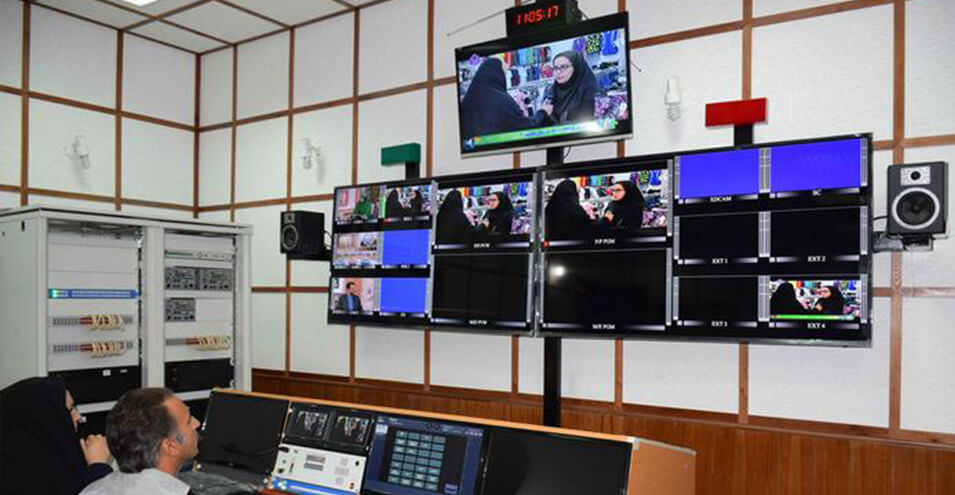
Ali Rezavani, an IRIB reporter, interviews an expert from the Sepah Intelligence Organization in a controversial documentary that IRIB produced about Kavous Seyed Amami. Kavous Seyed Amami’s son says this reporter was his mother’s interrogator.
The IRIB documentary titled “Usual Suspects” was halted Sunday, November 10 (19 Aban) just minutes after it began airing due to a “technical fault.” In the first few minutes of the documentary, which was made after Kavous Seyed Amami’s death and the security forces’ raid on his home, Ali Rezavani interviews an expert from the Sepah Intelligence Organization.
Ali Rezavani, who began his professional career at the Journalists’ Club and entered IRIB with news about the police force, was the host of the program “Outside the Box.”
After his image appeared in the documentary “Usual Suspects,” Ramin Seyed Amami, son of Kavous Seyed Amami, told “Human Rights Campaign in Iran” that the person who appeared as a reporter in the “Usual Suspects” documentary interrogated his mother, Maryam Mambini, on June 25, 2018 (4 Tir 1397).
Ramin Seyed Amami said that after his mother watched a few minutes of the documentary broadcast Sunday night, she became so distressed that she was transferred to the hospital.
Kavous Seyed Amami, a university professor and environmental activist, died in Evin Prison in February 2017 (Bahman 1396) after his arrest for unclear reasons. The suspicious death of this 64-year-old professor, one of Iran’s most prominent environmental activists, received extensive coverage in international media.
Human rights organizations asked the Iranian government to explain the reason for his arrest and the circumstances of his death in a cell equipped with surveillance cameras. No official report has yet been released about the cause of Kavous Seyed Amami’s death.
Security officials claim that this university professor and other environmental activists who were arrested at the same time are spies. While the National Security Council, as well as the Ministry of Intelligence and Iran’s Environmental Organization, have repeatedly denied this accusation, environmental activists remain behind bars.
The production of the documentary “Usual Suspects” on the subject of “environmental activists’ case files” and the extensive promotion for broadcasting this film on social networks appears to be a fresh attempt to justify the arrest of these activists.
Ali Rezavani’s name is not for the first time being raised on social networks. Born in 1984 in Tehran, he holds a bachelor’s degree in communications sciences and is also called “the stickiest reporter.”
He, who calls himself a “sports reporter,” said last year in response to the presence of a female referee in basketball games that “it seems the basketball federation has run so short of referees that a female referee was judging men’s games.”
Ali Rezavani is accused of conducting security programs such as “20:30” for IRIB under the guise of a reporter. Masih Alinejad, organizer of the campaign against mandatory hijab, says Ali Rezavani is an interrogator and cooperator with security institutions. She says that “Ali Rezavani went after my mother to get her to ‘confess’ in a television report.”
According to Ramin Seyed Amami, Rezavani, along with security forces, entered Kavous Seyed Amami’s home on the night of June 25, 2018, coinciding with a football match between Iran and Portugal.
Ramin Seyed Amami wrote at the time on his Instagram page: “The officers brought six large boxes with them and took them to the basement of our house without anyone being allowed to witness their activities. Is it still five months after my father’s death that their evidence is insufficient? Do they intend to plant evidence there? Authorities are currently on the premises and have occupied the street. Our defense lawyer, Mr. Keikhosravi, showed up downstairs in our building but was not allowed to enter.”
On February 16, 2017 (26 Bahman 1396), IRIB also broadcast a documentary in the “20:30 News” program in which it questioned Kavous Seyed Amami’s character and activities and called him a spy. Such a documentary violates Iran’s domestic laws and international laws regarding the principle of innocence as well as violating the privacy of individuals.
Kavous Seyed Amami’s family and lawyers filed a complaint against IRIB, asking officials to be “accountable” for the cause of his death instead of “security atmosphere creation and defamation” of the late Seyed Amami; a complaint that, according to Ramin Seyed Amami, went nowhere.
Kavous Seyed Amami’s son told the Human Rights Campaign: “Our complaint against IRIB went nowhere. We also knew it wouldn’t go anywhere and our complaint was mostly symbolic. We wanted to say that your evidence about the espionage accusation is an image of my father petting his dogs or his fishing hook that you show on twenty-thirty with the claim that he made contact with Israel through this.”
Source: DW