Another Wave of Pressure on Bahá’ís: Four-Year Prison Sentences for Four Bahá’ís and Arrest of Two Others
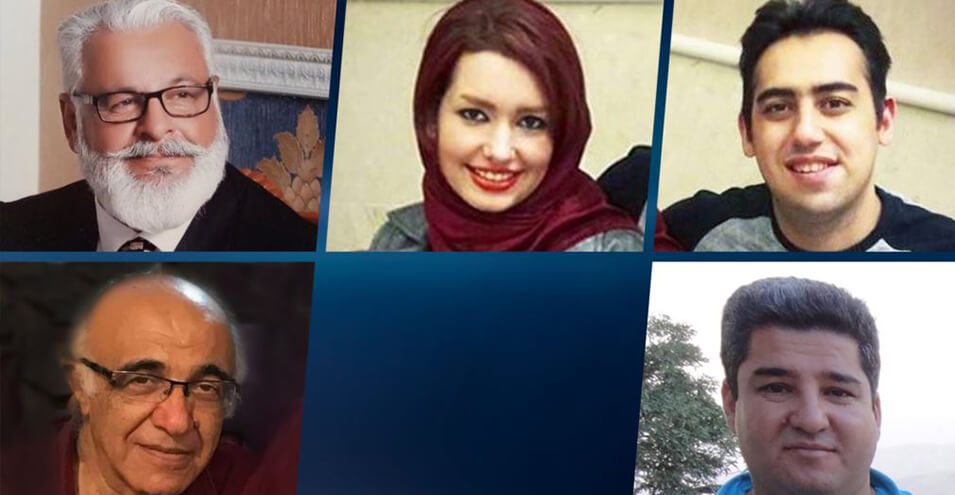
In continuation of the crackdown on religious minorities in Iran, prison sentences have been issued for four Bahá’í citizens and two other Bahá’í citizens have been arrested.
Four Bahá’í citizens named Rooyin Kahnsaal, Abolfazl Ansari, Ruhollah Zebaei, and Mohammad Sadegh Rezaei have been sentenced to a total of four years in prison by the Revolutionary Court of Alborz, and two other Bahá’í citizens named Saman Shirvaneh and Farzaneh Mansouri have been arrested by Revolutionary Guard Intelligence officers in Qarchak city and transferred to an unknown location.
According to a report by the Iran Human Rights website, each of these four Bahá’í citizens, residents of Alborz city, have been sentenced to one year in prison by Branch 1 of the Alborz Revolutionary Court, headed by Judge Asef Al-Hosseini, on charges of “propagandistic activities against the sacred system of the Islamic Republic of Iran and in favor of the Bahá’í faith.”
Based on this report, the hearing for these citizens’ case was held on Dey 28, with the presence of their lawyers in the aforementioned branch, and the verdict was announced to them on Sunday, Bahman 6.
Four Other Sentences
On the other hand, Asadollah Jaberi, Minu Riazati, Ehteram Shekhi, and Farida Jaberi, who had previously been sentenced by Branch 4 of the Bushehr Provincial Court of Appeal to three years in prison and two years travel ban, were arrested on Saturday, Bahman 5, to serve their sentences by reporting to the Criminal Execution Unit of the General and Revolutionary Prosecution of Bushehr city and transferred to the city’s prison.
Previously, Voice of America reported that these Bahá’í citizens and three other Bahá’í citizens named Emad Jaberi, Farrokh Loqa Faramrzi, and Pouneh Nasheri, who were arrested on Bahman 24, 1396 by security forces at their homes or workplaces and were later conditionally released on bail of 50 million tomans until the end of legal proceedings, were sentenced to a total of 21 years in prison by the primary court of Bushehr province in Ordibehesht of the current year, and this verdict was confirmed verbatim on Friday, Azar 1, by the Bushehr Provincial Court of Appeal.
Based on this report, the lawyers of these Bahá’í citizens were also not allowed to enter the hearing session held on Azar 23, and these Bahá’í citizens remained silent in protest of their lawyers’ absence during the hearing and presented no defense.
Previously, Voice of America reported that Ruhollah Zebaei and Abolfazl Ansari, two Bahá’í citizens residing in Karaj, were arrested on Saturday, Mordad 12, by security officers in their personal homes.
On the other hand, Abolfazl Ansari and Rooyin Kahnsaal were also arrested in mid-Mordad in their personal homes and transferred to Rajaei Shahr Prison in Karaj, and according to information from the Iran Human Rights website, they were conditionally released from prison on Shahrivar 17 and Shahrivar 12 respectively by posting bail until the end of legal proceedings.
The Iran Human Rights website reported in another report that Saman Shirvaneh and Farzaneh Mansouri, a Bahá’í couple residing in Qarchak city, were also arrested on Thursday, Bahman 3, when Revolutionary Guard Intelligence officers raided their personal residence and transferred them to an unknown location.
Based on this report, the Revolutionary Guard Intelligence officers searched the residence of this Bahá’í couple before their arrest and seized some of their personal items including mobile phones and laptops.
Based on available information, the family of these Bahá’í citizens, despite approaching judicial authorities and the Revolutionary Guard Intelligence Office in Qarchak city, have received no information from authorities regarding the status of this Bahá’í couple and their place of detention.
The treatment of Bahá’í citizens by the Islamic Republic has a long history, and this is not the first time a Bahá’í citizen has been arrested solely for their belief in the Bahá’í faith or convicted by court orders.
Recently, representatives of 33 countries, including the United States, on Friday, Aban 17, in a periodic session reviewing the status of human rights in Iran, criticized the violation of the rights of ethnic and religious minorities, including Bahá’í citizens in Iran, and demanded that the Iranian government respect their rights.
International human rights organizations and the United States government have repeatedly condemned the harassment and imprisonment of adherents of religious minorities in Iran.
Javid Rahman, the United Nations Special Rapporteur on human rights concerning Iran, also said in Mordad of the current year in his second report on human rights conditions in Iran that the Islamic Republic no longer executes Bahá’ís solely because of their religious beliefs, but the risk of raids, arrests, and imprisonment of them is constantly present, and since August 2005, more than 1,168 Bahá’ís have been arrested and faced vague and ambiguous charges.
Source: Voice of America