5% Increase in Drug Use Tendency in Iran
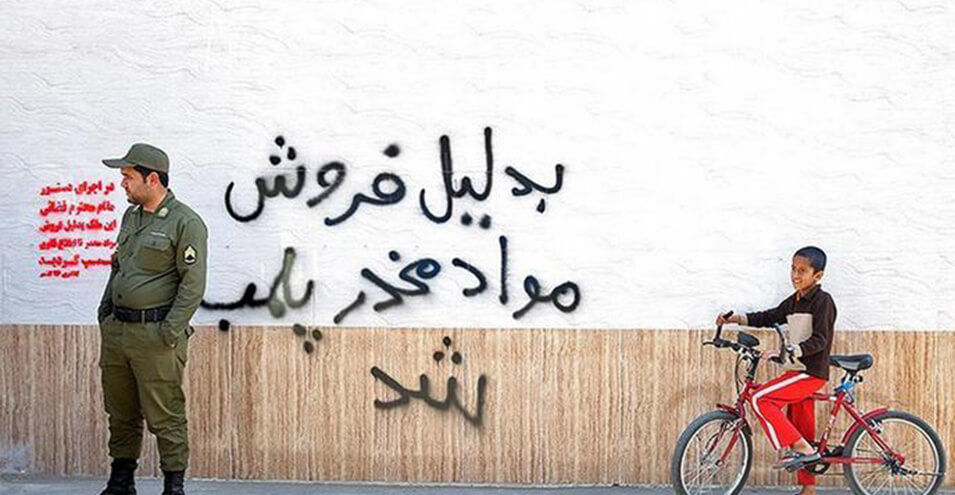
The Secretary General of Iran’s Anti-Drug Headquarters reports a five percent growth in drug use tendency in the country and states that three thousand people die annually as a result of drug consumption. He has called upon non-governmental organizations to help the government solve the problem.
Brigadier General Eskandar Momeni, Secretary General of Iran’s Anti-Drug Headquarters, says that 70 percent of the country’s prisoners have been arrested in connection with drugs and measures must be considered in this regard. During a visit to an addiction treatment and care center in Tabriz, he recalled that 55 percent of registered divorces in the country and most thefts are also related to addiction.
Momeni asked non-governmental organizations to assist the government in combating drugs and added that any innovative plan would be supported and welcomed: “Because the government alone cannot do this work and also cannot undertake the provision of treatment services.”
The news of a five percent increase in drug use tendency in Iran is being announced while the sixth development plan had set a 25 percent reduction in addiction nationwide as a five-year outlook.
From Opium to Crack
Opium, opium derivatives and their byproducts are introduced as the most widely consumed drugs in Iran. Saeed Safatian, head of the “Addiction Demand Reduction Working Group” at the Expediency Discernment Council, announced opium’s share in types of consumed substances at 53 percent. Cannabis, marijuana and crack, after opium and its byproducts, are the most common drugs in Iran. According to official statistics, 67 percent of drug addicts in Iran consume opium and its byproducts, 12 percent consume cannabis, marijuana and crack, 11 percent consume heroin and crack cocaine, and 8 percent consume methamphetamine.
Parviz Afshar, spokesman of the Anti-Drug Headquarters, says approximately four million people in the country consume drugs recreationally, regularly or as addicts. The Welfare Organization, in breaking down this figure, identifies 1 million and 800 thousand people as recreational users and the rest as addicts who suffer physical and psychological complications if they go without drugs for a day. However, experts estimate the actual number of addicts to be higher than official figures.
The Welfare Organization previously announced that 10 percent of the country’s addicts are women. Rasoul Khezri, a member of the parliamentary social commission, also acknowledged that 80 percent of students involved in addiction had experimented with drugs during their school years.
Addiction; The Mother of Social Harms
The Anti-Drug Headquarters states that more than 22 percent of Iranian workers use drugs, and drug consumption in provinces with greater economic and social problems is higher than the national average. Also, according to Hamidreza Sarami, Director General of the Research and Education Office of the Headquarters, seven thousand and 500 newborns addicted to drugs are born annually in Iran.
Poverty and social disorder and the lack of “a sense of satisfaction and contentment,” particularly among young people, and easy access to drugs are cited as reasons for the spread of addiction in Iran.
The increase in drug consumption in Iran reflects the government’s inability to address the root cause of the problem and the failure of punitive and aggressive plans. Until 2017 and before the change in the law on drug trafficking penalties, nearly 70 percent of executions in Iran were related to drug crimes.
In addition to poverty and social disorder, the lack of “a sense of satisfaction and contentment,” particularly among young people, and easy access to drugs are cited as reasons for the spread of addiction in Iran.
Source: DW