After Forty Years, Women Return to Stadium; Women Hope to Break All Restrictions
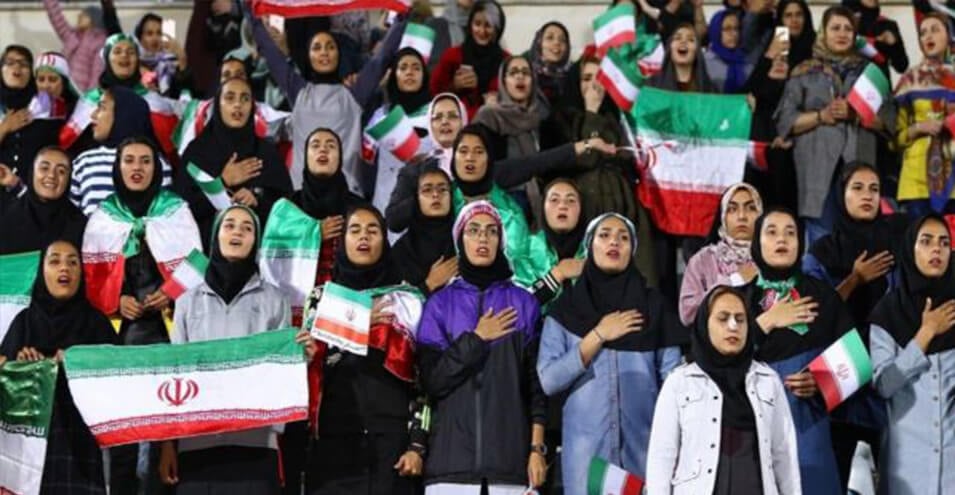
On Thursday, October 18, Iran’s national team will host Cambodia in Tehran in a World Cup qualifier match. From a football perspective, it will likely be a comfortable match for Iran, but for Iranian society this is an important day. The Islamic Republic of Iran’s government, which since the revolution has not allowed women to enter stadiums and watch football matches, has agreed under domestic and international pressure to allow some women into the stadium.
On Wednesday night, Amnesty International issued a statement saying that Iranian authorities must lift all restrictions on women’s attendance at stadiums to watch football matches.
Until 1978, national and club football matches were held without restrictions, with both male and female spectators present, but this never happened again after that.
Women have paid a heavy price to access stadiums. They have stood behind closed doors many times, were sometimes arrested, sometimes faced abuse, and even experienced the death of one daughter of freedom.
While Iranian women have gained permission to enter the stadium, even ticket sales for today’s match were not fair for women. Although ticket sales were supposed to be held on October 17, Wednesday, in an unannounced move, sales began a week earlier on Thursday, October 10, in the final hours of that day for just one seating section. A section that was behind one of the goals and TV cameras.
However, women’s enthusiasm for the Azadi stadium stands was such that tickets for the first section sold out in just a few minutes, and sports authorities were forced to allocate three other sections to women. Ultimately, 4,000 tickets were sold to women. Although remaining empty seats were sold to women in violation of FIFA rules, and female photographers still have not been able to obtain permission to enter the stadium.
In contrast, men did not show as much enthusiasm for the Iran-Cambodia match. Media in Iran reported that after a week of ticket sales for this match, men had only purchased 2,500 tickets. This means that women’s enthusiasm for this match, with just one day of ticket sales, exceeded that of men.
However, the unannounced actions by authorities did not end with overnight ticket sales for women. Just days before the match, police announced that a large number of female officers would be present at the stadium to control security. Additionally, images posted on social media indicate that “cameras” have been installed to monitor women around their seating area.
The producer of the superior football program has also implicitly announced that “images of the ladies” will definitely “not be broadcast” on television.
While segregation of stands with barriers at Azadi stadium had made headlines in recent days, Tehran’s special police force also announced the gender separation of stadium parking lots and said two parking areas have been allocated to women, which “male spectators” do not have the right to use.
Wake Up FIFA
Gender segregation continues to the stadium entrance, and women cannot enter through the main gate where men enter the stadium with “Azadi Sports Complex” written above it; instead, women can enter the stadium through the eastern entrance.
Despite all these restrictions, Islamic Republic authorities have not stopped opposing women’s entry into stadiums. Mohammad Jafar Montazeri, the General Prosecutor of the Islamic Republic of Iran, described women’s presence in stadiums as “calculated moves by enemies,” and police also said they oppose women’s presence in stadiums. Although these objections, given FIFA’s requirement to Iran’s Football Federation, this time could not prevent ticket sales to women.
Now the half-open doors of Azadi stadium mean for many a “victory” in the first step toward realizing the trampled rights of women over the past 40 years. But many on social media, with the hashtag “#wakeupfifa,” speak of the violation of international rules and the performative nature of Iranian women’s presence at Azadi stadium.
Open the Real Doors for Women
Zeinab Sehhafi, known as Zeinab Persepoli, one of the girls who repeatedly tried to reach the stadium and even went to the stadium several times in male disguise, is also among those who told the Persian section of Voice of America that the real doors of the stadium have not yet opened for women.
She said: I believe the stadium doors have opened for women when women can easily buy tickets for all league and cup matches and go to stadiums, not just national or Asian matches.
She, who has been arrested multiple times on charges of entering the stadium and was ultimately forced to leave Iran, referred to arrest for the charge of “entering the stadium” and said: We were arrested for charges that are not considered crimes under Islamic Republic laws, and we would pledge not to go to the stadium again. Yet after each pledge, I would return to the stadium.
This Persepolis fan girl added that Iranian women are fighting to return to 40 years before.
After the 1979 revolution, the Islamic Republic closed stadium doors to women and only in a few cases selectively allowed women to enter Azadi stadium. The US State Department has consistently condemned the violation of women’s rights in Iran by the Islamic Republic regime and has called for an end to harassment, persecution, and discrimination against women who are merely demanding their basic and fundamental rights.
Despite all these complications, Thursday, October 18, is an important day for Iranian women. A day when Iran’s weakest match in its own group could possibly be transformed into the most important historical event for half of Iranian society.
Source: Voice of America