Water Crisis: Iran and 16 Other Countries Moving Closer to ‘Day Zero’
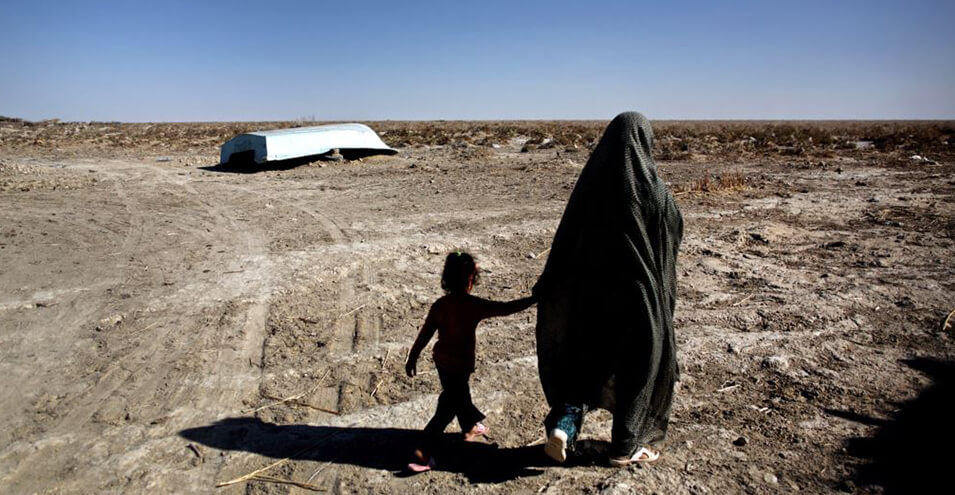
The latest assessment by the World Resources Institute shows that Iran, alongside Qatar, Israel, and Lebanon, is at the forefront of countries facing an “extraordinary” water crisis and has reached the brink of “Day Zero”—the day when water resources may be depleted.
The new assessment published in the research institute’s “Water Risk Atlas” ranks Iran as the fourth country approaching “Day Zero.”
Seventeen countries, of which Iran is one, collectively representing one-quarter of the world’s population, find themselves in conditions that the research institute has classified as “worst” in terms of drought and water scarcity crisis.
However, Iranian citizens, even in the best circumstances, cannot take comfort from their neighbors and neighboring countries, as twelve of the seventeen countries are located in West Asia and North Africa: from Qatar and Lebanon to Israel, Kuwait, Saudi Arabia, and the UAE.
In the north and east of Iran, the situation is equally dire: Pakistan, India, and Turkmenistan are all among the seventeen crisis-stricken countries.
In terms of population, however, India faces the worst conditions. This country not only ranks among the seventeen countries on the brink of “Day Zero,” but its population is collectively three times larger than all the other sixteen countries combined.
As researchers from the World Resources Institute have stated, crisis-stricken countries in West Asia and North Africa, including Iran and its neighboring countries, face not only drought and water scarcity and problems resulting from climate change, but increased demand has also worsened the situation.
A World Bank report from last summer showed that this region ranks first among “water-insecure” regions, particularly due to groundwater extraction. More than eighty percent of water used is not recycled, and its countries face “the greatest economic damage” caused by water scarcity due to climate issues.
The French news agency has quoted Andrew Steer, director of the World Resources Institute, as saying “the damage caused by water scarcity is the worst crisis no one is talking about. Food insecurity, economic instability, war, and migration are the consequences of this crisis.”
In December of last year, the head of the Iran Chamber of Commerce Water Studies Center said that “fifty years of mismanagement” has left us with only “five years” before a “public water catastrophe” occurs in Iran.
Mohammad Hossein Sharieatmadaari, while expressing pessimism about whether “sufficient will to solve this problem” has been formed, added that nevertheless “organizing, repairing, and reviving the country’s water resources is possible.”
Researchers from the World Resources Institute also say that by investing in water resource management, problems can be reduced.
According to this institute, “three approaches are available” to address problems arising from the water crisis: increasing agricultural productivity, for example by using crops that require less water and improving agricultural technologies.
Investing in “gray” infrastructure such as proper piping, and “green” infrastructure, such as wetlands or healthy watershed basins, which can address both water scarcity and problems caused by water pollution.
And finally, changing perspective, reusing and recycling water; “we must abandon the approach that used water is no longer recyclable.” With the right approach and water reuse, “new” water resources can be created.
Source: Radio Farda