Nabavi: 60 percent of Iran’s wealth is under the control of institutions supervised by the Supreme Leader and the IRGC
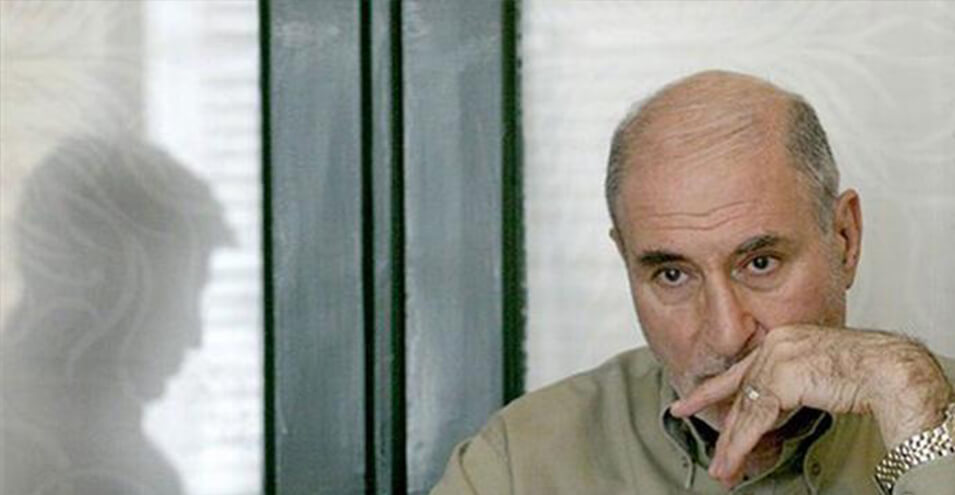
Behzad Nabavi, a reformist political activist, recently stated in an interview that 60 percent of Iran’s wealth is under the control of four institutions commanded by Ayatollah Khamenei, none of which have any connection to the government and parliament.
The interview of Behzad Nabavi, a reformist political activist, with the “Alef” website belonging to Ahmad Tavakoli, a principlist representative in previous parliamentary terms, is circulating on social media these days. Behzad Nabavi stated in this interview that 60 percent of Iran’s national wealth is under the control of four institutions. These institutions are the “Executive Headquarters of the Imam’s Decree,” “Khatam al-Anbiya Garrison,” “Astan Quds,” and “Foundation of the Oppressed,” which according to him “have no connection whatsoever to the government and the Islamic Consultative Assembly.”
Nabavi explained that the first three institutions are under the direct supervision of Ali Khamenei and report only to him. The fourth institution, the “Khatam al-Anbiya Garrison, is also a subsidiary of the Islamic Revolutionary Guard Corps, and its commander is appointed by the Supreme Leader.” He stated elsewhere in this interview that “according to the constitution, the government’s authorities represent approximately 10 to 20 percent of the total authorities for running the country, and we should expect nothing more from the government.”
No accurate information about the total assets of the institutions under the command of the Supreme Leader of the Islamic Republic has been published in the media. In November 2013, the Reuters news agency estimated the assets of the “Executive Headquarters of the Imam’s Decree” at “approximately 95 billion dollars.”
Infiltration at high levels of government
Behzad Nabavi warned from the tribune of the Alef website that “the issue of infiltration is very important and serious and must be addressed.” He refers to espionage at high levels of government and says: “I believe that things are happening in the country that cannot be attributed to reformists and principalists or even considered to be caused by extremism. For example, in the office of Commander Naqdi, two Israeli spies were identified who were imprisoned with some political prisoners, one of whom was executed. These are at lower levels. And I am concerned about higher levels.”
Behzad Nabavi considers the beginning of widespread protests in December 2017 to be “fabricated by some domestic institutions” whose calculations went wrong and whose slogans got out of their hands. He gives Mashhad as an example: “For instance, in Mashhad, starting in front of the city hall with about 400 people chanting ‘death to Rouhani,’ they headed toward the shrine, and upon return their numbers multiplied several times and the slogans changed, becoming directed at the entire system!” Nabavi, however, believes that the ultimate exploitation was done by the “counter-revolution.”
The third current
Behzad Nabavi also refers to a third current, which in his view is a populist movement with “populist and apparently justice-seeking slogans.” A current that “puts the fight against selective corruption on its agenda, targeting certain corrupt individuals who were elected” but “does not really address the roots and essence of corruption.” He criticizes this current, which also seeks “youth-oriented” policies, for not taking “democracy and political development and investment in the country” seriously, and its justice-seeking is of a type that has no result “except the distribution of poverty. Something that happened in the Soviet Union and led to its collapse.”
This reformist activist believes that the governance program of the Islamic Republic to “get rid of both reformist and principlist factions” might be to ultimately seek individuals with the characteristics of “the third current,” though individuals who according to him are “under control,” and “if it cannot find such individuals, it is not unlikely that it would resort to the previous ones.” Behzad Nabavi did not name any recognizable figures of this current. But perhaps one of the most prominent figures accused of populism in the history of the Islamic Republic, who after falling out of the circle of power became a severe critic of “injustice,” is Mahmoud Ahmadinejad, during whose presidency Iran witnessed the most concentrated wealth and power in the hands of the very institutions that Nabavi mentioned.
Nabavi believes that people are “dissatisfied with the entire political establishment.” Both with principalists and reformists, but he emphasizes that “the elected parts of the establishment have little role in running the country.” This conversation took place at a time when deep and widespread corruption is prevalent in Iran and any opposition from civil society activists is met with severe prison sentences.
Behzad Nabavi was arrested in September 2009, following that year’s presidential elections, and spent six years in prison.
Source: DW