UN Calls for Resumption of Refugee Rescue Operations in Mediterranean
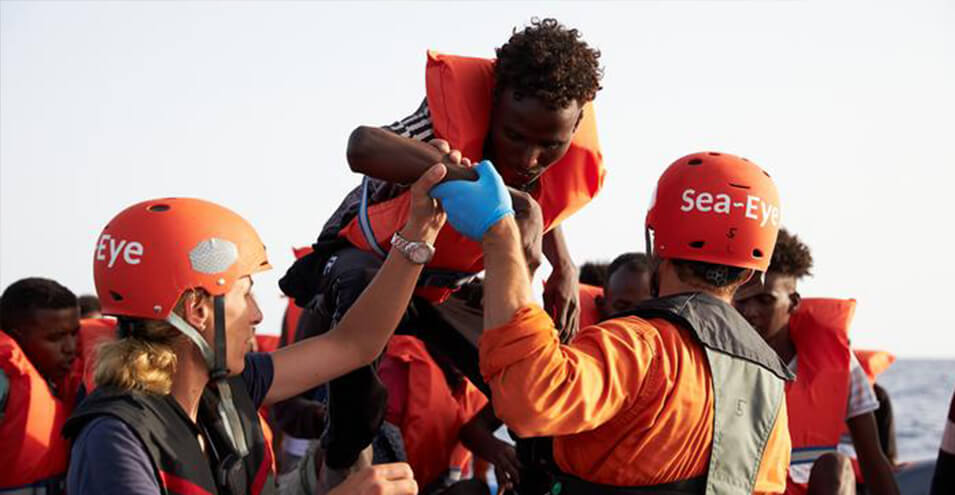
The United Nations has called on European countries to resume search and rescue operations for refugees in the Mediterranean Sea. The UN High Commissioner for Refugees has described the situation in Libya as “dangerous” and called for an end to returning refugees to the country.
The United Nations says the “indefensible” situation of migrants and refugees in Libya should compel European countries to reconsider their policies.
According to the German news agency, UN High Commissioner for Refugees Filippo Grandi and head of the UN refugee support organization Antonio Vitorino have called on European countries in a joint statement to resume search and rescue operations in the Mediterranean Sea that have been suspended.
In a statement released Thursday evening (July 11, corresponding to July 20) in Geneva, European countries have been asked to rescue migrants and refugees adrift in the Mediterranean Sea and transfer them to safe ports.
These two bodies emphasize that expansion of accommodation facilities and reception centers for migrants and refugees who have reached Libya is urgently needed.
Grandi and Vitorino have described the situation in Libya as dangerous and called for an end to returning rescued refugees from the Mediterranean Sea to the country. They say that events such as the deaths of dozens of refugees in one of the camps east of Tripoli, who lost their lives in an airstrike last week, should not be allowed to happen again.
Eastern areas of Tripoli have been a scene of bloody clashes between government forces and attackers since the military offensive by the “Libyan National Army” led by General Khalifa Haftar toward the Libyan capital began.
1.3 Million Displaced and Refugees in Libya
According to statistics from the UN High Commissioner for Refugees, there are currently 1.3 million migrants and asylum seekers in Libya, with approximately 500,000 of them registered with names and details.
Some of these individuals are those who have fled to Libya to escape persecution, harassment and violence, while others intend to migrate through the country. Grandi and Vitorino emphasized in their joint statement that better care must be provided to these people to prevent them from falling into the hands of human traffickers.
The Italian government announced a few days ago that it has reached an agreement with Libya’s “Government of National Accord” to strengthen the country’s coast guard in order to combat human traffickers.
Under this agreement, the Libyan coast guard is to be equipped to prevent the trafficking of migrants and refugees to European countries via the Mediterranean Sea. This measure has faced considerable criticism because international observers have assessed the conditions of refugee detention in Libya as “inhumane”.