Administrative Discrimination and Ill-Gotten Wealth of Representatives
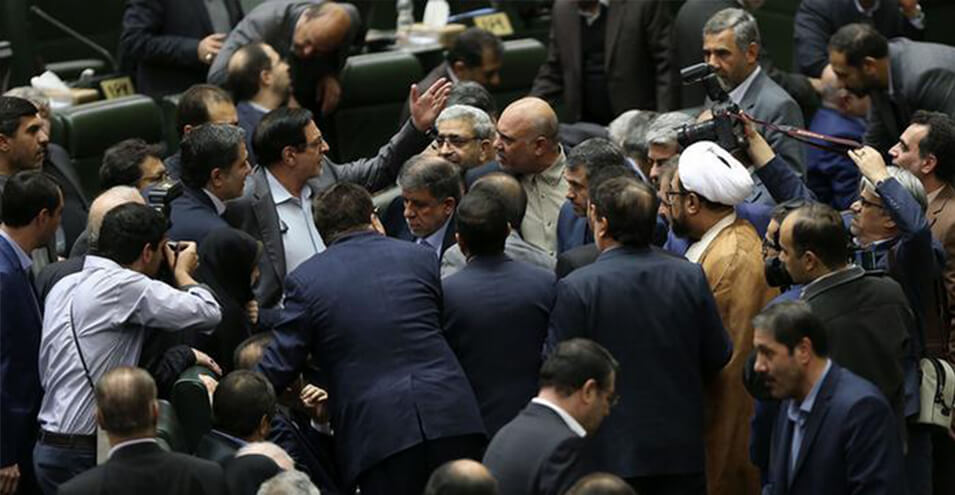
The head of the Article 90 Commission in the sixth parliament, while acknowledging the corruption of representatives, considers the system of discrimination in the country’s management as the root cause, saying that when individuals enter parliament with the approval of the Guardian Council, they no longer feel accountable to the people.
News about some representatives’ requests to withdraw impeachment of a minister in exchange for receiving an apartment sparked a discussion about extortion and financial corruption in the parliament. This news, which Abolfazl Abotorabi, a member of the Velayati faction in parliament, brought to the fore, was definitively denied. The parliament’s board of directors, in explaining the facts, said that two representatives had requested apartments from some ministers, but this request was unrelated to the impeachment discussion.
The financial situation of representatives and their children, party-playing and lobbying they engage in, is not a hidden matter. The website “Khabr Online” in this regard approached two former parliament representatives who were active in the Article 90 Commission; a commission whose duties include reviewing how parliament functions and investigating violations and related complaints.
Both former representatives, while acknowledging “extortion and favor-seeking” by representatives, have not limited this approach to the tenth parliament.
Hossein Ansari-rad, representative from Nishapur and head of the Article 90 Commission in the sixth parliament, states that the ill-gotten wealth of representatives and their extortionist behavior when voting stems from administrative discrimination in the country. This reformist figure says: “When parliament is formed based on the Guardian Council’s view in such a way that some are excluded and others enter parliament according to the Guardian Council’s understanding, one cannot expect more from it.”
Ansari-rad considers one example of representatives’ privilege-seeking to be a representative’s son’s admission to having four jobs: “Why does a representative who had nothing one day suddenly become a billionaire? People who spend billions of money just to come to parliament naturally must expect several times that return, and this is the essence of corruption.”
Fazil Mousavi, member of the Article 90 Commission in the eighth parliament, believes: “When someone becomes a representative who is not at the level of that chair, it is natural that they are tempted and move toward extortion.” He says many enter this field deliberately and make illegal use of their representative positions: “Unfortunately, they are not few and their number increases day by day.”
Fazil Mousavi points to the stark difference in the financial situation of some representatives at the beginning and end of their representation, saying that not only parliament, but many institutions in Iran suffer from the disease of extortion and rent-seeking.
Mahmoud Sadeghi, a reformist representative from Tehran, said in July 2018 that a number of parliament representatives received bribes during the investigation into Tehran Municipality: “One representative received a hologram land-use change permit worth one billion tomans, and several others received five-million-toman bank cards.”
Vali Dadashi, representative of Astara and member of the Article 90 Commission in the tenth parliament, previously said: “Because of some lobbies and behind-the-scenes events in parliament, parliament has fallen from being at the head of affairs.”
Mohammad-Reza Najafi, representative from Tehran, also previously said that some representatives change their votes contrary to their beliefs due to “personal or group interests” or under the name of “expediency consideration.” He cited the reason for changing votes as “issuance of orders outside parliament.”
Fazil Mousavi, former member of the Article 90 Commission, says: “A review was conducted on ten parliamentary terms, as I was told, according to these reviews the tenth parliament representatives had the least adherence to observing some matters in these areas, and the greatest adherence was in the first parliament. That is, the further we moved away from the first parliament, the less this adherence became.”
Source: DW