What Does the Sanctions on Khamenei by the United States Mean and Signify?
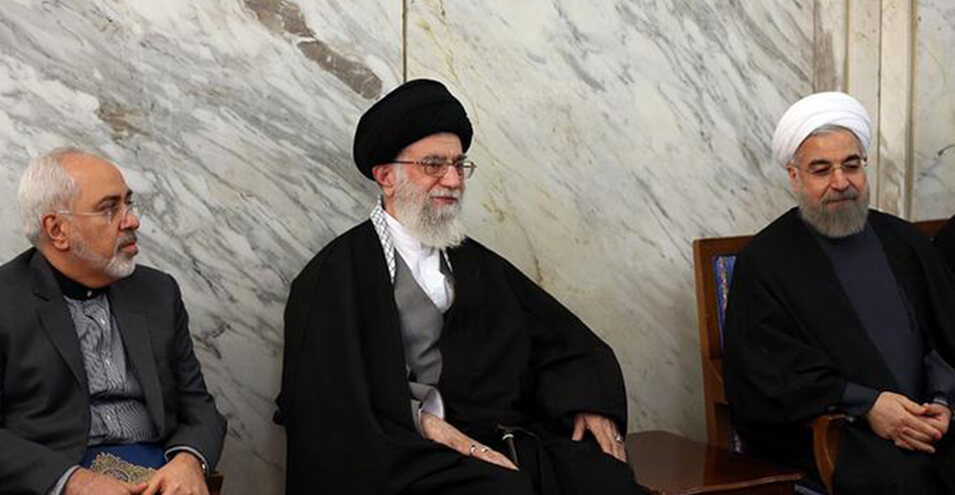
According to Iran, the new US sanctions against Ali Khamenei and Mohammad Javad Zarif close the door to negotiations. The United States has described the new sanctions as a response to the Islamic Revolutionary Guard Corps’ downing of its drone. Read the views of some experts on this matter.
Hassan Rouhani, President of the Islamic Republic of Iran, has reacted sharply to the sanctions against Ali Khamenei, saying he owns nothing but a house and a Husayniyyah. However, it appears that the political and symbolic significance of sanctioning the leader of the Islamic Republic far exceeds its economic consequences.
Hassan Shariatmadari, Ahmad Alavi, Ammar Maleki, Reza Tagizadeh have answered Deutsche Welle’s Farsi service’s question about what the sanctions against Ali Khamenei mean and signify.
Digesting America’s Action is Not Easy for Khamenei
Hassan Shariatmadari, Political Activist Opposed to the Islamic Republic
The recent sanctions imposed by Mr. Trump this time have targeted the person of the Islamic Republic’s leader and all his financial institutions, establishments, and shadow government. It is not yet clear exactly whether these sanctions will be implemented by the US Treasury Department all at once or gradually.
But the scope of these sanctions, if necessary, can encompass all sectors of the system and can even include religious sectors such as Friday prayer leaders and religious officials and theological seminaries and the monthly stipends that the leader provides to seminary students inside and outside Iran, targeting all these spheres, and in addition to his political and military apparatus, can complicate his dealings with the religious sector as well.
Assistance to what are called liberation movements and which in fact include salary recipients and agents of the Islamic Republic, the Revolutionary Guards, and the leadership abroad, is generally carried out by the leader’s institution. Furthermore, the enormous budget that is conducted under the title of religious and cultural propaganda by the leader’s institution can also be included in these sanctions. The large apparatus of Shiite clergy in Najaf and Khamenei’s religious representatives around the world can also be targets of these sanctions.
Everything mentioned above may be implemented according to America’s sanctions-negotiation policy, either all at once or step by step. If implemented, these sanctions will face Khamenei’s influence inside and outside Iran, and especially in the Islamic world and Shiism, which is of great concern and interest to him, with a serious problem and would be very painful and distressing for him.
It is likely that for him digesting this retaliatory action by America that has targeted his influence and leadership will not be easy at all. Khamenei’s reaction to this retaliatory action by Trump will largely determine the nature of interaction and relations between the two countries.
A Symbolic Action with Real Effects
Ahmad Alavi, Professor of Economics in Sweden
Although it is possible that sanctioning the Islamic Republic’s leader may seem ineffective, the act itself signifies an escalation in tensions between the White House and the Islamic Republic. This tension has various dimensions, including symbolic and real dimensions. However, the symbolic and real dimensions in the economic sphere have overlap. Therefore, every symbolic action results in real effect.
Washington’s reaction, whatever its motivation, will have significant consequences for Iran’s economy. Increased political tension means more insecurity and therefore will have a negative impact on Iran’s investment rate. The quickest effect of these sanctions will be escalation of tensions and reduced incentive for Iran’s trading partners to export to and import from Iran, which itself means shrinking Iran’s foreign trade.
Flight of financial capital from Iran in the form of non-return of proceeds from non-oil exports or migration of capital and investors from Iran is also among the other consequences of escalating tensions between the two countries’ governments. Since Iran’s economy is exogenous and inward-looking, the impact of shrinking Iran’s foreign trade on economic growth will be negative. Shrinking Iran’s foreign trade means a reduction in investment in the country and therefore will have a negative impact on the level of activity of production units and will also reduce the value of the national currency. Under such circumstances, increased stagnation, unemployment, and inflation in the medium term would not be surprising.
America’s Behavior Has Left the Islamic Republic in Desperation
Ammar Maleki, Professor of Political Science in the Netherlands
Many who criticize broad sanctions and believe in targeted sanctions consider political sanctions to be one of the best tools for punishing oppressive and adventurous governments, including the Islamic Republic. Therefore, sanctioning high-ranking political officials of the Islamic Republic who have been involved in suppression and human rights violations domestically and killing and warmongering abroad is a defensible action, and even most of those opposed to economic sanctions defend this type of sanction.
The leader of the Islamic Republic is the highest official who has played a principal role in all domestic and foreign crises; domestic suppression and widespread human rights violations are carried out by institutions appointed by the Islamic Republic’s leader (judiciary, police institutions, security institutions); on the other hand, all of the system’s adventurous and warmongering policies abroad are determined by this person and executed by institutions directly under the Islamic Republic leader’s supervision, and their commanders and high-ranking officials are chosen by the leader (Quds Force, military institutions).
Under these circumstances, if it is decided to implement targeted sanctions because of the aforementioned actions, naturally the Islamic Republic’s leader and his close circle should be among the principal ones subject to sanctions.
The US government, by employing a maximum pressure policy and declaring readiness for negotiations without preconditions with the Islamic Republic’s leaders, has used the “carrot and stick” approach to place high-ranking officials of the Islamic Republic in a tight corner so that they are forced to sit at the negotiating table to preserve their existence.
However, the Islamic Republic’s leader, regardless of the pressure and damage inflicted on the people and country, by declaring the policy of “neither war nor negotiation,” has placed the country in a corner and limited the system’s options; as a result, the system is trying to change the game with provocative actions such as damaging tankers and destabilizing the Persian Gulf and downing an American drone so that by creating a limited military confrontation, before being forced to completely surrender, it can enter into a “heroic negotiation” through display of power and demonstration of ability to destabilize the region.
But in turn, the Trump administration, as an unpredictable government with unexpected actions, including placing the Revolutionary Guards on the list of terrorist groups, refraining from military response to the downing of an American drone, and imposing new sanctions on high-ranking system officials (including sanctions on the Islamic Republic’s leader and foreign minister), has left the Islamic Republic in confusion and desperation.
Apparently, this is the first time that the unconventional Islamic Republic system in the global arena has faced a counterpart that has the upper hand in implementing unconventional and unpredictable methods and policies.
A Direct Blow to Ali Khamenei
Reza Tagizadeh, Analyst of Iranian Issues
Despite not carrying a heavy financial burden, placing the name of the Islamic Republic’s leader, the staff of his office and institutions under his supervision has psychological importance and constitutes a direct blow to Ali Khamenei, who has de facto placed himself in the position of head of Iran’s executive branch.
The “pressure for pressure” policy and responsibility for the failure of the mediation initiative of Japanese Prime Minister Shinzo Abe, which was an opportunity for Iran to exit the crisis, have been attributed to the Islamic Republic’s leader.
The failure of the “pressure for pressure” policy due to the limitations of Iran’s current capabilities in relation to domestic and foreign commitments is inevitable – a situation that the former Soviet Union faced during 1985 to 1989 and before the complete collapse of the ruling system led to gradual withdrawal from Africa, Latin America, and cutting aid to Warsaw Pact member countries.
The major flaw in Ali Khamenei’s “pressure for pressure” strategy is the absence of a backup plan (Plan B) for exiting the crisis.
* The articles published on this page solely reflect the views and opinions of their authors.
Source: DW