Return of Foul Smell to Tehran; Cause Unknown
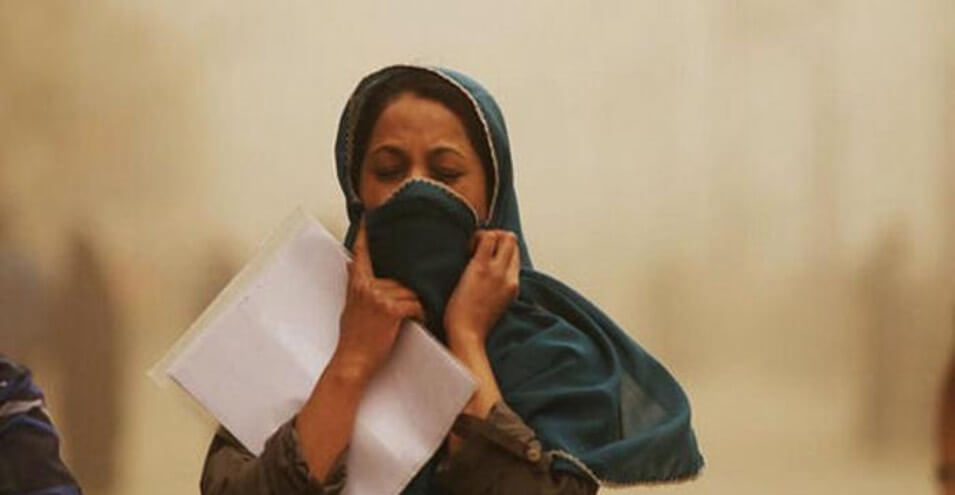
An unpleasant odor is reaching the nostrils of residents in various areas of Tehran. Residents of Vanak, Pol-e Modiriat, Pirouzi, Yaft Abad, Azadi, Enqelab, and Imam Hossein Square have complained about the smell. The governor of Tehran says this odor is different from last year’s smell.
Along with Tehran’s air pollution and the announcement of unhealthy air quality for sensitive groups, an unpleasant odor is bothering the nostrils of citizens in the capital, especially in districts 2, 4, 6, 9, 10, 11, and 13 of Tehran. Residents of Vanak, Pol-e Modiriat, Pirouzi, Yaft Abad, Azadi, Enqelab, and Imam Hossein Square have smelled and complained about this odor; an odor like that of rotten eggs.
The Deputy for Supervision and Monitoring of the Department of Environment and Conservation says the issue of odor spread in the mentioned areas was raised in a meeting of the working group for reducing air pollution in Tehran Province, and experts are investigating to find the source of the odor. Mohammad Rastegari announced that if the type of pollution is identified, steps can be taken to identify its source.
Jalal Maleki, spokesman for Tehran Fire Department, also said that after public calls, two stations were dispatched to the central and southwest areas of Tehran: “Firefighters have reported that in some areas a small volume and unusual odor is being smelled, but its source is unknown.” Maleki asked Tehran citizens not to pay attention to rumors but did not himself provide an explanation for the cause of the odor spread.
A Tehran resident told Deutsche Welle: “Some students from Al-Zahra University in Deh Vanak said we were in class and we were passing out from the intensity of the foul smell and were on the verge of nausea.”
The governor of Tehran announced that this year’s foul smell is not similar to last year’s smell. The director general of the Hazards Office of the Geological Survey Organization said the cause of Tehran’s smell is wind blowing from the south accompanied by humidity: “Whenever the wind direction in Tehran changes toward the south, this smell reaches people’s noses.”
Shima Ansari, director general of Environment and Sustainable Development of Tehran Municipality, said: “As soon as the cause is identified, we will inform the citizens.”
Mojtaba Yazdani, deputy of city services at Tehran Municipality, also announced that all Tehran Municipality forces, including firefighting, waste management, and city services, have been assigned to investigate the causes of odor spread in the capital.
The commander of the country’s passive defense told the “Young Journalists Club” that the previous time we suspected mercaptan gas odor, but the oil and gas company denied this: “The crisis organization also said that the source of the odor is not related to the four gases we examined, including sulfur.”
Alirez Jalali added that the Department of Environment is investigating the matter: “Their view is that it is due to air inversion and the initial effect of rainfall, but they are not certain.”
Last December, an ammonia-like smell engulfed Tehran, with its center identified around Imam Airport. At that time, it was even rumored that the smell was due to the activity of Mount Damavand volcano, the rupture of the Enqelab Square sewage network, or damage to the Tehran refinery. All these possibilities were ruled out without the source of the smell being finally identified. Anushirvan Mohseni Bandpey, governor of Tehran, had mentioned the leakage of mercaptan chemical substance in open space as one of the possibilities.
Havad Heydarian, a journalist, wrote on Twitter: “I asked the deputy of human environment of the Department of Environment and the director general of Environment of Tehran Municipality about the source of Tehran’s foul smell; the definite reason is unknown. No odor measurement laboratory is active in Tehran. Last year’s smell was also not identified. There are speculations about injecting mercaptan chemical into city gas, which is not definitive.”
Source: DW