From the Glory of Opening in the 1950s, to the Destruction of the 12,000-Seat Hall; The Story of Azadi Stadium, the Beating Heart of Iranian Sports
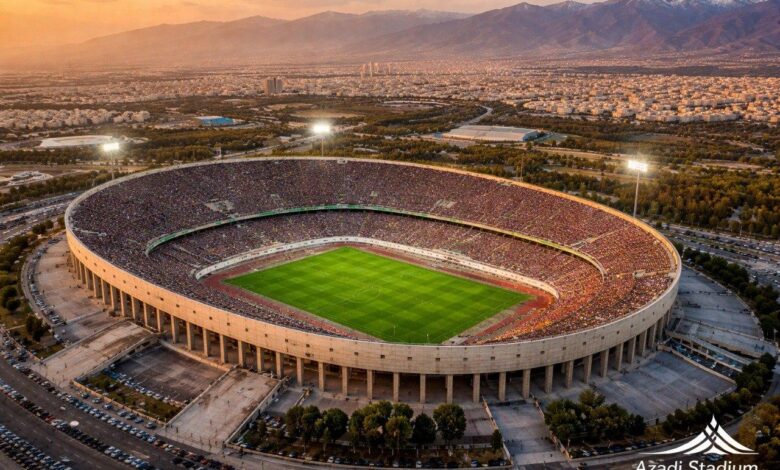
Azadi Stadium in Tehran is one of Iran’s most important sports and social symbols. Since its opening in the 1350s (1970s), it has been the host of the largest sports events and public gatherings. This complex, which has recorded many historical memories in the collective memory of Iranians, has once again come into the spotlight of public attention with recent developments involving damage to its 12,000-seat hall.
The Beginning of a Sports Symbol in the Capital
Construction of the Azadi sports complex began in the early 1350s (1970s) in western Tehran. This stadium, initially known as “Aryamehr,” was inaugurated in 1350 (1971) and quickly became one of Asia’s largest and most modern stadiums.
The primary purpose of building this complex was to host the 1974 Tehran Asian Games; an event that introduced Iran at that time as one of the important centers of sports in the Asian continent. Following the Islamic Revolution in 1357 (1978), the name of this complex was changed to “Azadi Stadium,” a name that today reminds millions of Iranians of sports and national memories.
Architecture and Features of the Azadi Complex
Azadi Stadium is part of a large sports complex that includes various facilities such as the main football stadium, covered halls, swimming pools, and training grounds. The complex’s main stadium, with a capacity of tens of thousands, has for years hosted Iran’s important football matches.
The design of this complex was carried out by prominent Iranian architect Abdolaziz Farmanfarmaian and was considered one of the most advanced sports projects in the region at the time, in terms of architecture and engineering standards.
Host to Historic Moments of Iranian Sports
Over more than five decades of operation, Azadi Stadium has hosted some of Iran’s and Asia’s most important sporting events.
Among these events, the following can be mentioned:
- The 1974 Tehran Asian Games, whose opening ceremony and many competitions were held at this complex.
- The 1976 AFC Asian Cup, which was accompanied by the championship of Iran’s national team.
- Important matches of Iran’s national football team in World Cup qualifying competitions.
- Intense Tehran derbies between Esteghlal and Persepolis teams, which have always been held with the presence of tens of thousands of spectators.
For many Iranians, Azadi Stadium is not merely a stadium; it is a place where memories of different generations have been formed.
The 12,000-Seat Hall; Home to Indoor Sports
Alongside the main stadium, the Azadi complex had a large covered hall with a capacity of approximately 12,000 people. Over the years, this hall has hosted important competitions in indoor sports including volleyball, wrestling, basketball, water polo, and futsal.
Iran’s national volleyball team has also held important matches at various times in this hall and achieved memorable victories for fans.
Damage to the 12,000-Seat Hall in Recent Developments
In recent developments, reports were published of serious damage to the 12,000-seat hall of the Azadi complex. According to these reports, this hall was targeted during recent military attacks and significant portions of it were destroyed.
This incident has also caused damage to some other buildings and facilities surrounding the complex and has prompted various reactions among sports officials, athletes, and the public.
Azadi; Beyond a Stadium
For Iranians, Azadi Stadium is not merely a concrete structure. Over decades, this complex has become a symbol of national solidarity, sports enthusiasm, and shared memories of the people.
From championship celebrations of the national team to thrilling club competitions, Azadi has always been the stage for the passionate presence of fans and the narrator of part of Iran’s contemporary history.
Azadi Stadium in Tehran is considered one of Iran’s most important sports heritages; a place that since its opening in the 1350s (1970s) to today, has witnessed great and historic events.
Despite the damage inflicted on some of its sections in recent years, this complex still holds a special place in Iranian culture and collective memory, and many consider it the beating heart of Iranian sports.
Author: M.R