Thousand More HIV/AIDS Cases Identified in Iran
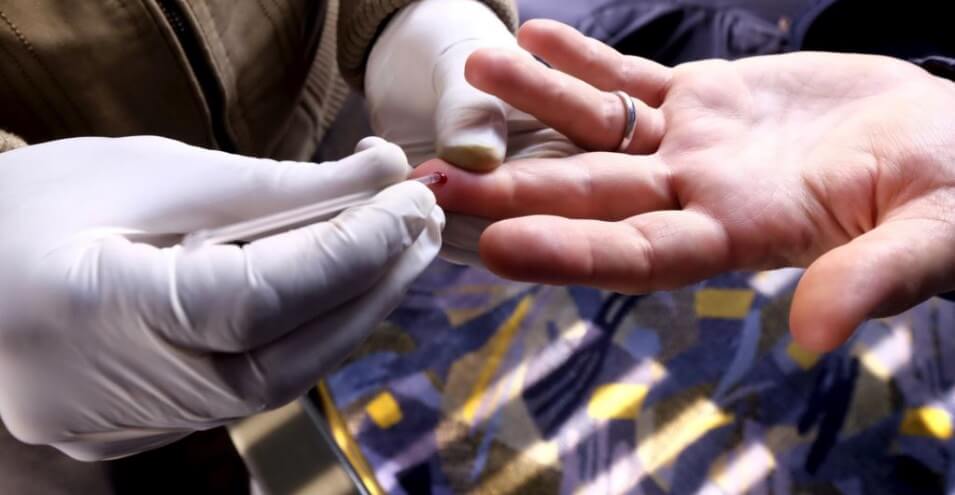
Nahid Khodakarami, a member of the Health and Environment Commission of Tehran City Council, says that in the first six months of 1398 (Iranian calendar year), one thousand new cases of AIDS patients were identified in Iran.
According to a report by Mehr News Agency on Sunday, December 10, Ms. Khodakarami, in a notice raised on the occasion of World AIDS Day at Tehran City Council, also stated that if “the taboos surrounding this disease are broken, the rate of identification will be several times higher.”
She also said: “We should not be afraid to warn young people that if they engage in risky sexual behavior, they should use condoms. We should not be afraid to tell young people what dangers threaten them if they engage in risky sexual relations.”
Alirez Raisi, Deputy Minister of Health, also confirmed these statistics and said that “95 percent of new HIV cases are among vulnerable individuals.”
Raisi estimated that “there are 60,000 people living with HIV in the country. A total of 40,573 HIV patients have been registered throughout the country, of which 18,938 people have died and 21,635 people are alive.”
Kambiz Mohazzeri, head of the Harm Reduction and AIDS group at the country’s Welfare Organization, also said in a meeting in Chaharmahal and Bakhtiari Province that only “40 percent of people with AIDS virus in the country have been identified.”
Ibrahim Qadri, Deputy Health Officer of Kurdistan University of Medical Sciences, also told ISNA news agency that among 580 identified AIDS patients in Kurdistan Province, 246 people have died.
Mahmoud Hosseinpour, Deputy Health Officer of Hormozgan University of Medical Sciences, announced the total number of people with HIV virus in Hormozgan as 1,372 people, of whom 511 have died.
Mehdi Golyan, head of the Health Center of Razavi Khorasan Province, also reported the identification of 790 cases of HIV virus patients.
According to a report by Hamshahri Newspaper, Ali Hosseinpour, a specialist in charge of the behavioral diseases group at Mashhad University of Medical Sciences, also said “50 to 60 new cases annually” of AIDS are identified in areas covered by this university in Razavi Khorasan Province.
According to him, “Previously, cases of HIV transmission in Razavi Khorasan accounted for 10 to 12 percent, but in recent years, the wave of disease transmission through sexual contact has been increasing.”
The official website of the Islamic Consultative Assembly, Melli House, also wrote in a report: “Among identified cases in 1397 and the first half of this year, transmission by shared needle decreased by 31 percent and sexual transmission increased to 48.6 percent, and mother-to-child transmission reached 2.6 percent.”
Based on this report, Minu Mohraz, head of Iran’s AIDS Research Center, says: “In recent years, sexual contact has become the main route of AIDS transmission in the country, and the number of women who have contracted HIV through sexual contact has increased tenfold.”
According to Ms. Mohraz, “patients are between the ages of 25 to 40, and weak public awareness and lack of education have put them at risk of contracting this disease.”
In Iran, accurate statistics of AIDS patients are also considered confidential information, and recently, after some people in the village of Chenar Mahmoud in Lordegan contracted the disease, official authorities again refrained from providing accurate figures of patients.
Source: Radio Farda