Violation of Religious Freedom, Continuation of Government Injustice Against Iranian Christians
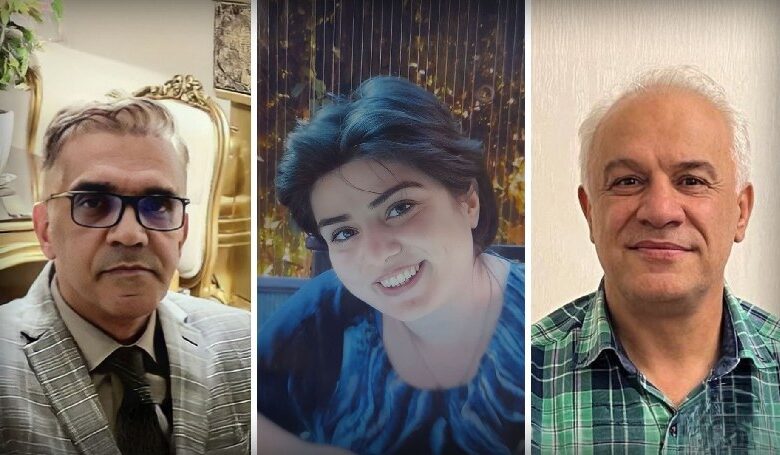
From Evin Prison to the Revolutionary Court, a new account of religious freedom violations and the trial of three other Christian citizens.
While the Islamic Republic emphasizes “freedom of divine religions” in its official propaganda, new evidence shows that pressure and persecution of Christian citizens continues. The second session of the trial of “Aida Najafloo,” “Joseph Shahbazian,” and “Nasser Noor Delgoaltapeh,” three Christian citizens who have been imprisoned in Evin Prison for more than eight months, will be held in late Mehr.
The first court session took place on Shahrivar 15, 1404 under the presidency of Judge Solwati in Branch 15 of the Tehran Revolutionary Court. The session lasted more than three hours, and the three defendants were transferred from Evin Prison to court. They defended themselves against charges such as “propaganda against the system” and “actions against national security.” According to sources close to the case, these charges have been repeatedly made against Christians for years without presenting valid documents or evidence.
In the indictment issued by the prosecutor of Evin’s Public Prosecution Office, five Christian citizens, including “Lida Alkasani,” have also been charged. In the final decision, “forming and directing a house church,” “conducting evangelical Christian meetings,” and practicing religious rites such as “baptism and communion,” are listed as examples of the crime, clearly indicating the continuation of religious freedom violations in the country.
This court is presided over by Judge Solwati, an individual who has been sanctioned by the European Union and the United States for issuing harsh sentences against civil activists and Christian citizens. Despite the government’s claim of religious freedom for religious minorities, Joseph Shahbazian (an Armenian citizen) is being tried again, even as officials have repeatedly stated that Armenians are free to practice their Christian rites.
Aida Najafloo, a mother of two children, is one of the detainees. After 65 days of detention in Ward 209 of the Ministry of Intelligence, she was transferred to the women’s ward of Evin. A source close to her family reported: “Aida Najafloo is a mother of two children, one of whom is facing illness. The mother’s absence has caused serious problems in caring for this child. Additionally, inadequate medical care in prison has worsened pain and injury in her spinal and lower back areas.” This situation is reminiscent of discriminatory treatment that has been repeatedly inflicted on Christians in security detention facilities for years.
Nasser Noor Delgoaltapeh, another defendant in this case, has gone on a hunger strike in protest of the continued ideological detentions. Informed sources reported that after 35 days of hunger strike in Evin Prison, he suffered a suspected heart attack and was urgently transferred to a hospital. His detention occurred without a court order and through a raid by security forces on his home in Parand.
Joseph Shahbazian, who continues to be held in Evin Prison, was prevented from attending his mother’s funeral on Farvardin 25. His mother’s funeral was held in Tehran, but this Christian citizen’s request for temporary leave was denied. From the perspective of human rights observers, this deprivation is another example of “inhuman treatment and violation of the right to human dignity.”
Lida Alkasani, Shahbazian’s wife, was released in Ordibehesht of the current year by posting a bond of four billion tomans. A raid by intelligence officers on this couple’s home led to his re-detention. This comes as numerous reports in recent weeks have been published about heavy sentences for Christian citizens, including the conviction of five other Christians to a total of more than 40 years in prison because of their religious beliefs and activities.
The case of Najafloo, Shahbazian, and Noor Delgoaltapeh is merely one example of the Iranian government’s continuous treatment of Christians; a treatment that appears to be judicial in nature but in practice is indicative of a systematic approach to restricting religious freedoms. The continuation of ideological detentions, the use of security charges, and even the criminalization of Christian practices, confirms the reality that religious freedom in Iran is not a guaranteed right, but merely an unfounded slogan.