Contradictory Statements from Iranian Officials about Possible Negotiations with the US; Rouhani Says the Door to Negotiations is Open, Araghchi Says it’s Closed
While U.S. officials have announced that America has shown its willingness to negotiate with Iran, contradictory statements continue regarding the Islamic Republic’s approach to negotiations with the United States.
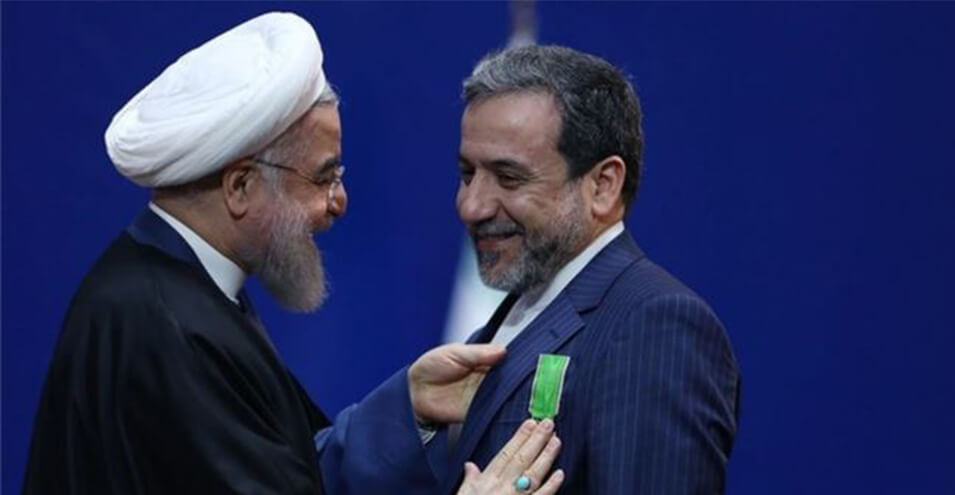
In the latest instance of these contradictions, Hassan Rouhani stated on Wednesday, May 29, that the path to negotiations with America is not closed, and addressing the United States said, “If you return to the negotiating table with commitment to your obligations, the door is not closed to you.”
This position by Rouhani, who identifies himself as “in favor of negotiations,” differs from his stance from a week earlier, when he had said he does not accept conducting such talks “under current conditions.”
However, on the other hand, the FARS News Agency reported that Abbas Araghchi, Deputy Foreign Minister of the Islamic Republic, during a visit to Qatar, described any negotiations with America as “moot.”
This week the President of the United States sent a clear message to Tehran. President Trump, on the sidelines of his trip to Japan, said that America has no intention of regime change in Iran or harming the country, but only wants to prevent Iran from acquiring nuclear weapons.
American officials say they prefer to negotiate directly with the leader of the Islamic Republic rather than with Rouhani or Zarif. Earlier, Ayatollah Ali Khamenei, the leader of the Islamic Republic, described negotiations with America as “poison” and said there was no possibility of dialogue with this country. Khamenei’s opposition to negotiations with America comes at a time when after the nuclear agreement, it became clear that representatives of the leader had begun secret negotiations with American officials from the end of 2012.
The contradictory statements by Islamic Republic officials come at a time when Morgan Ortagus, spokeswoman for the U.S. State Department, announced on Tuesday, June 18, that if the Islamic Republic takes the 12 conditions put forth seriously, the United States is ready to negotiate with Iran.
In recent weeks, tensions between the United States and the Islamic Republic in the region have escalated. U.S. officials say they have intelligence indicating that the threat from Iran is more serious than before.
U.S. Concerns about Islamic Republic Actions and Increased Pressure
The United States says the nuclear agreement with Iran has not had a positive effect on the behavior of this country. President Trump, by withdrawing from the JCPOA in April 2018, issued orders to reinstate nuclear sanctions against the Islamic Republic of Iran in two phases in August and November of last year.
The United States says the Islamic Republic is the world’s greatest state sponsor of terrorism, continues its ballistic missile program in violation of UN Security Council Resolution 2231, and is a source of instability in the Middle East.
Iran’s missile tests had previously been met with reactions from Western countries, and they had repeatedly asked the Islamic Republic to stop producing and testing these missiles.
In recent years, Iran has conducted missile tests, on some of which slogans of “Death to Israel” were inscribed in various languages (including Hebrew).
In 2018, several assassination plots by individuals affiliated with the Islamic Republic against political opponents in Europe were also discovered, leading to diplomatic action by France, Germany, Denmark, and the Netherlands against the Iranian regime.
On June 1 of last year, the U.S. Secretary of State, in announcing America’s new strategy toward Iran, listed the 12 conditions of the United States for an agreement with the Islamic Republic, which essentially constitute a list of American demands from the Islamic Republic, or in other words, details of the changes in behavior required from the Iranian regime.
Some of these conditions include stopping support for terrorism and refraining from destabilizing activities in the region, such as support for Hezbollah in Lebanon and interference in regional countries.
In early 2019, the United States placed the Islamic Revolutionary Guards Corps on the list of terrorist groups. This was the first time that the United States had placed a military force of a country on such a list alongside groups like al-Qaeda and ISIS.
Source: Voice of America