‘Resettlement’; An Opportunity for Legal Entry of Refugees to Germany
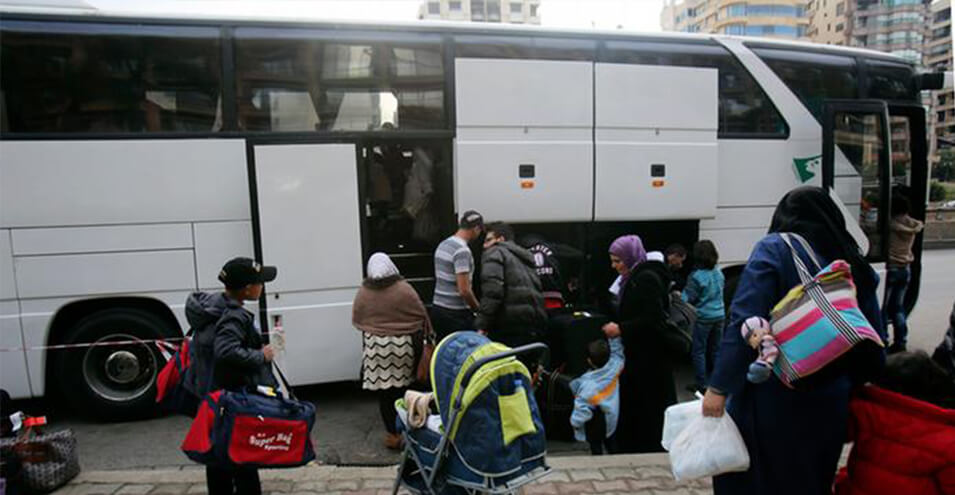
Germany is increasingly accepting refugees officially recognized under the United Nations ‘Resettlement’ program. However, this measure will not eliminate the right to asylum for other refugees.
Over the past five years, the number of refugees covered by the UN Refugee Resettlement program entering Germany has increased. While between 2012 and 2014 an average of 300 such refugees entered Germany annually, their numbers increased in 2016 and 2017, reaching a total of 1,600 people.
After the European Union requested in 2017 that its member states accept at least 50,000 eligible refugees for “resettlement,” the German government promised to accommodate a total of 10,200 people in the country in 2018 and 2019.
Steve Alter, spokesperson for the German Interior Ministry, told Deutsche Welle that Berlin aims to use this approach not only to help refugees who are in immediate need of support, but also to reduce pressure on neighboring countries of war-torn nations dealing with the problems of war refugees, and to combat human trafficking networks.
Alter emphasized that this measure will not eliminate the right to political asylum for other refugees, a right guaranteed in Germany’s Basic Law.
Conditions for Acceptance in the “Resettlement” Program
This program is designed for refugees who have been recognized as refugees by the UN High Commissioner for Refugees in their country of residence and who have urgent need of support.
The UN High Commissioner for Refugees is required to first include individuals in this program who have little chance of returning to their country and have no prospects for beginning a normal life in the country where they are temporarily residing.
In this regard, elderly people, patients, children, and victims of torture and violence are prioritized.
Refugees do not have the personal ability to submit an application for acceptance in this program; rather, the UN High Commissioner for Refugees makes the decision in this regard. The final decision is left to the receiving country.
Responsibility for accepting these individuals in Germany lies with the Federal Office for Migration and Refugees (BAMF), which decides after conducting face-to-face interviews with refugees and reviewing their situations.
Refugees who are resettled in Germany initially receive a three-year residence permit and work authorization, and are entitled to receive social services.
“Assistance is Insufficient”
Although Germany’s efforts to help such refugees have been encouraged by the UN High Commissioner for Refugees, the overall level of assistance to individuals accepted in the “Resettlement” program is considered very low.
Norbert Trossin, a colleague of the UN High Commissioner for Refugees in Egypt, points out that all US assistance for resettling refugees has been cut since 2018, creating greater need in this area.
In an interview with Deutsche Welle, he emphasizes: “Reality does not match what we expect. The UN High Commissioner for Refugees has officially recognized 250,000 people as refugees in Egypt, but resettlement opportunities have been found for only 5,000 of them.”
Source: DW