80% of “Street Children Rounded Up” in Tehran are Foreign Nationals
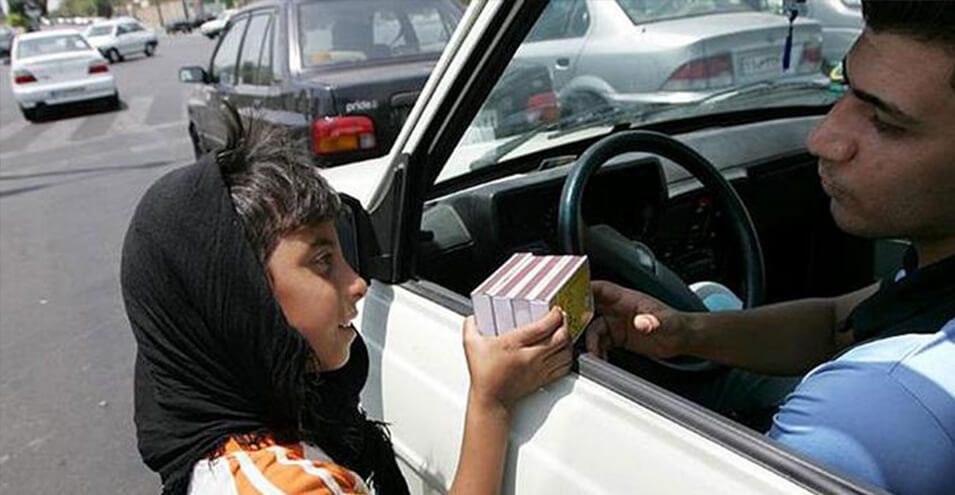
The plan to “round up and organize street children and child laborers” resumed in Tehran approximately 40 days ago. According to Iranian officials, 80% of these children are foreign nationals and 50% of them are “completely illiterate.” Child rights advocates are calling for a halt to this plan.
Iran’s Interior Minister reported on the “inappropriate situation of street children and beggars rounded up” in Tehran, stating that 80% of them are nationals of other countries, particularly Afghanistan.
According to Tehran’s Governor, in the implementation of the “street children and beggars roundup and organization plan,” a total of 306 children have been “rounded up and organized” so far.
Abdolreza Rahmani Fazli stated today, Sunday, the 6th of Mordad (July 28), on the sidelines of the “meeting of the National Social Council on the topic of organizing and placing working children,” that: “Reports show that street children and beggars are living in inappropriate conditions and have been exploited.”
Rahmani Fazli, noting that “a large portion of street children and beggars are nationals of other countries and must definitely receive support,” emphasized: “Given that some of these children were from Afghanistan, we have raised the issue with that country’s embassy.”
Threat to Return Afghan “Street Children”
Iran’s Interior Minister threatened that if Afghanistan fails to cooperate, Afghan street children will be returned to that country. He said: “Most of the rounded-up children are Afghan and illegal; if other institutions provide the necessary cooperation, we can take appropriate measures to organize street children, but if they do not cooperate, we will return these children.”
Abdolreza Rahmani Fazli also reported on police enforcement against “street child labor gangs” and judicial cooperation in this regard.
According to ILNA, Isa Farhadi, Tehran’s Governor, also announced on the sidelines of today’s meeting in the presence of the Interior Minister, that “100%” of the 306 rounded-up street children “were beggars” and 80% of them are nationals of other countries.
While the vast majority of rounded-up street children are foreign nationals, the Director General of the Office of Social Victims’ Affairs of the Welfare Organization, the body responsible for implementing the “street children and beggars roundup and organization plan,” announced last Tuesday that 53% of all identified street children in Iran are foreign nationals.
Tehran’s Governor also clarified in another part of his remarks today that 50% of rounded-up street children were “completely illiterate” and 20% of them are “parentless.” He added: “Unfortunately, among these children, there are also those who suffer from illnesses that need to be treated.”
“Only 18% of Rounded-up Children are Iranian”
Isa Farhadi also stated that the percentage of Iranian children among the rounded-up street children is “18%.”
Farhadi spoke about street children with Iranian parents, saying that if these children “are rounded up in these plans for the first time, a commitment is only taken from the family and the child is returned to them, but if it is repeated, this action is a crime.”
According to Tehran’s Governor, however, “if the child is a national of another country and his or her parents are legally present in Iran, a commitment must be given for the first time, and if it is repeated, measures will be taken to expel them from the country.”
Isa Farhadi added: “If a child is illegally present in Iran with his or her parents and is rounded up in this plan, measures will be taken to expel that child along with his or her family on the very first occasion.”
Farhadi, meanwhile, identified “parentless children” as the “most important problem” and said: “According to the decision of the National Social Council and the Minister’s order, we decided to hold a meeting with the embassies of the relevant countries regarding the organization of these children so that necessary measures can be taken to expel them, and otherwise they will be kept in camps.”
Protest by Child Rights Advocates
The plan called the “roundup of child laborers and street children,” which was suspended in the fall of 1396 (2017), partly due to civil protests, was resumed about 40 days ago in Iran’s capital. This action, which initially took place in Mordad 1396 (August 2017) as part of the “beggar roundup plan,” sparked reactions from a number of child sector activists and members of Tehran’s city council and was considered a confrontation with a “victimized and oppressed” group.
The Deputy for Social Affairs of Iran’s Welfare Organization had explicitly stated that the goal of implementing this plan is to clear city streets of the presence of these children: “The goal of the joint plan to organize Iranian and non-Iranian working and street children is so that we do not witness their presence in city streets.”
Less than two years ago, several experts and civil organizations protested against the “child labor and street children roundup plan” in an open letter: “Instead of rounding up children and punishing families who, out of necessity and ignorance, send their children to work, the country’s financial resources and human capital should be spent through coordinated short-term, medium-term, and long-term programs on improving livelihoods, access to employment, and improving the living conditions of vulnerable groups in society and ensuring their children’s access to education and health.”
Source: DW