Reporters Without Borders Reveals Iranian Judicial Case with Approximately Two Million Registered Names
The Reporters Without Borders organization announced on Thursday, February 8, 2024, in a statement that based on an official document from the Islamic Republic of Iran’s judicial apparatus, it can confirm that at least 860 journalists and citizen-journalists were arrested, imprisoned, and even executed between the years 1979 and 2009 in the country.
On Wednesday, February 7, 2024, Reporters Without Borders held a press conference announcing the “acquisition of a computer file” based on whose “information and contents” registered in Iran, one can “uncover arrests, imprisonments, and executions in Tehran.”
According to Reporters Without Borders, this file was provided to the organization by “whistleblowers who were seeking to alert the public and international institutions about ruthless repression.”
Based on the Reporters Without Borders statement, the file contains “data from Iran’s judicial apparatus” from recent decades, and Reporters Without Borders has analyzed portions of this data related to the period from 1979 to 2009.
As Reporters Without Borders stated: “In this file, 1.7 million names are registered, which include all segments and individuals in society including women, men, and children, members of religious and ethnic minorities, ordinary prisoners, and political prisoners, including regime opposition activists and journalists and citizen-journalists.”
According to Reporters Without Borders, based on its researchers’ findings from the contents of this file, “between the years 1979 and 2009, the Iranian regime arrested and imprisoned at least 860 journalists, some of whom were executed.”
This report, noting that “in this file, there is never any reference to the ‘defendants” status as journalists,” emphasizes that “this is how the Iranian regime repeatedly claims in domestic and international circles that there are no journalists and in general no ideological or political prisoners in its prisons.”
According to the Reporters Without Borders statement writers, this behavior, called “governmental lie,” is “deliberately organized to both silence critics and deceive international human rights organizations.”
Based on these findings, “the judicial apparatus attempted to manipulate or distort the truth about the situation and charges against journalists and political prisoners.”
In this statement, it is emphasized that “journalists have been arrested and imprisoned under false charges such as ‘taking action against internal security,’ ‘propaganda against the Islamic Republic system,’ ‘cooperation with foreign agents,’ and ‘espionage.'”
The report also confirms: “Other charges such as ‘insulting Islamic sanctities’ and ‘insulting the position of the Supreme Leader of the Islamic Republic or the founder of the system’ have also been used to arrest journalists and citizen-journalists.”
Christophe Deloire, Director-General of Reporters Without Borders, said: “The existence of this file and its millions of data not only reveals the extensive scope of lies by Iranian government officials over all these years about the absence of political prisoners and journalists in the country’s prisons, but also shows that the Islamic Republic regime for 40 years has systematically and relentlessly imprisoned hundreds of men and women for their beliefs or journalism work.”
The Director-General of Reporters Without Borders, whose center is in Paris, France, has requested Michelle Bachelet, United Nations High Commissioner for Human Rights, to “confront this governmental lie by demanding accountability from the Islamic Republic of Iran’s officials for these actions.”
In part of the Reporters Without Borders statement, the execution of at least four journalists in the 1980s is mentioned: Saeed Soltanpour, Rahman Hatefi Manfard, Siavosh Farzami, and Ali Asghar Amirrani are among the executed journalists of those years, to which this organization has referred by their names and case file numbers.
Based on Reporters Without Borders’ analysis of this computer judicial file, “of approximately 61,924 women registered in this official judicial apparatus document, 218 are journalists and citizen-journalists.”
Part of Reporters Without Borders’ findings relate to arrests connected to public protests following the controversial 2009 elections, which according to the organization’s statement, for the “first time” confirms that “more than 6,048 people were arrested in public protests against the re-election of Mahmoud Ahmadinejad as President of the Islamic Republic in 2009.”
Based on Reporters Without Borders’ findings, of these, at least over 600 women and 5,400 men were arrested under the charge of “taking action against internal security.”
The report confirms that the charge of action against national security was also used against journalists and citizen-journalists who covered the demonstrations.
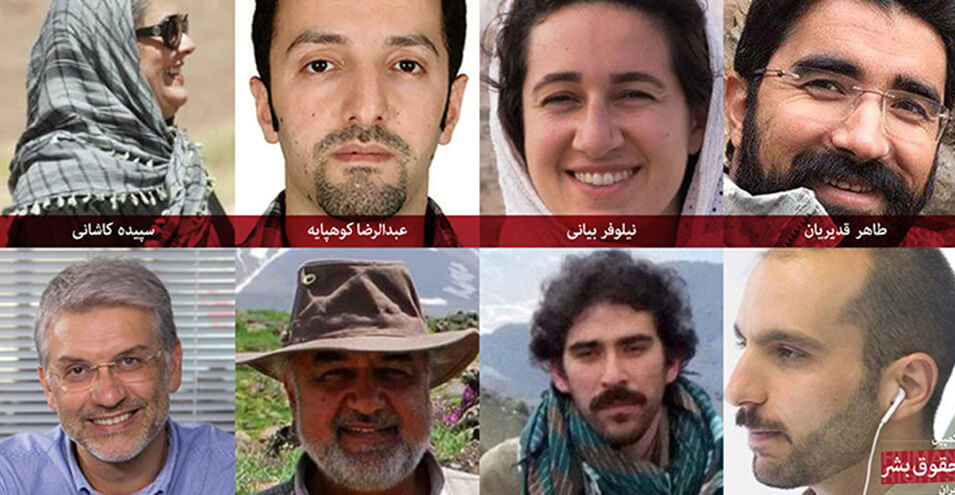
Reporters Without Borders confirms in its statement that among hundreds of names in this file, one can see the names of well-known imprisoned journalists including Faraj Sarkoohian, Reza Alijani, Taghi Rahmani, Akbar Ganji, Mohammad Sadegh Kaboudvand, Zhila Bani Yaqoub and her husband Bahman Ahmadi Amouei, Saeed Metinpur, Hengameh Shahidi, Narges Mohammadi, and Ahmad Zeidabadi.
Part of this statement addresses the death of Zahra Kazemi, an Iranian-Canadian photojournalist, who in June 2003, while photographing a gathering of families of prisoners in front of Evin Prison, was arrested, and after a short time, Iranian judicial authorities announced that she died in the hospital.
Reporters Without Borders announced that in analyzing the contents of the judicial data file, it has reached information about at least 61,940 political prisoners from 1979, of which at least 520 were only 15 to 18 years old at the time of arrest.
According to the organization’s announcement, the file also includes the names of victims of the large-scale massacre of political prisoners in the summer of 1988.
In the summer of that year, nearly 4,000 prisoners and among them some journalists, based on “Khomeini’s order,” were re-interrogated in sessions that in most cases lasted only a few minutes, and many were sentenced to death. Members of the death committees formed across Iran issued execution sentences for most prisoners who did not renounce their beliefs.
Based on this report, “the judicial data file determines for the first time that 5,760 Iranian citizens in Tehran were pursued, arrested, or in some cases executed solely on the charge of membership, according to the judicial apparatus, in the ‘deviant Bahai sect.'”
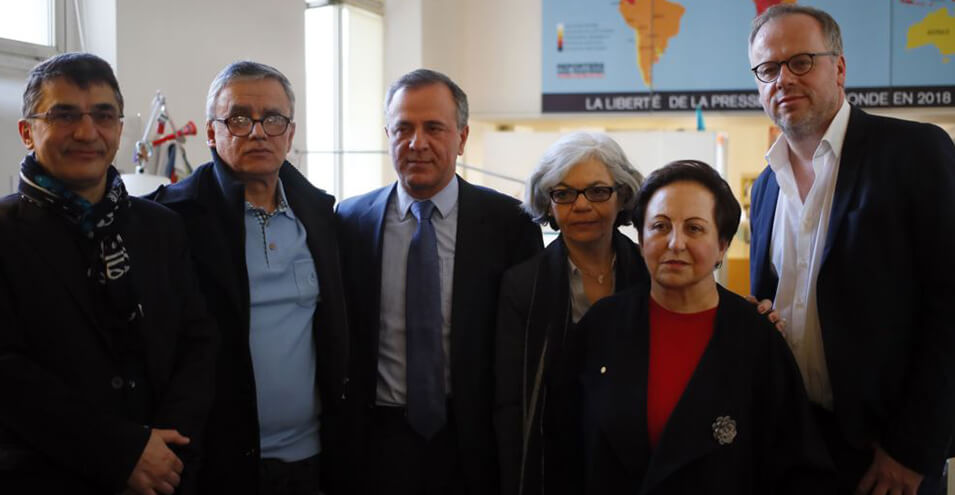
Reporters Without Borders stated in its statement that after obtaining this file, a committee called the Oversight Committee for the Use of Judicial Data was formed under the leadership of Shirin Ebadi, a human rights lawyer and Nobel Peace Prize winner, to analyze and verify this information.
According to the organization’s announcement, Manizheh Baradaran, a human rights activist, writer and researcher, political prisoner in the 1980s, Iraj Mesdaghi, human rights activist, researcher, political prisoner in the 1980s, and Reza Moini, researcher and representative of Reporters Without Borders, formed the members of this committee.
Source: Radio Farda