Oil Minister: Sanctions Pressure Harder Than War

Bijan Zanganeh reported that Chinese and Russian companies are unwilling to cooperate with Iran. He says that in Europe, no one is buying Iranian oil, and Italy and Greece, which are not subject to US sanctions, do not even “answer our calls”.
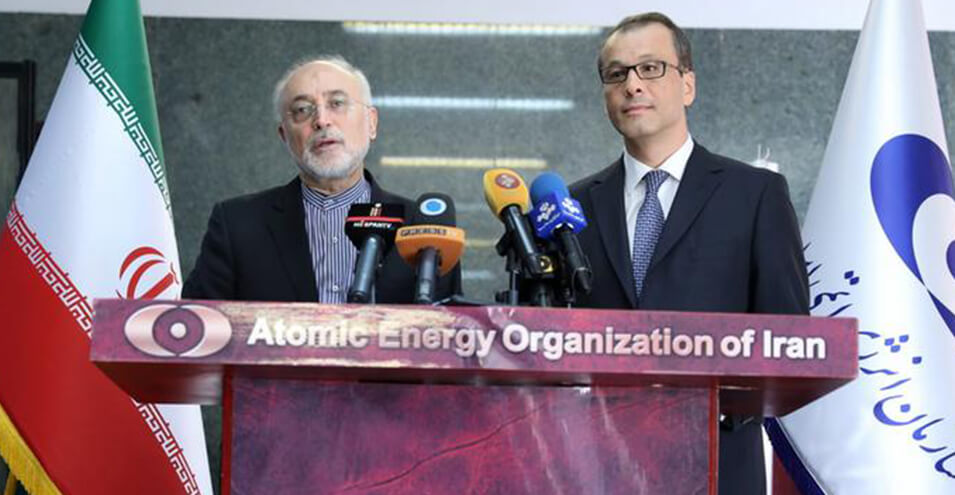
Bijan Namdar Zanganeh, Iran’s Oil Minister, responded again at a press conference held on Tuesday morning, 16 Bahman (February 5), to criticism raised by a number of parliament members regarding the refusal to conclude contracts with Chinese and Russian companies.
On the 9th of Bahman, 72 parliament members sent an open letter to the heads of the three branches accusing the oil minister of not only failing to make practical efforts to counter sanctions, but also blocking almost all existing channels to circumvent sanctions, whether intentionally or unintentionally.
In this letter, the Ministry of Oil was accused of negligence and inattention to “conducting strategic negotiations with major countries in the region that are traditionally Iran’s commercial partners in the oil and gas sector” and also the lack of “developing cooperation in the upstream oil and gas sector with BRICS member countries (China, Russia, Brazil, India, and South Africa)”.
Zanganeh responded to some details of this letter in the early days of its publication and said that at the regional level, the agreement for building a gas pipeline to Pakistan was signed years ago and “Iran has executed the pipeline up to near the border, but the Pakistanis are not ready to implement it, and the problem is that they clearly say they don’t have this readiness due to external pressure”.
Regarding cooperation with the Chinese, he also said that “the Chinese are not willing to sign a contract with us under any circumstances”.
“The Other Party is Unwilling, What Can I Do”
The oil minister, in response to the 72 representatives’ letter at his Tuesday press conference, went a step further and said that Chinese and Russian companies are fundamentally unwilling to cooperate with Iran: “Which contract did the other party want and we didn’t sign? When the other party is unwilling to sign, what can I do?” He added: “I was in war too and I understood war, but these conditions are harder than war.”
After the JCPOA signing, the development of Phase 11 of the South Pars natural gas field was handed over to French Total and China National Petroleum Corporation (CNPC). With the US withdrawal from the JCPOA in Ordibehesht and Total’s withdrawal from the contract, Iran hoped the Chinese would remain committed to the deal. However, a month ago, CNPC announced that it was withdrawing from the contract due to US sanctions.
Three days ago, Mohammad Reza Jariri, a member of the Iran-China Chamber of Commerce, also reported increasingly limited trade with this country and lack of cooperation from Chinese banks with Iranian customers. He wrote in ILNA news agency: “Kunlun Bank was established during the previous government to organize Iran-China banking relations during the period of intensified sanctions against Iran and with the aim of circumventing sanctions… but now this same bank supports the sanctions imposed against Iran by the US and informs the Iranian side that it will not trade sanctioned items with our country. The situation has become such that one cannot circumvent them in the way of the previous sanctions period.”
Iraq Also Complied With Sanctions
Zanganeh, in continuation of his remarks and referring to sanctions pressure, described the current situation as “harder than the war period”. He said that “the US intended to make Iran’s export revenues zero, but it failed. Now they intend to create disruption in money transfer so that inflation and shortages occur in Iran and the people become worried”. After that, Zanganeh acknowledged that there are no shortage of problems in selling Iranian oil either. With the example that in Europe, except for Turkey, no one is willing to buy oil from Iran, he added: “Greece and Italy are exempt from the US, but they don’t buy oil from Iran and they don’t even answer our calls.”
Iran’s oil minister even considered oil and gas exchanges with Iraq to be subject to disruptions caused by US sanctions. According to him, “Iraq cut off the 11,000 barrel swap of Kirkuk oil after Iran sanctions were imposed”.
Kirkuk oil is again exported to the world through Iraq’s pipeline to Turkey.
Referencing existing problems in oil sales on the Energy Stock Exchange was another part of Zanganeh’s remarks. The aim of offering Iranian crude oil at the stock exchange was announced as countering US oil sanctions.
In recent months, Iran has offered oil on the stock market four times, and only in the first two instances was some of the offered oil sold. In the third and fourth rounds, despite the fact that the buyer could pay the oil price in full in Rials, no buyer was found.
Zanganeh, acknowledging the failure of oil sales at the stock exchange, said: “The maximum the Oil Ministry could do was announce that purchases would be made in Rial. Rial-based purchases also mean capital outflow, but the heads of the three branches agreed to this matter and limited the supply.”
Government officials had hoped that while the US was seeking to identify large oil shipments, selling this commodity in smaller shipments by the private sector would reduce the possibility of identifying oil buyers, or at least delay it. However, it apparently potential buyers are concerned that the US will make no distinction between the private and public sectors in imposing oil sanctions against Iran, and therefore fewer people are taking the risk of buying oil from the stock market.
Source: DW