Truck Drivers’ Strike Continues; 256 Drivers Arrested
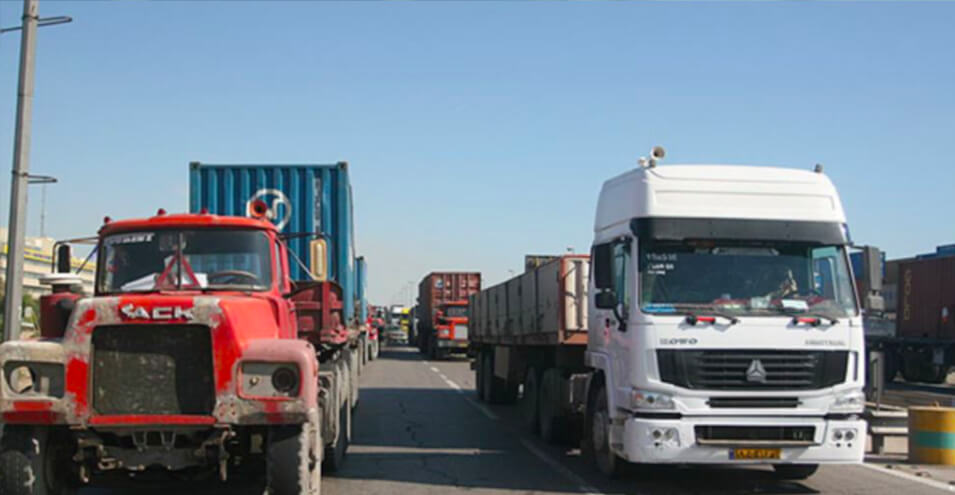
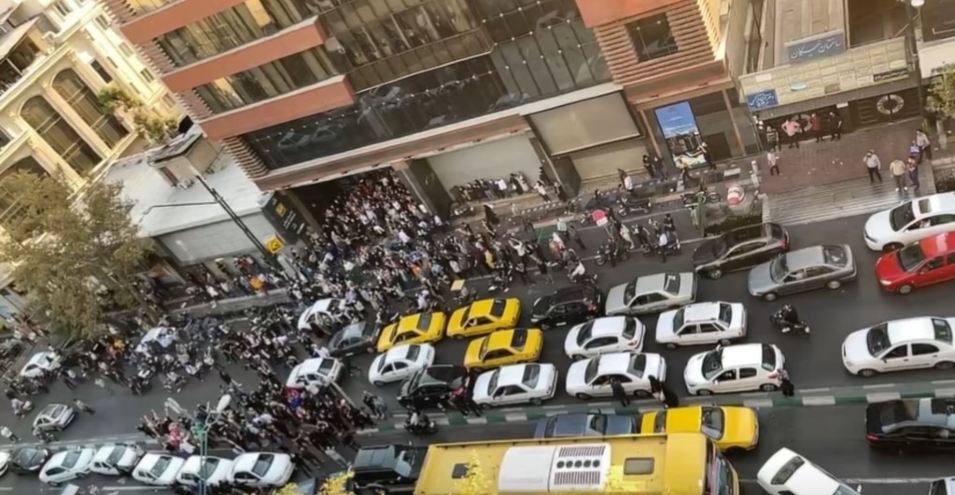
As the truck drivers’ strike continues in various Iranian cities, some human rights sources have reported the arrest of at least 256 truck drivers and drivers in the new round of the truck drivers’ strike in various Iranian cities.
Hrana, which covers Iranian human rights news, wrote on Tuesday that based on the total number of those arrested in various cities, it can be said that the number of arrestees exceeds 256 people.
Iranian truck drivers, for the second time since the beginning of Mehr month, protested their professional demands such as insufficient freight rates, reduced fuel quota, and rising vehicle parts prices like tires, in various cities including Qazvin, Alborz, Ardabil, Isfahan, Fars, Semnan, Kermanshah, Zanjan, Hamadan, North Khorasan, Razavi Khorasan, and towns of Nahavand, Bojnord, Kangoan, Pakdasht, Nishapur, Shirvan, Sanandaj, Ahar, Gorgan, Bandar Gaz, Izeh, Razan, Harsin, Dalahou, Zarand, and Shahr Kord, and refused to pick up cargo.
Mehr news agency, regarding truck drivers’ protests, quoted some truck drivers saying: “The approved price of bias tires is between 1.9 million and 2 million tomans, whereas brokers sometimes sell them to truck drivers for 5.5 million tomans.”
Threatened with Execution Sentence
After several days into this round of protests, officials claimed to be addressing truck drivers’ demands, but in practice, they adopted judicial action against the strikers, to the extent that Mohammad Jafar Montazeri, the General Prosecutor of the country, threatened the arrestees of this strike with execution sentences.
Mohsen Karami, the acting prosecutor of Qazvin, regarding 17 drivers arrested in the province, announced that after forwarding the files of these individuals, the prosecution sought the most severe punishment, namely execution, on charges of “corruption on earth,” “highway robbery,” and “disrupting public order and security.”
Continuation of Strikes
Despite all the threats and widespread arrests by the Islamic Republic government, truck drivers have not stopped striking, and videos they release emphasize that these strikes have not yet ended.
Truck drivers’ protests have brought problems such as rising agricultural product prices to the market. Recently, Behnam Nikfar, the CEO of Iran’s International Stone Exhibition in Nahavand, told IRNA news agency about the impact of truck drivers’ strike on holding Iran’s International Stone Exhibition, saying that “only 50 percent of booths, of which 30 percent are related to miners from Central Province and Nahavand, have been prepared and have transferred their stones into the exhibition, and the remaining 50 percent are still struggling to secure trucks to transport the stones.”
Truck drivers first started extensive strikes on the first of Khordad this year for two weeks regarding the reduction of commission rates, increase in freight rates, and government assistance for insurance premium payments.
These strikes were followed by support from international unions, including the International Federation of Transport Workers, supporting the strikes of Iranian truck drivers and drivers. In recent days, other international support has also been given to this strike.
The International Union of Truck Drivers of North America also supported Iranian striking truck drivers in Khordad this year.
Source: Voice of America