Bennett: Israel Will Not Allow Any Foreign Company to Approach Iran
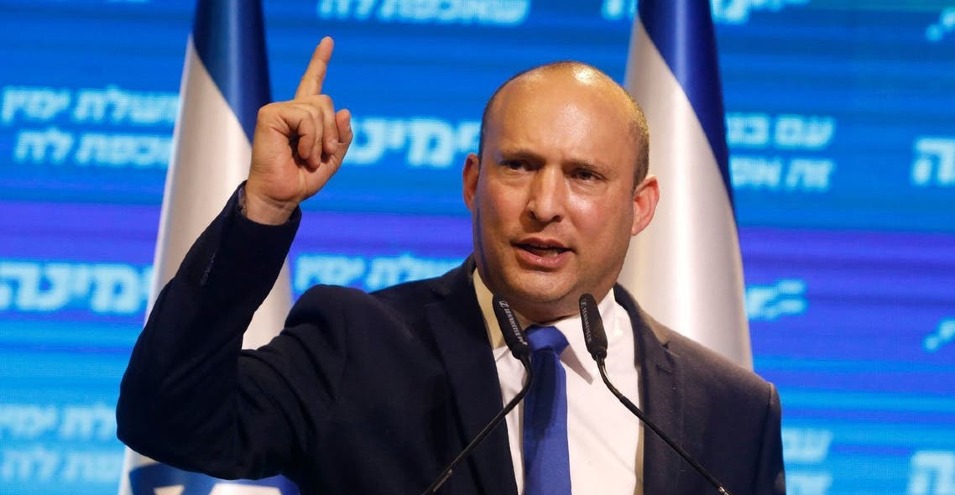
Israel’s prime minister says that even if the JCPOA is revived and the United States returns to the agreement, Israel will not allow any international company to cooperate with Iran.
Naftali Bennett said on Monday evening, March 7, that after the revival of the JCPOA, Israel will still explain to international companies that for the sake of protecting their economic interests, “they should not approach Iran.”
Mr. Bennett, speaking at a ceremony at the Menachem Begin Memorial Center in Jerusalem, added that Israel is prepared to explain to all global companies that they should not go to Iran because “there is nothing there that you are looking for.”
According to him, Israel has decided to pursue a different approach from 2015, when the JCPOA was achieved, and with the powerful and rapid military capabilities it has created, will continuously strike at the objectives of the Islamic Republic of Iran.
Hours before these remarks, Yair Lapid, Israel’s foreign minister, met with his American counterpart Anthony Blinken in Riga, the capital of Latvia, to discuss the JCPOA and Iran, as well as Russia’s invasion of Ukraine.
Mr. Blinken emphasized that the United States is committed to its obligation regarding preventing Iran from acquiring nuclear weapons.
Yair Lapid’s trip to Riga is assessed as part of the Israeli government’s latest efforts to emphasize Israel’s position in opposition to reviving the JCPOA. Mr. Lapid had previously said that “we were unhappy with the JCPOA and we are even more unhappy with reviving it.”
Naftali Bennett, at the end of his secret trip to Moscow on March 5 and his three-hour negotiations with Russian President Vladimir Putin, emphasized that Israel will not be bound by any agreement that countries reach with Iran.
Israeli media reported that Mr. Bennett’s secret trip to the Kremlin on Saturday, in addition to attempts to mediate in Russia’s war in Ukraine, was driven by Israeli concerns about the possible revival of the JCPOA.
According to Israeli media reports, the issue of continued Israeli-Russian coordination regarding Syria was also raised in Naftali Bennett’s negotiations with Vladimir Putin.
According to regional media reports, one day after this meeting, Israel launched another missile attack against Syria.
Syria accused Israel of attacking several points around Damascus with its missiles on the morning of March 7. This was the third attack attributed to Israel on Syria in the past 12 days.
According to Syria’s official news agency, two people were killed in the attack and material damage was caused.
No further details about the nature of the bombed targets have been disclosed. However, Benny Gantz, Israel’s defense minister, without referring to his country’s responsibility for the attack, said that Israel will use all its capabilities and tools to ward off threats. He referred to threats emanating from Iran.
Naftali Bennett also called on the Islamic Republic of Iran in his Monday evening remarks to “leave Syria.” He said we will impose a swift and painful cost on you in the vicinity of your own home.
In this warning to Iran, he said you will pay this cost with your blood.
Despite successive remarks by Israel’s prime minister and defense and foreign ministers against the Islamic Republic of Iran’s military presence in Syria and in opposition to the possible revival of the JCPOA, as Vienna talks have progressed, Israel’s opposition has accused Mr. Bennett’s government of not taking sufficient measures to prevent the revival of the JCPOA.
Benjamin Netanyahu, the opposition leader, said on March 7, referring to ongoing talks in Vienna, that “Iranians are fighting like lions at the negotiating table for their interests,” but the Naftali Bennett government has surrendered to Iran “like a rabbit” and “has exposed Israel to threats.”
Mr. Netanyahu, speaking on the occasion of the 30th anniversary of Menachem Begin’s death, the former Israeli prime minister, said that Menachem Begin even issued the order for an air strike on the Osirak nuclear reactor in Iraq to destroy Iraq’s nuclear capabilities, even when the United States opposed Israel’s attack on Iraq.
Benjamin Netanyahu stated that the Naftali Bennett government’s commitment to the United States not to surprise Washington regarding possible attacks on the nuclear program (of Iran) was a mistake.
Source: Radio Farda