New Round of Bazaar Traders’ Strike Coincides with Launch of US Sanctions Against Islamic Republic
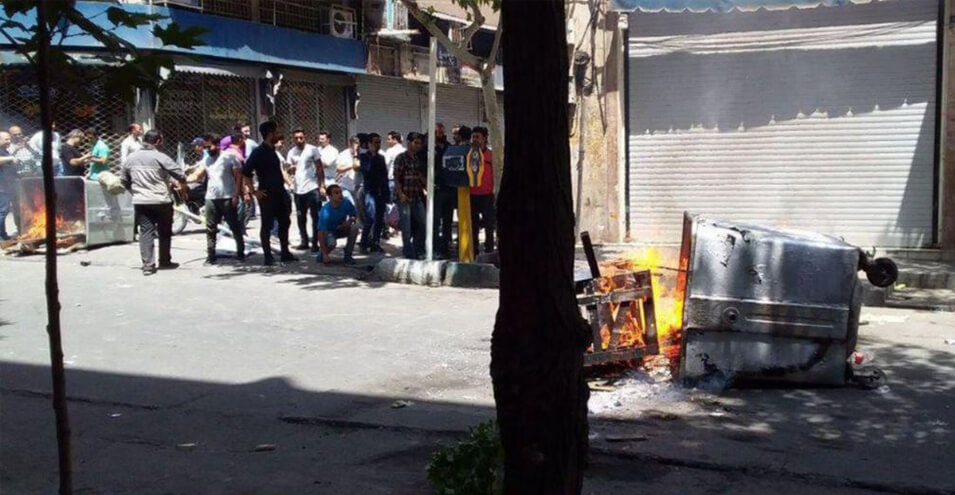
Reports indicate the beginning of a new round of strikes by Iranian bazaar traders coinciding with the return of US sanctions against the Islamic Republic in various cities across the country.
Videos published on social media show that on Monday, November 5, many shops in various Iranian cities including Tehran, Gorgan, Babol, and Mashhad were closed. In these images, it was announced that business owners have joined the nationwide bazaar traders’ strike.
Prior to this, calls had been issued to launch a new round of these strikes in protest against inflation, price hikes, and market stagnation.
This new round of strikes comes at a time when US sanctions against Iran were also implemented on Monday. Sanctions that appear likely to affect Iran’s economic situation and lead to a continuation of bazaar traders’ protests.
Last month, Iranian bazaar traders protested in response to currency market fluctuations, economic conditions, recession, inflation, and confusion among consumers and sellers. They also staged strikes and protest gatherings in June, which were met with widespread police presence to deal with what was described as “economic security disruptors.”
Some analysts view bazaar traders’ protests as a continuation of the demonstrations of December 2017, and believe that the protest wave that began across Iran in December of last year has never completely subsided.
The US Secretary of State had previously tweeted about the Iranian bazaar traders’ protests, saying that the Islamic Republic spends money on foreign terrorist groups instead of its own country and has trapped its own people.
However, these nationwide strikes in Iran have drawn bazaar traders at a time when the fourth round of truck drivers’ protests has also recently resumed. Truck drivers who faced extensive judicial and security crackdowns in their previous strikes have now staged a strike in protest of the detention of their colleagues by Iranian security agencies.
Source: Voice of America