Zarif: We Are Prepared for the Worst-Case Scenario
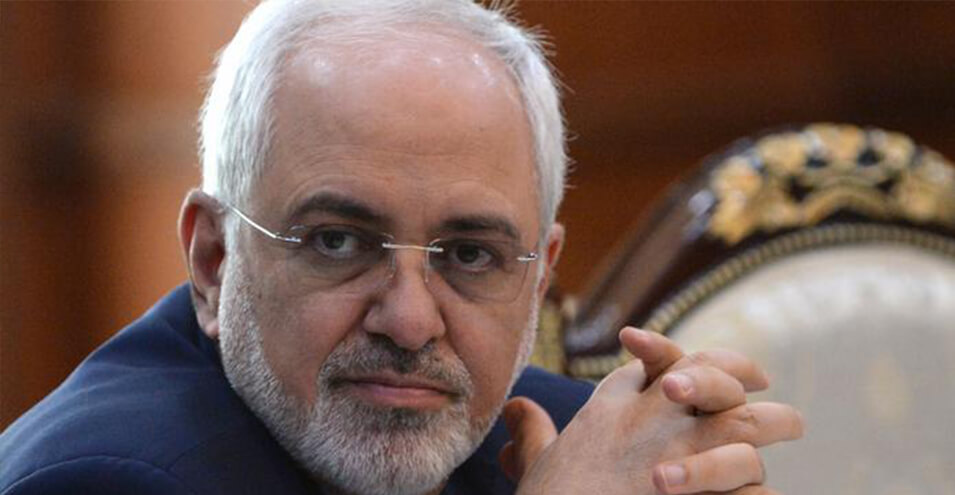
Iran’s foreign minister called America a disease “addicted to sanctions.” Referring to his “mistake” in trusting Americans, Zarif said the JCPOA will survive even without Washington’s presence. According to Zarif, Iran is prepared for the “worst-case scenario.”
Mohammad Javad Zarif, Iran’s foreign minister, participated in his first interview with foreign media following Washington’s withdrawal from the JCPOA in a conversation with CNN, describing America as a disease “addicted to sanctions.” While ruling out negotiations with the United States or renegotiating the JCPOA, he stated that Iran is prepared for the “worst possible scenario.”
In response to a question about why Iran continued with the JCPOA despite being aware of America’s “addiction” to sanctions, Zarif said: “This was one of the mistakes. The problem was that we believed America had learned that regarding Iran, sanctions create economic difficulties but do not achieve the political results they are targeting; I thought Americans had learned this lesson, but unfortunately I was mistaken in this regard.”
Last week, Ayatollah Ali Khamenei, the Supreme Leader of the Islamic Republic, in statements that were later deleted from Iranian websites and subsequently revised, said that he had made a “mistake” in the nuclear negotiations process and had allowed Iran’s foreign minister to negotiate with America.
In his CNN interview, Zarif also emphasized that while ruling out the possibility of negotiations with Washington, the nuclear agreement between Iran and world powers known as the JCPOA will continue to exist even without America’s presence.
However, Iran’s foreign minister said yesterday that the European Union is “not yet prepared to bear the cost” of preserving the JCPOA, and European measures so far have been “more of a statement of position than operational action.”
When asked whether a meeting between Rouhani and Trump is possible, similar to the meeting between American and North Korean leaders, Zarif ruled out such a scenario, saying: “No; when our previous major achievement has been discarded.” He added that “the previous agreement was a test for us to see whether we could trust America or not.”
The Supreme Leader in his speech last week ruled out negotiations with America and announced that he would prohibit it.
Mohammad Javad Zarif, in response to a question about the possibility of a “sustainable agreement” with the U.S. president, said: “This depends on President Trump. Whether he wants to do something to make us believe he is a trustworthy party or not.” Regarding the Islamic Republic’s distrust of the American president, Iran’s foreign minister added: “If we spend our time on him and he signs another agreement, how long will it last? Until the end of his presidency? Or until he leaves the place where the agreement was signed?”
Zarif also addressed the new economic policies of the Iranian government while referring to economic difficulties and the decline in the value of Iran’s national currency, saying: “The economic developments you are now seeing are due to measures that had to be taken to prepare for those days (days of sanctions); therefore, we are prepared for the worst possible scenario.”
Donald Trump, the U.S. president, announced America’s withdrawal from the nuclear agreement with Iran on May 8 (April 29). The first round of sanctions began on August 6, including in the fields of dollar purchases by the Islamic Republic, trade in gold and precious metals, and automotive manufacturing. On November 4, U.S. sanctions on Iran’s oil and energy sectors and central bank transactions will be implemented.
The return of U.S. sanctions against Iran had already begun to impact Iran’s economy even before their implementation took full effect. Following severe currency market turbulence since the beginning of the current year, the value of the Iranian rial has dropped by approximately half. The currency market turbulence coincided with an influx of Iranian citizens rushing to buy dollars; an action taken by people to protect the value of their liquid assets.
Despite this, Ishaq Jahangiri, the First Vice President, expressed optimism two days ago that despite the “critical” conditions, sanctions, and Iran’s economic crisis, the country is “not in a deadlock” and can withstand American sanctions by relying on its human resources and natural resources.
America’s withdrawal from the JCPOA and the return of its sanctions against Iran met with European opposition. Despite the European Union’s emphasis on efforts to protect European companies engaged in transactions with Iran, many of these companies have since announced the suspension of their activities in Iran.
Source: DW