Blackouts Are Crippling the Industry
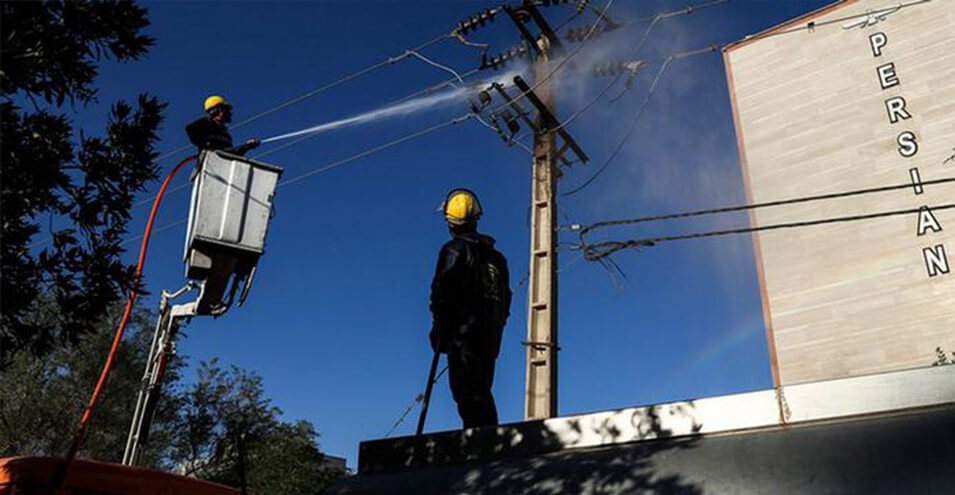
Household electricity or industrial electricity? Tehran’s electricity company has appealed to the capital’s residents for 10% savings, but industry and production are suffering the most from power outages. The synchronization of blackouts with July’s heat has also disrupted daily life.
“Power outages are currently crippling the country’s industries and production units and industrial facilities are severely suffering from this issue.” Abdolvahab Sahl Abadi, head of Iran’s House of Industry, Mines and Trade, emphasized this point, stressing that the motors and electric motors of industrial owners have suffered various damages due to recent power outages, and if this situation continues, Iran’s industrial conditions will worsen.
Sahl Abadi expressed regret that no measures have been taken in recent years to replace new and renewable energies, and industrial electricity is cut alongside household electricity: “Power outages of industrial and production units not only involve a reduction in production, but also bring other specific damages. Industrial units face power cuts in summer, and their gas is cut off in winter.”
Household consumption, industrial consumption
IRNA news agency quotes Sahl Abadi as saying: “The energy minister believes that electricity consumption should be reduced, but over the past few years there has been no positive development in new and renewable energies, and we should know that the world’s view is that even if household electricity is cut off, industrial electricity should not be cut off.”
The Ministry of Energy has not exempted industrial and production units from the scheduled power cut program, which carries the risk of a severe decline in production and worker unemployment. Of course, many factories and workshops have separate generators, but a chain of damages such as shortage of spare parts and raw materials or slow transportation are undeniable consequences in the production process. A building contractor told Deutsche Welle: “Because our construction complex is located in an area where several important hospitals are located, we don’t have power outages, but we hear about and know about others’ problems.”
The head of Iran’s House of Industry told ISNA that factories and production and industrial units have made efforts to minimize damage from power outages, but solutions must be implemented at the macro level: “Industrial owners adjust their systems so that their production costs are reduced and costs related to energy carrier consumption for them are lowered. A factory that consumes 2000 kilowatts of electricity uses modern equipment and parts, including related capacitors, to arrange conditions in such a way that it does not bear increased costs and increased electricity consumption.
Conservation call
On Tuesday, July 25, Tehran’s electricity distribution company asked the capital’s citizens to help the electricity industry with just a 10% reduction in electricity consumption, especially during peak consumption hours between 12-17 and 20-23, and to refrain from unnecessary consumption.
The consequence of power outages is not just halting the industrial wheel; daily life is also affected by a chain of damages resulting from blackouts. The Tehran Traffic Control and Management Center said that traffic police officers are personally managing traffic and passage due to disruption of traffic lights in central and western Tehran neighborhoods. The head of Tehran’s traffic police said that accident statistics have risen due to the blackout of lights, and the city’s transportation and traffic organization is not responsible for considering emergency power or solar-connected energy at intersections.
Meanwhile, citizens, especially young people, have been advised to use stairs instead of elevators during scheduled blackout days. The CEO of Kermanshah Fire Department said that since blackouts began in Tir month, there have been 96 cases of rescuing people trapped in elevators.
The synchronization of blackouts with peak July heat has frustrated citizens. A resident of a complex in western Tehran told Deutsche Welle: “Due to the blackout and the elevator not working, garbage from 48 apartments was not emptied one night. The next morning, the stench and rotting garbage had spread throughout the alley.”
No electricity exports to Iraq
Repeat calls by officials to the people for electricity conservation, changes in office working hours, or safety recommendations for commuting and working during blackouts are being made while the Iraqi government announced that negotiations for importing Iranian electricity to that country have failed and Baghdad will enter talks with Saudi Arabia.
According to IRNA, the Iranian side said it cannot resume electricity exports to Iraq through four power transmission lines. It was previously stated that Iranian electricity exports to Iraq are due to Baghdad’s one billion dollar debt to Tehran.
Hamid Chitchian, former energy minister, writes in a detailed note that the imbalance between income and expenses of the water and electricity industry puts heavy pressure on the national economy. Chitchian points out that the full cost of providing each kilowatt-hour of electricity is between 310 to 480 tomans, but the average selling price is around 66 tomans. By comparing electricity prices in Western countries or the region, Chitchian concludes that electricity prices in Iran are so low that nobody sees the point in being economical.
Source: DW