Tehran Bazaar Merchants Hold Protest Rally Against Currency Price Hikes

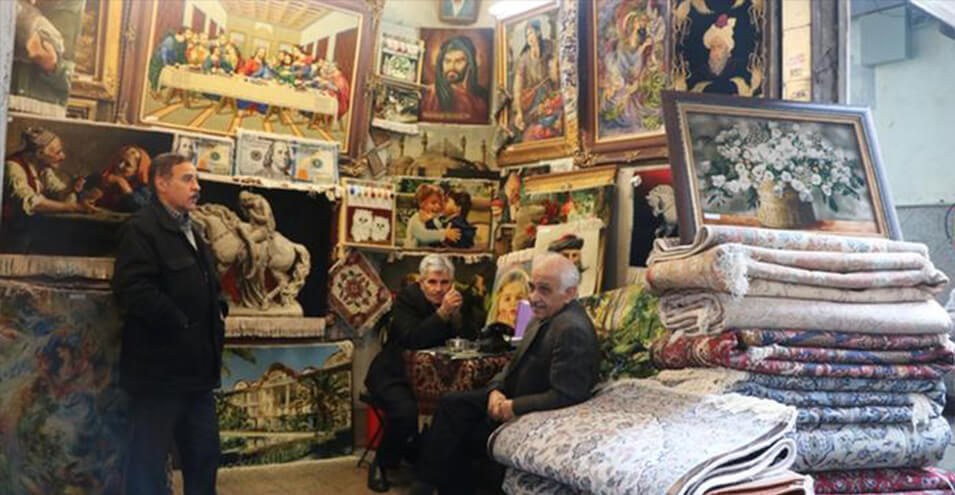
One day after mobile phone sellers held a protest gathering in Tehran, the capital’s bazaar merchants also stopped work and held a rally and march in protest against economic stagnation, currency market turmoil, and shortage of customers caused by rising prices. Reports of clashes between police and protesters have been published.
On Monday (June 25) a large section of Tehran’s bazaar merchants stopped work and held a rally and march in protest against the stagnation gripping the market, unprecedented fluctuations in currency rates, and shortage of customers caused by rising prices. The protest movement by capital merchants took place one day after mobile phone sellers gathered at Alaadin Passage and Charsou in Tehran.
Videos received by Deutsche Welle Farsi as well as videos published on social media show merchants and protesters chanting slogans such as “Close down, close down, we are all together,” calling on other merchants to shut down their shops.
Fars News Agency reported that initially “fabric sellers and merchants of the main bazaar, Charsouq and Saraye Qaisariah” closed their shops, and subsequently other merchants shut down their stores and joined the protesters.
According to Fares, police forces “were present at the scene and provided conditions for a peaceful and professional gathering of merchants” by maintaining order and calm. However, other reports indicated clashes occurred between police officers and merchants.
The Revolutionary Guards-affiliated news agency wrote, based on its correspondent’s observations: “In Amin Market, which sells household appliances, some merchants say that because we don’t know what will happen to the dollar or we won’t sell goods to customers, or first we take a deposit from them and agree with them that if the goods become more expensive from the factory, they must also accept the price difference. Under these circumstances, we cannot sell existing goods to people because we don’t know at what dollar rate we should buy goods to supply the sold items.”
According to ISNA news agency, the presence of protesters on the main bazaar street (June 15 Street) caused “congestion.” According to the same report, some protesting merchants described their action as “spontaneous and in reaction to increasing prices in the currency market.” According to merchants, during currency market fluctuations over the past month, their businesses have faced stagnation and recession.
Abdollah Esfandiari, head of the central board of trustees of Tehran’s bazaar, told ISNA about the protest by some bazaar merchants including wholesale markets, small Charsouq and fabric sellers: “The demands of bazaar merchants are legitimate and they want the status of the currency market to be clarified once and for all. We hope that by addressing their problems, tomorrow the market will return to normal.” According to Esfandiari, “bazaar merchants are protesting against currency price increases, fluctuations and unlimited increases in its rate, instability in customs and non-clearance of goods, lack of clear standards and principles for goods clearance, and so on, and given that under such circumstances they cannot make decisions and sell their goods in any way, they have put their work in a semi-shutdown state until their situation becomes clear.”
Ahmad Karimi Esfahani, secretary-general of the Islamic Association of Guilds and Bazaars, referring to the fact that “we had predicted the current market conditions beforehand,” emphasized: “We have repeatedly given necessary reminders to officials and said that the current policy cannot control the market situation.”
Mobile Phone Sellers’ Protest Movement
On Sunday, following a sudden increase in mobile phone prices, a number of mobile phone shop owners in Charsou and Alaadin Passage in Tehran temporarily closed their shops and held a protest gathering. They were protesting against sharp increases in the currency rate in the open market and consequently unprecedented increases in mobile phone prices, as well as declining sales of their products due to reduced purchasing power of the people.
Severe currency market fluctuations in recent days and months in Iran have manifested in various sectors. One of these sectors is the market for digital tools and goods, including mobile phones, which is said to have experienced at least a 30 percent price increase.
While some domestic news agencies reported the previous day’s dollar price in the informal market at 8,700 tomans, some sources reported it had reached 9,000 tomans.
Fars News Agency, in a report on yesterday’s protest gathering, quoted a passerby: “The situation is very bad; every phone price has doubled, a three and a half million toman phone has become 7 million tomans, and iPhone 10 has gone from 6 to 13 million.” One seller also said: “Prices have gone so unreasonably high that although people know they shouldn’t buy because tomorrow it will be more expensive, still their logic won’t accept paying 4 million for a 2 million toman phone.”
According to domestic news agencies, the crowd of protesters at Alaadin Passage and Charsou, who yesterday chanted slogans against “a 10,000 toman dollar,” dispersed after a while with police intervention, and merchants also ended their protest.
Source: DW