Interior Minister Announces Subsidy Removal for Three Top Income Deciles
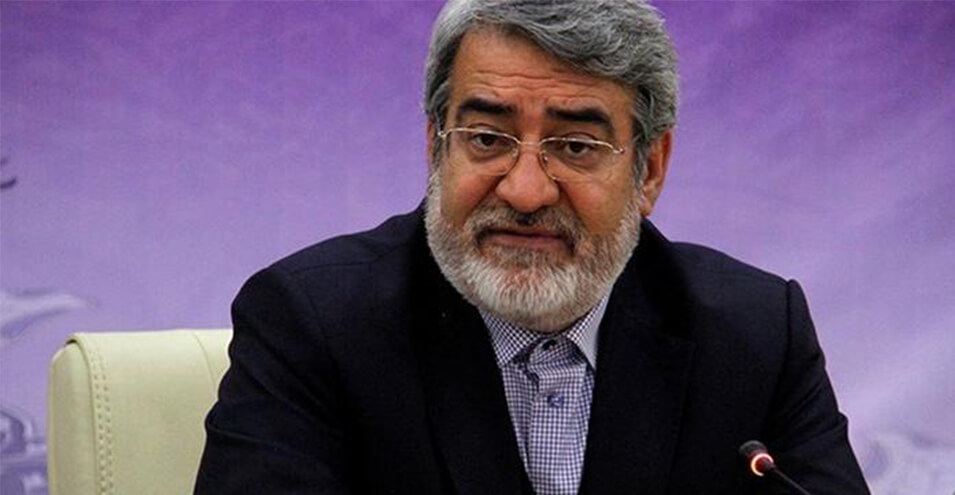
Rahmani Fazli says that according to the president’s order, resources from removing subsidies for the three highest income deciles will be allocated to development projects in provinces. Hassan Rouhani said a day earlier that subsidies should be paid but in a “targeted and conditional” manner.
Abdolreza Rahmani Fazli, on Thursday, the sixth of Dey month at noon, during a meeting of the economic resistance headquarters in Bushehr province, while appreciating the efforts of the province’s executive officials, emphasized that there is still a long way to go to reach favorable conditions.
According to Tasnim news agency, the Interior Minister said at this meeting: “In the economic sphere, the inappropriate, incorrect and outdated economic structure, which was absolute dependence on oil, must change and we are witnessing significant changes to such an extent that many of our merchants and traders have knowledge and experience, and if conditions are equal, our country also has remarkable progress in the economic field.”
Contrary to this claim and despite American sanctions that have severely reduced Iran’s oil and gas exports, the projected revenues for this sector in next year’s budget bill are 148 thousand billion tomans and about 20 thousand billion tomans more than what was determined in the sixth development plan of the Islamic Republic.
In this bill, which the head of the twelfth government presented to the Islamic Consultative Assembly on Tuesday, it is envisioned that in 2020, cash subsidies for the three highest income deciles of society will be removed.
Subsidies for Three Deciles for Development Projects
The Interior Minister, during his visit to Bushehr, in response to requests from some officials to grant more authority to provinces, said: “One of these cases is the president’s order regarding the allocation of subsidy credits for three deciles to provinces so that subsidies are paid with people’s coordination. Therefore, by removing subsidies for the three deciles of society, those funds will be allocated for the implementation of development projects in provinces.”
In the 2020 budget bill it states: “Governors across the country are authorized, in coordination with the Ministry of Cooperatives, Labor and Social Welfare and based on the Iranian citizens’ welfare database, to proceed with removing cash subsidies for the three highest income deciles. Resources resulting from the removal of cash subsidies for high-income households, upon approval by the province’s planning and development council, will be used to gradually eliminate absolute poverty as well as complete priority unfinished provincial projects in that province.”
Efforts to remove subsidies from high-income recipients began at the start of the eleventh government but have not yielded significant results so far. Gholamali Jafarzadeh Imamabadi, representative of Rasht and member of the parliament’s planning, budget and accounting commission, said last year that over 96 percent of Iranians receive subsidies.
Ali Larijani, parliament speaker, said last Thursday that the total subsidies paid to the people reach 900 thousand billion tomans and is more than double the entire budget, but because “the country does not have normal conditions,” now is not the right time to cut them.
The cost of paying cash subsidies, the amount of which has not changed since 2010, is estimated at approximately 42 thousand billion tomans annually. Larijani’s reference apparently concerns all subsidies that the government provides in various sectors.
Risk of Stalled Development Projects
President Hassan Rouhani, at Wednesday’s cabinet meeting, while repeating the figure of 900 thousand billion tomans, said: “The government pays very high subsidies in the sectors of water, electricity, oil, gasoline, diesel, educational and health services, and has no intention of removing them.”
According to ISNA news agency, Rouhani meanwhile said that subsidies should always be paid but it is necessary that these subsidies be “targeted, conditional and temporary.” He says the government is trying to either not reduce service sector subsidies or keep the reduction minimal.
Some experts believe that allocating resources from removing subsidies for the three deciles to poverty elimination and completing development projects in provinces carries the risk that if the government fails in this task, development projects will also stall and cannot play a role in job creation and recovery from economic recession.
Source: DW