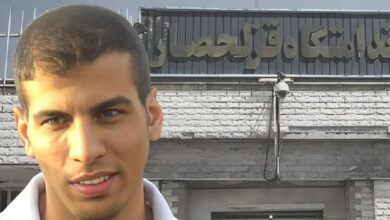
Growing Concerns for Ramin Hosseinpanahi’s Family: “Legally, Execution Could Happen at Any Moment”
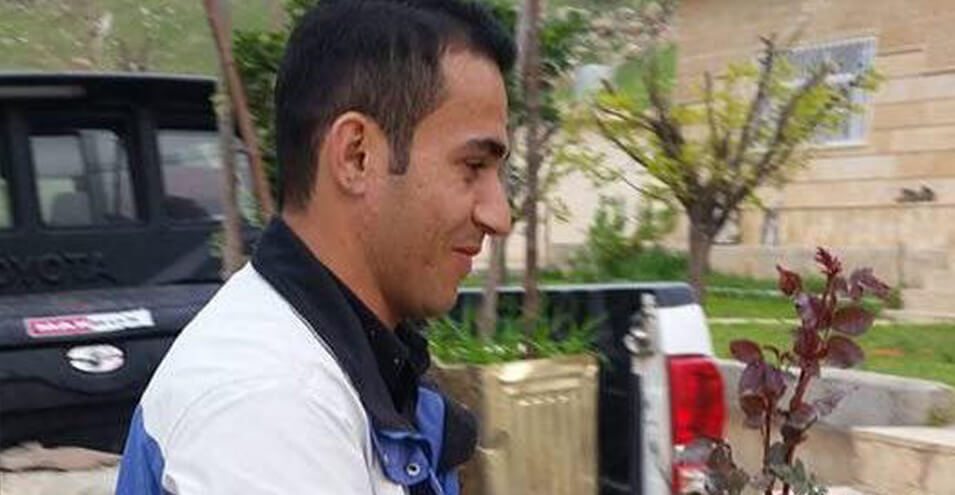
Amjad Hosseinpanahi, brother of a human rights campaign, told Iran Human Rights that with the end of Ramadan and the beginning of executions in Iran, the possibility of carrying out his brother Ramin’s death sentence has increased. Given the security situation in Iranian Kurdistan and fears of potential gatherings, the family’s concern is that this sentence could be carried out without informing the lawyer or notifying the family.
According to Hossein Ahmadinezhad, Ramin Hosseinpanahi’s lawyer, the case of this 24-year-old Kurdish political activist has been referred to the execution section of Sanandaj Court, and he is currently being held in Sanandaj Prison with a final death sentence. Amjad Hosseinpanahi told Iran Human Rights that given the finality of the sentence and previous statements by security officials, there is a “high probability” of executing the sentence.
Amjad Hosseinpanahi told the campaign about this: “Ramin’s sentence is final and a retrial has been rejected. Legally, at any moment there is a possibility of Ramin’s execution. Previously, intelligence officials told Ramin that the sentence would be carried out after Ramadan and before the anniversary of his arrest on the 3rd of Tir (June 24th). Ramadan has ended and only five days remain until the 3rd of Tir and the anniversary of his arrest. Although we don’t trust the games played by security agencies, both we and Ramin will have an anxious week ahead.”
Ramin Hosseinpanahi was shot in the abdomen, waist and legs by Revolutionary Guard forces on the 3rd of Tir 1396 (June 24, 2017) for his membership in Komele, one of the Kurdish opposition parties to the Iranian government, and was arrested. On the 5th of Bahman 1396 (January 24, 2018), he was sentenced to death in a brief court session at the first branch of Sanandaj Revolutionary Court. On the 20th of Farvardin 1397 (April 9, 2018), Branch 39 of the Supreme Court confirmed this sentence, and with the rejection of a retrial request by the judiciary, the case proceeded to the execution phase.
Ramin Hosseinpanahi’s lawyer, after the confirmation of his client’s death sentence in an interview with the campaign, declared the court process unjust. He said his client was deprived of access to his lawyer and family throughout the preliminary investigation and interrogation in solitary cells, was pressured to make a televised confession, and his refusal to make a televised confession led to his prolonged detention in solitary confinement.
Amjad Hosseinpanahi said that given Kurdistan’s security situation, in addition to the danger of execution, his brother might be executed without notification and without informing the lawyer and family: “There is a security situation in Kurdistan, and if there is a serious intention to carry out the sentence, it is unlikely that he would be given a chance for a last visit or that we and his lawyer would be informed. Because certainly, our family, relatives, and fellow citizens would not remain silent and would protest if informed of the execution. The possibility of a secret execution is another concern and worry for us, that he would not even have a chance for a last visit.”
Ramin Hosseinpanahi has been sentenced to death on the charge of “baghi” (armed rebellion), while his lawyer has repeatedly stated in interviews with the campaign and other media outlets that his client has never fired a gun, was not armed, and is a political protestor.
Hossein Ahmadinezhad, on the 20th of Farvardin 1397 (April 9, 2018), rejecting the charge of baghi, told the campaign: “Although it was proven in court that he was not armed and did not shoot at anyone, the lower court issued a death sentence on the charge of ‘baghi,’ which concerns armed operations and drawing weapons. The appeals court, without considering our defense arguments and in haste, confirmed the sentence. As the lawyer of Mr. Hosseinpanahi, I consider this sentence unjust.”
The court considered Mr. Hosseinpanahi’s activities as an example of the charge of “baghi,” an Arabic word that entered Iranian Islamic Penal Law from Shiite jurisprudence. Baghi in literal terms means transgression and violation of others’ rights and is the subject of Articles 278 and 279 of the Islamic Penal Code passed in 1392 (2013). Before the 1392 Islamic Penal Code, the charge of “moharebeh” (war against God) was usually used instead of baghi.
According to Article 287 of the Islamic Penal Code, any group that conducts an armed uprising against the foundation of the Islamic Republic of Iran’s system is considered baghi, and “in case of weapon use,” its members are sentenced to death. However, Article 288 of this law states that if members of a baghi group are arrested before any conflict and use of weapons, if the group has organization and hierarchy, they are sentenced to ta’zir imprisonment of the third degree, and if the organization and hierarchy have been dismantled, they are sentenced to ta’zir imprisonment of the fifth degree.
According to the lawyer’s and family’s statements, Ramin Hosseinpanahi was neither armed at the time of arrest nor did he shoot anyone. According to the law, mere membership in Komele party, like any other party whether armed or unarmed, does not constitute baghi.
Komele of Iranian Kurdistan, for which Ramin Hosseinpanahi is accused of membership, is a group opposing the Islamic Republic of Iran’s government that mainly operates in Kurdish-inhabited areas of Iran. After the 1357 Revolution, this group engaged in armed struggle against the Islamic Republic in Iran. Many of its members and citizens accused of connections with them have been killed, executed, and imprisoned by the Islamic Republic.
Source: Iran Human Rights