European and American Tourists’ Travel to Iran ‘Almost Halved’
The head of the “Iran Travel Agents Association” says that in the second half of the year, despite travel costs to Iran being cut in half, the number of European and American tourists has decreased by 42 percent “due to threats and sanctions.”
Ibrahim Pourfaraj told ISNA news agency that domestic agencies have reduced travel prices to Iran by around 56 percent due to currency fluctuations. However, in his explanation, he said the price reduction is because foreign agencies are aware of Iran’s currency rate situation and “they object if prices are not realistic and balanced.”
Pourfaraj described “negative propaganda against Iran” as the reason for creating “a wave of concern beyond the borders” and in another part of his interview with ISNA, he spoke of a 42 percent decline in European and American tourists.
He also criticized Iran’s tourism advertising situation, saying that these advertisements are referred to state television “while the audience of this media is not our target audience. These advertisements should be conducted on large and effective networks to have an impact.”
The head of the Iran Travel Agents Association did not clarify who requested that these advertisements be conducted on Iran’s state television, and it is unclear why government officials view the Islamic Republic of Iran Broadcasting as a tool for promoting travel to Iran in other countries.
Concurrent with Pourfaraj’s remarks, the head of Iran’s Cultural Heritage and Tourism Organization said the number of regional tourists “has grown by 51 percent.”
Despite the fact that the head of the Iran Travel Agents Association spoke of a decline in European tourists, Ali Asghar Mounssan, the head of the Cultural Heritage Organization, “assured” that their numbers would also “grow.”
Mounssan says, without providing specific explanations, “in the near future, Europeans will also realize that the country’s current problems are economic and have no connection to security issues.”
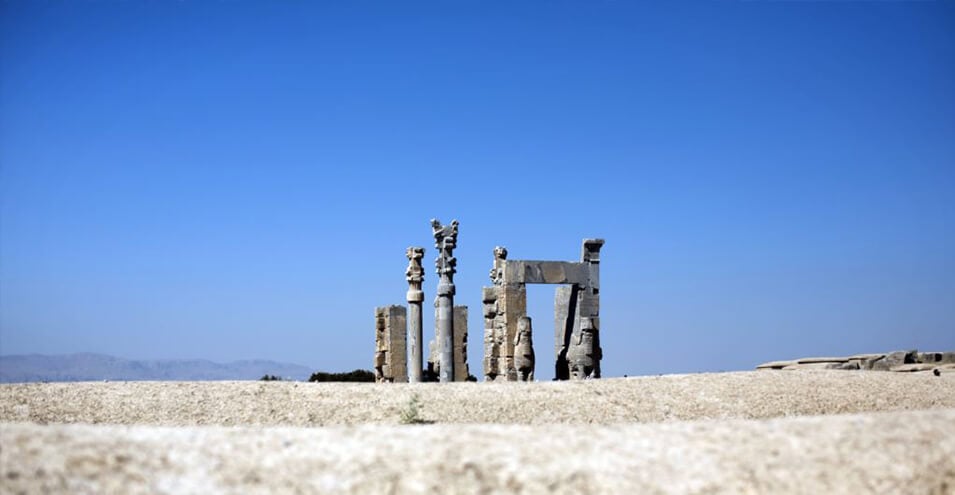
Currently, Iran, with 22 cultural/historical sites registered on the “UNESCO World Heritage List,” and Lut Desert on the list of natural sites and centers, is ranked tenth among the world’s countries alongside the United States; ahead of Japan, Brazil, Australia, Greece, and Turkey. Italy, China, and Spain are at the top of this list.
Nevertheless, over the past four decades, tourism has not flourished in Iran; especially in comparison with countries that, according to the United Nations research and cultural institution, have numerous sites for sightseeing and travel.
Various issues and problems are mentioned regarding the Iranian government’s inability to attract foreign tourists; from the perception among citizens of other countries about Iran, inadequate advertising and the absence of advertisements and consequently foreign tourists’ unfamiliarity, “diplomatic challenges” to issues such as mandatory dress codes, a shortage of hotels or the absence of recreational and entertainment centers common in many countries of the world.
Source: Radio Farda