Parliamentary Representative Warns of Consequences of Drying Up of Qom Salt Lake
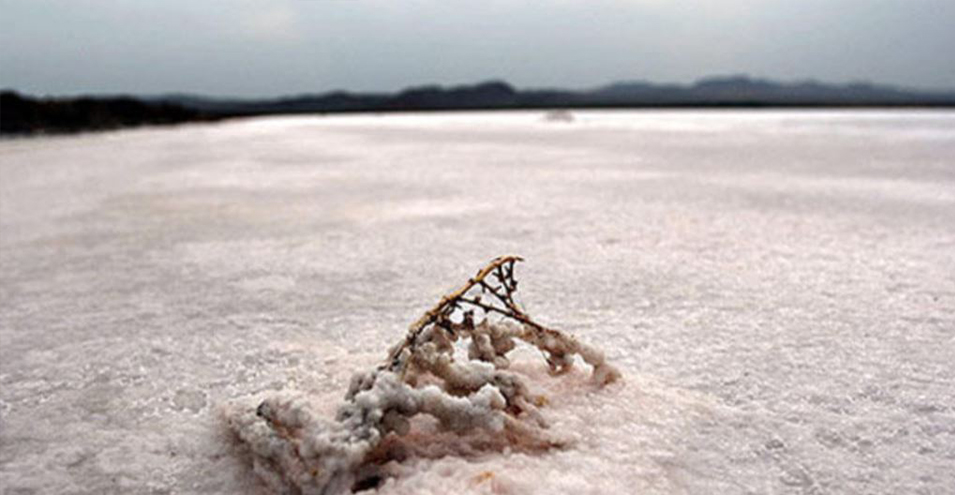
Jaber Kouchaki-Nejad, Vice Chairman of the Parliamentary Faction for Environment and Sustainable Development, warned on Tuesday, May 2nd, about “salty rain showers resulting from the desiccation of Qom Salt Lake.”
Mr. Kouchaki-Nejad, in an interview with the National Parliament News Agency affiliated with Parliament, issued this warning and called on the Environmental Organization to prevent “the situation of Qom Salt Lake from becoming critical,” adding: “Salt lakes, if they dry up, will cause the salts present in them to become suspended in the air like dust particles.”
According to him, if Qom Salt Lake dries up, “the environment of neighboring provinces, including Tehran,” will be endangered, and this phenomenon “doubles the likelihood of salty rain showers.”
This parliamentary representative further stated: “If salty and saline rains occur, all lands in the affected provinces will turn into salt marshes,” and called on the Environmental Organization to take action to protect the ecosystem of this lake.
Qom Salt Lake, like many of Iran’s wetlands and lakes, is facing a water shortage crisis.
Last Wednesday, a national conference titled “The Crisis of Salt Lake and the Phenomenon of Dust in Iran’s Central Basin” was held in Qom to examine this issue.
According to IRNA news agency, Jafar Biglou, director of the Geographical Institute of Tehran University, warned at this conference that “the drying up of Salt Lake will cause the expansion of centers of salty dust particles.”
Salt Lake is located in the eastern region of Qom and at the intersection of three provinces of Qom, Semnan, and Isfahan, and is considered Iran’s largest seasonal and hypersaline lake, covering approximately 200,000 hectares.
This lake was completely filled in past decades through the rivers of Karaj, Jajrud, Shur, Qomroud, and Qarah Chai, but is now transformed into one of the active dust centers in the region.
Previously, Ahmad Shafiei, Deputy Director of Qom’s Environmental Protection Department, reported on the second day of Mordad month in 2016 about the crisis of the shrinking expanse of Qom Salt Lake, the disappearance of villages within a 50-kilometer radius of this lake, and the progression of this crisis toward the city of Qom.
Mr. Shafiei had stated that “11 important villages in this region have been abandoned, and a number of others are managed through water supply arrangements, and if conditions continue in this manner, the remaining villages will also become depopulated.”
Water shortage and drought threaten many regions of Iran. In recent years, many of Iran’s wetlands, rivers, and lakes have either dried up or are at risk of drying up.
Uncontrolled exploitation of underground water reserves and mismanagement of water resources have also compounded Iran’s problems.
Isa Kalantari, former Minister of Agriculture of Iran, has warned that continuation of the current trend “threatens Iran’s life and civilization.”
Source: Radio Farda