Anniversary of the Murder of Dariush and Parvaneh Forouhar; a Crime Whose Main Perpetrators Were Never Tried
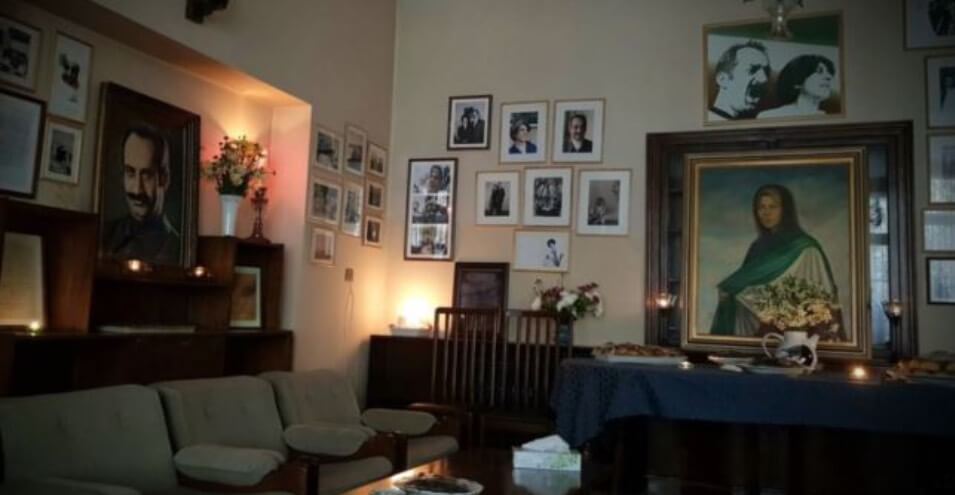
November 23rd marks the anniversary of the murder of Dariush and Parvaneh Forouhar, critics of the Islamic Republic; a killing whose principal perpetrators have never been punished, and several intelligence ministry officials accused of involvement in it were ultimately released despite receiving severe court sentences.
On the evening of November 23, 1998, Iranian intelligence ministry officials, as part of a project to assassinate dissidents and opponents, went to the home of Dariush Forouhar, secretary-general of the Iran Nation Party, and murdered him and his wife, Parvaneh Eskandari, by stabbing. The intelligence ministry of the Islamic Republic later announced that several of its employees were responsible for the murders of Dariush Forouhar, his wife, Mohammad Jafar Pouyandeh, and Mohammad Ali Mokhtari, two other victims of the serial killings. Although the number of victims exceeded this list, the Mohammad Khatami government recognized only these four as victims of the serial killings. However, in the years following that period, the case of the serial murders, which led to the arrest of Said Emami, former deputy security chief of the intelligence ministry, and several other ministry employees, experienced numerous ups and downs. These included the death of Said Emami in prison, which Islamic Republic officials claimed was suicide by ingesting cleaning products.
During this time, Mostafa Kazemi, then acting deputy security chief of the intelligence ministry, and Mehrdad Aalikhani, director-general of the intelligence ministry, were sentenced to life imprisonment for “ordering and issuing commands for four murders.” Both are currently free.
Ali Mohseni, a member of the intelligence ministry’s operations department, was sentenced to qisas (retaliatory execution) for his role in the murder of Parvaneh Eskandari, after payment of half the full blood money to the perpetrator. Hamid Rasouli and Mohammad Azizi, mid-level managers of the intelligence ministry, were each sentenced to life imprisonment for ordering and issuing commands for the execution of the murder of Dariush and Parvaneh Forouhar.
Those sentenced to qisas, following an appeal of the sentence and pardon by the children of Dariush and Parvaneh Forouhar, were sentenced to 10 years in prison and are reportedly currently free.
Additionally, Qorbanali Dori Najafabadi, the former intelligence minister, who resigned from his position following the intelligence ministry’s admission of his employees’ involvement in the murders, despite being identified by the accused as having been informed of the killings, was never prosecuted. This is despite the claim by Parasto Forouhar, the victims’ daughter, that two principal suspects in the case had identified Dori Najafabadi as the one who ordered the murders. Dori Najafabadi is currently the representative of Ayatollah Khamenei in Central Province, Friday prayer leader of Arak, a member of the Assembly of Experts, and a member of the Expediency Discernment Council.
According to Parasto Forouhar, detained intelligence ministry employees repeatedly stated in their interrogation documents that the murder of opponents was among the routine assignments of that ministry and that senior officials of that ministry were aware of it. However, none of this led to serious charges being brought against the then-intelligence minister or clerics close to Iran’s security apparatus, including Mohseni Ezhei. In contrast, security officials have either prevented or imposed restrictions on commemorative ceremonies marking the deaths of Dariush and Parvaneh Forouhar each year.
Source: Voice of America