Sword and Love Confrontation in Iran
Sara.Kh. FCN News Agency: A shared and widespread concern has preoccupied officials dealing with affairs in Iran. Politicians and those who for consecutive decades have conducted state matters through Islam-infused bread and plundered the people’s tables, are more agitated than others in this situation.
The growing tendency toward Christianity among various segments of the population, particularly among youth and university students, is the source of this shared concern. Because history is a truthful witness and confirms that in different periods, the infrastructural foundation of social, political, and economic changes in Iran has been strengthened through the transformation of viewpoints and the bold movements of young people and educated university-level segments.
This fear and anxiety of Iran’s power holders is so intense that they are unwilling to officially or even unofficially announce statistics on this matter. They even deny statistics announced by other sources. However, these very statistics indicate that more than one million new Christians have secretly converted from Islam to Christianity.
Meanwhile, officials are oblivious to the fact that their simplistic approach to this enlightening and salvation-bringing movement leads nowhere, and merely serves to obscure the issue.
Of course, the clubs of money, force, and deception have been set in motion in various forms against this movement and descend upon the unified body of new Christians.
Threatening Warnings
Meanwhile, we have witnessed that most of the regime’s megaphones, including Friday prayer leaders, have recently been warning about this event and, in an imperative tone, asking people to watch their children.
On the other hand, the Islamic Republic regime, to stem a flood that brings salvation instead of destruction, has resorted to punitive and violent confrontations against new Christians.
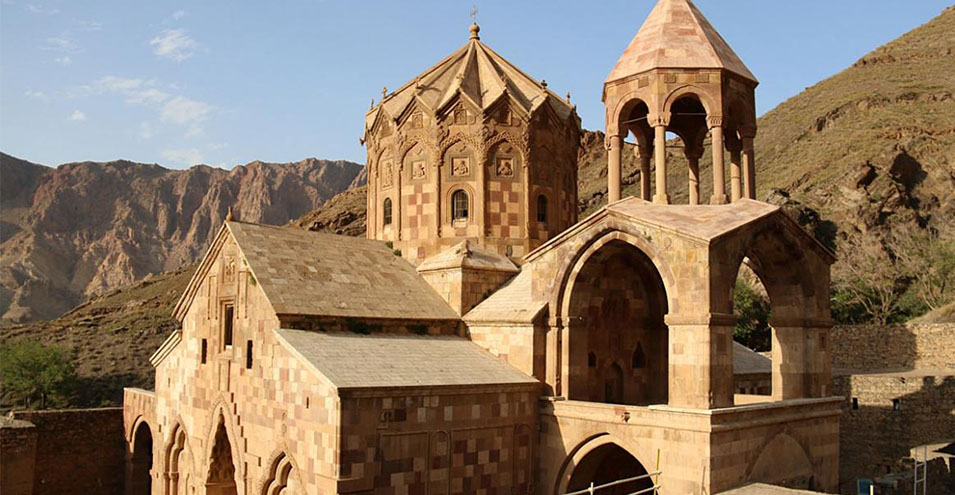
This is while Iranians’ inclination toward Christianity has roots in the history of this land and dates back to before the Arab invasion of this territory.
Confronting Christian Gatherings
The organized and formal development of Christianity in Iran, however, occurred through the formation of Persian-speaking Christian groups from the Qajar period and coinciding with the translation of the Holy Bible.
From that time on, these Christian groups, which were mostly Protestant, began constructing churches in various Iranian cities.
The construction of hospitals and Christian schools also strengthened simultaneously in various cities.
But with the occurrence of the Islamic Revolution, many of these churches were destroyed or closed, and officials declared all forms of evangelical activity of Persian-speaking Christians illegal.
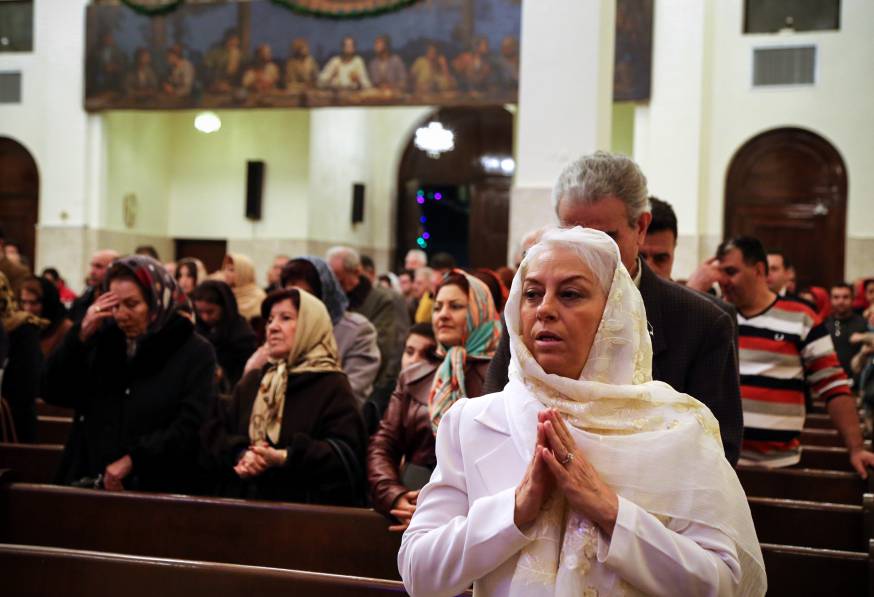
Such that now only a number of Persian-speaking churches operate in Tehran, and in other cities, constructing Persian-speaking churches or repairing and reopening churches is considered a crime. Even in Tehran, the presence of Muslims in churches or Christian religious ceremonies is considered evangelical and illegal activity.
Unprecedented Growth of House Churches
Meanwhile, the increase in house churches in the country is an example of the futility of the regime’s measures in suppressing the tendency toward Christianity in Iran.
Despite the imprisonment and torture of those involved, this remains one of the primary concerns of security and religious institutions.
The number of house churches in Tehran has increased to such an extent that not only religious authorities and security institutions but also prayer leaders in various neighborhoods of the capital are concerned about it.
Sheikh “Nasratollah Hatfi,” prayer leader of the “Sayed Sajjad” Mosque in Tehran, recently warned, referring to the promotion of Christianity among various segments of society, that today Christians have presented the Gospel to our young people in the most beautiful form of propaganda, and dozens of homes have been established as churches in various neighborhoods, particularly in the Bani Hashem neighborhood of Tehran, promoting Christianity.
Raiding Private Gatherings
The violent confrontations against Christians in the country have become so frenzied that even their private and family gatherings are subject to raids by government agents.
The collective arrest of Christian citizens at a family celebration in a garden in Firouzkouh county is an example.
Such confrontations occurred this summer at family celebrations and wedding ceremonies of Christians in Amol, Mashhad, Gorgan, Tehran, and Shiraz.
The transfer of those arrested in these raids to unknown locations is another measure that officials consider, believing that terrorization could be an effective tool against the development of Christianity in Iran.
Christianity’s Growth in Religious Cities
However, none of these threatening and violent tools have been able to prevent saved new Christians from continuing on the path they have chosen. This failure has not stopped the evangelical activities of those acting with malice against Christianity’s growth in Iran, and Christians are working with full force to save their fellow countrymen.
Interestingly, officials in the country, despite acknowledging this failure in closed-door sessions, are unwilling to accept the reality and continue their hostility.
Vahid Khorasani, a well-known religious authority in Qom, recently warned, referring to the fact that “house churches” are causing an uproar, that Muslim youth are converting to Christianity.
He even emphasized that in the city of Qom, young people have abandoned Islam and become Christian.
This religious figure claimed to have statistics of these new Christians to support his statements.
This is while during the Pahlavi regime, despite the freedom of Christians to preach and all forms of propaganda activities, the inclination of Muslims to change religion in Iran was not significant.
Disregard for Reality
Amidst all this, the regime’s power holders are unwilling to accept reality and address the pathology of the methods they employ to keep people Muslim.
They cannot even accept that violence, imprisonment, and torture are unable to influence Iranians’ tendency toward natural and historical inclinations toward Christianity.
While the evidence speaks to this claim.
For example, according to some religious figures, religious societies that once symbolized the established values of Islam are now in an inappropriate position.
Such that societies are riddled with disorder and lack of planning and have provided an excuse for the strengthening of society leaders and the gathering of corrupt and opportunistic individuals.
This is while for centuries mourning for Shiite Imams has held a special place in the religious and belief systems of some segments, and the ignorant masses, by participating in such ceremonies, gave those in power the opportunity to exploit their beliefs.
But now circumstances have unfolded such that youth prefer to participate in gatherings of the faithful rather than attend such ceremonies, and benefit from the teachings of Christianity.
And these accounts have filled officials with fear and subsequently endless reactions.
There is no doubt that if these obstinate figures were willing to peruse history, they would find that Christianity is rooted in the blood of Iran and Iranians, and violent confrontation with the growth of this mystical path in our land brings nothing but harm to government officials.
A Page from History
The birth of Jesus Christ occurred during the reign of Parthian king Phraates IV or, according to one account, Phraates V, and the crucifixion of Jesus Christ took place during the reign of Artaban III, who ruled from 11 to 38 A.D.
After the crucifixion of Jesus Christ, his disciples scattered throughout Asia and Europe. The Parthian kings supported Christian preachers for two reasons.
First, their kingdom was based on religious freedoms and respect for all beliefs, and second, Rome was considered their arch-enemy, and supporting Christians could also be politically beneficial for them.
Moreover, during this period, Christian preachers in Iran were warmly received by the people, because the message of Christ’s love, affection, and forgiveness, aside from being compatible with the character of the Iranian masses, was harmonious and consonant with the ideas and teachings of Mithraism or the Religion of Mithra, one of Iran’s ancient religions that had many followers among the masses.
Thus, Christians in Iran enjoyed nearly two hundred years of freedom to act and preach, and countless groups of Iranians converted to this faith. Major Christian centers were in the western provinces and in the northeastern territories of Iran.
At the beginning of the third century A.D., Iran’s religious atmosphere, and subsequently that of the Middle East and Europe, changed. In Iran, Ardashir I, who was the ruler of one of the Iranian tribes in Pars and had close family relations with Zoroastrian leaders, rebelled and fought with Artaban V, the last Parthian king.
Ardashir’s victories and especially his son Shapur’s victories—Shapur defeated and captured the Roman Emperor Valerian in 260 A.D.—strengthened the foundations of the Sassanid state. The leader of the Zoroastrian clergy or Mobeds at that time was a person named “Kartir,” who had considerable influence and power in the Sassanid leadership apparatus.
Ardashir I and his son controlled the power of the Zoroastrian clergy, but nevertheless, religious fanaticism reached its peak during the reign of Shapur I.
However, the establishment of a system of social classes during this period, which was shaped to the benefit of influential minorities and the detriment of the majority of people, over time caused discontent among the masses.
Under these circumstances, the religion of Christ and its mystical attractions drew many Iranians toward it. While in the Sassanid Zoroastrian religion, the king was the intermediary between God and God’s servants, in Christianity, humans were recognized as God’s children, and their relationship with God was considered a direct one. From a social perspective, Christianity also contained a form of socialism and rendered the power of large landowners and the wealthy insignificant.
Such that all believers lived together and shared in everything. Simple living and contentment, which were principles of Christianity, spread among the faithful.
In this way, Christians became beloved among the people through thanksgiving and worship of God and generous love for others, and the inclination toward Christianity grew.
In 313 A.D., when Constantine, the Roman Emperor, declared Christianity as the official religion of Rome, politics became intertwined with Christianity, and the consequence of this mixture was the persecution of Iranian Christians in the Sassanid Empire.
For political reasons, during the reign of Shapur II, the ninth Sassanid king, the persecution of Iranian Christians intensified. But what was the result?
Did the powerful succeed in eradicating Christianity in Iran or preventing its growth? If they and other powers opposed to Christianity’s growth in Iran succeeded in different periods, we would not be witnessing the unprecedented growth of Christianity in Iran today.
What now lies before Iranian officials is a repetition of history.
Whereas through a simple evaluation and survey, they could discover what Islam in the past 14 centuries and the last 4 decades has done to Iran and Iranians.
Final Word
In the current circumstances where corruption, crime, and neglect of human values have prevailed and threatened personal and social security, it is fitting that those in power who claim to be reformist in Iran judge the changes occurring among new Christians away from fanaticism.
And by conducting field research and evaluating the feedback on Christianity’s growth in Iran, make decisions to confront this movement.
New Christians do not expect support from officials. But in circumstances where our country experiences cultural decline and humanitarian indicators, it is hoped that Islamic preachers will refrain from confronting Christian preachers, so they can work to save their fellow countrymen by utilizing shared teachings.
Only in this way can we hope that lofty and pure thoughts will shine forth and we all be freed from narrow-mindedness, pessimism, and hatred.
Then, by striving to understand each other, we will be equipped with the weapon of love and will be able to work, with respect for each other’s beliefs, to form and maintain a religious society.
There is no doubt that current challenges in Iran threaten followers of all religions.
And disregarding the results of futile and devastating actions in these circumstances will burn the dry and wet together.
Because the prevalence of addiction, corruption, crime, and felony knows no rich or poor and will seize everyone.
May God have mercy and compassion on the hearts of Iran’s power holders and, with the tune of perpetual grace, soften their hardened hearts.