Salt Lake Hawz-e Sultan in Qom Dries Up Due to Drought
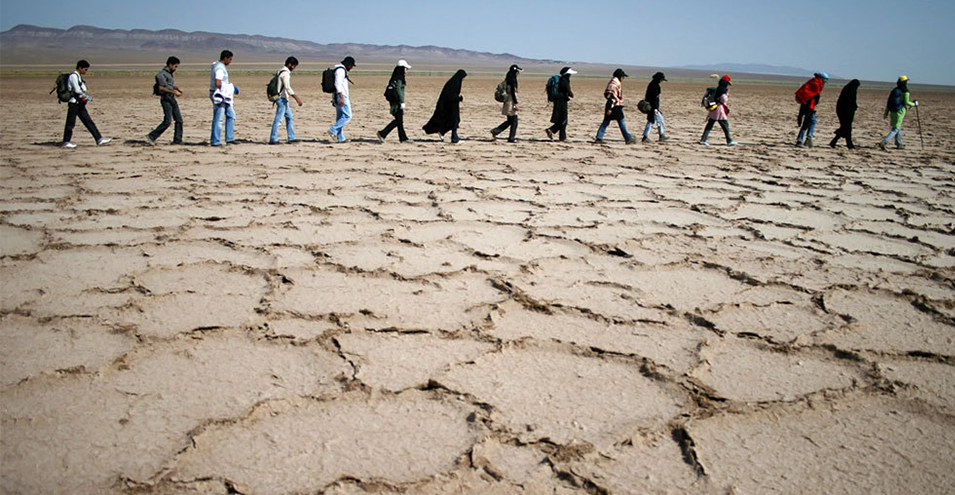
Bahar N., FCNN correspondent: Hawz-e Sultan, Iran’s largest natural mirror, is facing drought. The drought has gripped Qom Province since 1979, and Hawz-e Sultan, located 40 kilometers from Qom, has not been spared from the consequences of this phenomenon.
Available evidence suggests that illegal well drilling, improper land use, and poorly engineered dam construction in recent decades have intensified this problem.
According to Seyyed Rahman Daniali, head of environmental protection in Qom Province, in an interview with the Green Branch newspaper, the crisis in this lake has been more severe than in Lake Urmia, and this issue was mentioned by officials several years ago. However, due to lack of follow-up and coordination among executive agencies to revive the lake, and the construction of a dam upstream, a serious crisis threatens this lake. He emphasized that Qom Province lies 100 percent within the lake’s watershed and stated that Tehran, Alborz, and Markazi provinces cover 90 percent of this watershed area. Given the vast expanse of this lake, if the crisis is not controlled, it will have massive effects on these provinces.
This natural attraction is located 40 kilometers north of Qom city, 85 kilometers south of Tehran, and on the edge of the Persian Gulf Highway. This lake, also known as Lake Shahi and Lake Saveh Qom, covers an area of approximately 240 square kilometers in the northeast of Qom city with the Alborz mountain range to its north.
Hawz-e Sultan lies at an elevation of 710 meters above sea level, and with annual rainfall of 100 to 120 millimeters, this area falls within low-rainfall regions. It has four sections: the salt crust (main section), marshy edges, ecological boundaries, and plains.
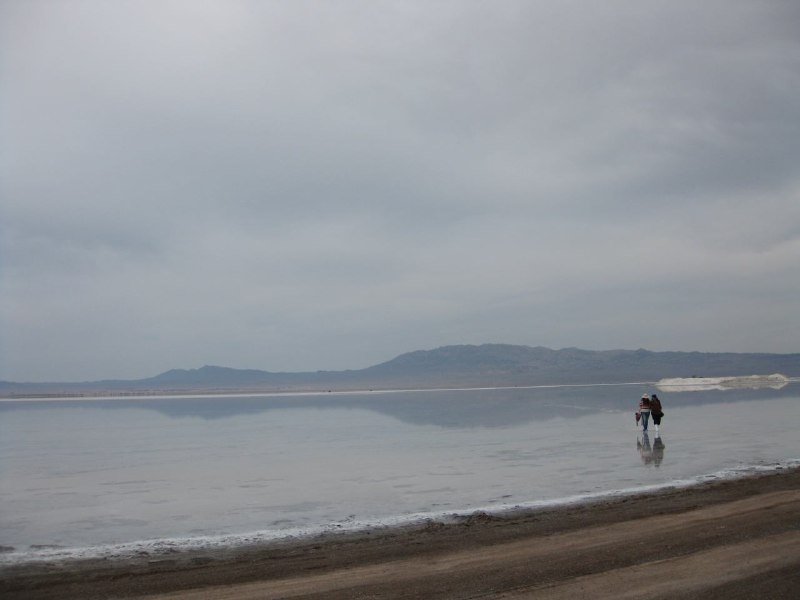
What appears today as salt flats once nurtured valuable species within itself. Animals such as Asian wild ass drank from this lake, and even now, during winter, layers of fresh water occasionally form in some areas, serving as watering places for migratory birds.
According to the former head of the environmental protection office in Qom Province, Hawz-e Sultan is actually a wetland. One of five wetlands in Qom Province that has been recognized by the international Ramsar Convention.
Some bacteria, algae, and sediments of this wetland have medicinal or industrial value. Most notably, there are birds that pass through Hawz-e Sultan. Crested grebes, various pigeon species, and migratory birds such as gray geese, pintails, cranes, various eagles, and others can be counted among these birds.
In the region, mammals such as rabbits, desert mice, foxes, and occasionally gazelles are also seen. Among the reptiles in the area, the presence of snakes and lizards, which play a role in biological pest control, is notable. Various spiders, beetles, termites, and rare ant species are widespread around the lake.
If Hawz-e Sultan has no water, Artemia, which is the indicator species and active component of this natural attraction, will not reproduce. Consequently, migratory birds that feed on Artemia will not come to this region. This is exactly what happened to Hawz-e Sultan this year, leaving the white carpet of this wetland lifeless.
The head of the environmental protection office in Qom Province says: This wetland becomes submerged during floods, but during droughts, it resembles a flat, barren plain and becomes a source of dust generation. The very dust that summers make the people of Qom hold their breath and turns the sky mustard-colored.
Researchers have discovered various plants such as yellow everlasting, sodawood, spinach, glasswort, and desert asphodel in this lake, and these plants are used in pharmaceutical preparation. Researchers have conducted experiments on the salt present in the lake and concluded that it contains valuable and important minerals such as magnesium sulfate, magnesium chloride, sodium chloride, and sodium sulfate. This salt is used in industrial applications. Interestingly, the magnesium extracted from Hawz-e Sultan’s salt lake is approximately 35 to 50 times greater than salt extracted from seawater, and from every 100 kilograms of salt extracted from this lake, 10 to 14 kilograms of magnesium is separated.
But let those in charge understand that to comprehend this catastrophe, reading and knowing the history of this lake is enough to identify the causes of such problems.
Maybe with a little thought, instead of cursing and wishing ill for the dear people of God, we should ask forgiveness from God and seek salvation from Him. Just as human principles also dictate that what you do not like for yourself, do not like for others. So, you who hold the fate of this Aryan land in your hands, show a little compassion, a little prayer, a little love. Drought and natural disasters are the feedback of poisoned thoughts that you yourselves have sought.