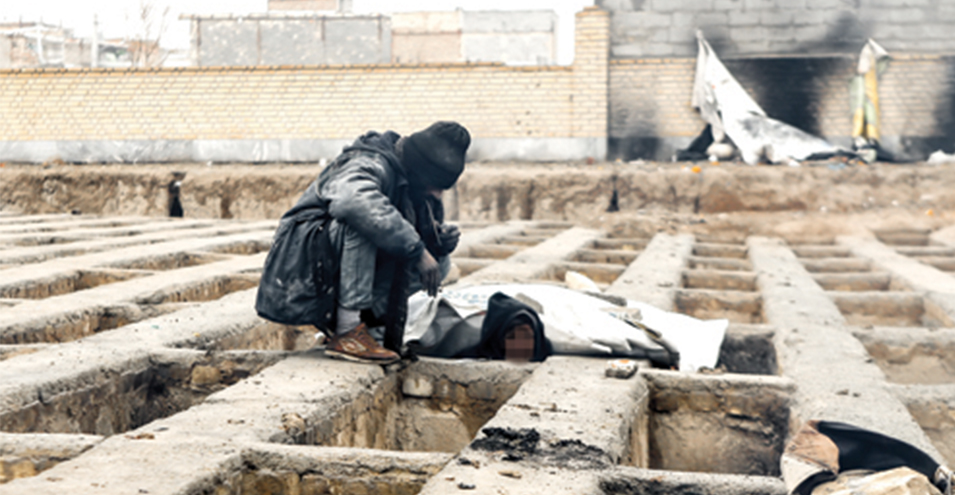
Government Indifference Amid Rising Corruption and Addiction in Iran
Sara.Kh. CNN Correspondent: The age of addiction among students has decreased, and the statistics of female heads of households in our country show an upward trend. Parallel to these problems, we are witnessing an increase in unemployment rates, especially among women.
These alarming realities together are a warning bell in the field of social health that is expected to wake up responsible authorities. However, the indifference of officials continues in a way that is questionable to such an extent that a sociologist in an interview with CNN warns that perhaps some officials deliberately and knowingly pursue the development of poverty, corruption, addiction, and lack of household support in our country.
Let us review some of these realities.
Declining Age of Addiction in Schools
Hamid Reza Pourioussef, one of the managers of the Welfare Organization, in an interview with ISNA, reported a decrease in the age of addiction among students and emphasized that divorce, addiction, and violence are three serious harms that require attention.
According to this official, the age of addiction in high schools has decreased to 15 to 18 years.
Teaching Hijab and Chastity to Unsupported Women
Shahnedokht Molaverdi, Vice President for Women and Family Affairs, recently announced that based on the latest general population and housing census, the number of female heads of households in the country is growing.
According to Mehr News Agency’s report citing this official, this trend increases social harms for women in society, and addressing it requires comprehensive and purposeful planning in all fields. While the focus of the programs introduced by this official includes supporting 550 proposed projects, of which 250 projects aimed at creating employment for women, teaching and promoting the culture of hijab and chastity in the country are being implemented. Meanwhile, it is unclear how teaching in the field of hijab and chastity can protect female heads of households from harm during unemployment and financial poverty.
Statistics show that the number of female heads of households without spouses in the country has now reached more than 2 million people.
While according to Anushiravan Mohseni, head of the Welfare Organization, this institution has queued more than 120,000 families for services to such victims, it is unclear when they will receive support. He emphasized that most of these families are headed by women.
This is while, apart from targeted support from the Relief Committee and the limited capacity of the Welfare Organization, no other institution is responsible for this task.
While the financial inability of female heads of households puts them at risk of various harms and also makes their children vulnerable.
Authorities Do Not Take Threats Seriously
Sohila Qasemi, a sociologist, in an interview with CNN, emphasized that in the last four decades, none of the governments in the Islamic Republic have had a specific and effective program to combat social harms.
She also reminded about the lack of attention to reviewing feedback from incomplete programs in this field and said: Unfortunately, so far, the majority of the country’s support capacity has been spent on expanding the body of organizations and institutions in charge, and this matter is more of a concern than supporting affected individuals.
According to Qasemi, such a trend indicates the reality that Iranian authorities have not yet believed that the spread of addiction in young ages or the growth of statistics of female heads of households is a serious threat to social and even security health in the country.
This sociologist considers the lack of researchers’ access to up-to-date statistics as a result of another weakness in Iran and believes that this weakness is the most appropriate way to cover up the inattention and negligence of managers.
Deliberate Negligence of Authorities Regarding the Spread of Addiction and Corruption
According to Qasemi, the practice where every now and then a manager announces a warning or unofficially voices a statistic is only intended to pass the ball to the other side. Because there is no follow-up in the news, and no manager considers himself accountable for his own threatening statistics.
She emphasizes that the current conditions indicate a kind of lack of supervision in the field of social harms.
Qasemi further predicts that the continuation of this situation will lead to the development of corruption and ruin in all classes, especially the adolescent and youth age groups of Iran.
The irreparable nature of ignoring these consequences, according to Qasemi, is somewhat suspicious to such an extent that she emphasizes: In some cases, such as declining age of addiction among students, the reaction of authorities is viewed with suspicion, and it seems that their indifference has gone beyond weak management and they deliberately fuel corruption.
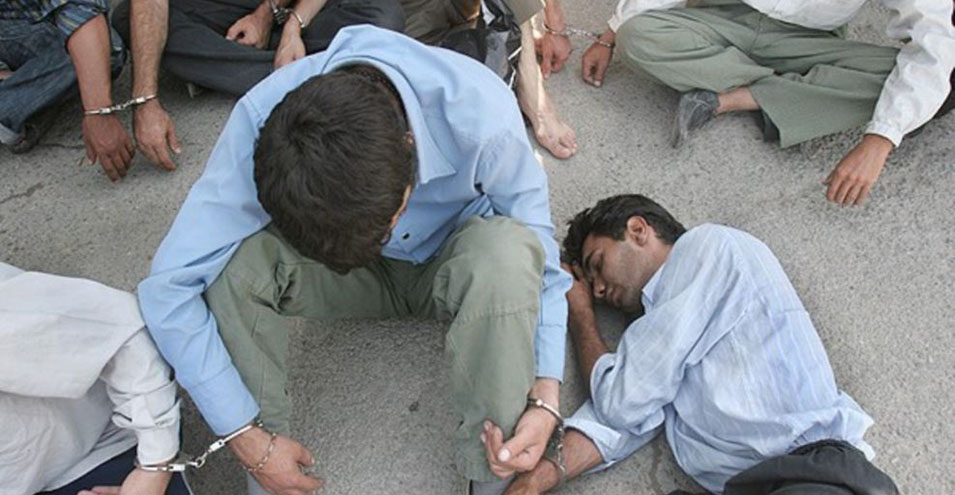
The decline in marriage statistics and the increase in divorce and the prevalence of HIV infection with a tendency toward sexual relations, coupled with an increase in the number of addicted women and criminal children, according to Qasemi, are serious signs of a social crisis in Iran that one cannot easily ignore. While this indifference by Iranian authorities has been remarkable in recent decades.
From the perspective of this sociologist, the lack of a clear and specific program in development plans during different periods is the obvious reason for this indifference.
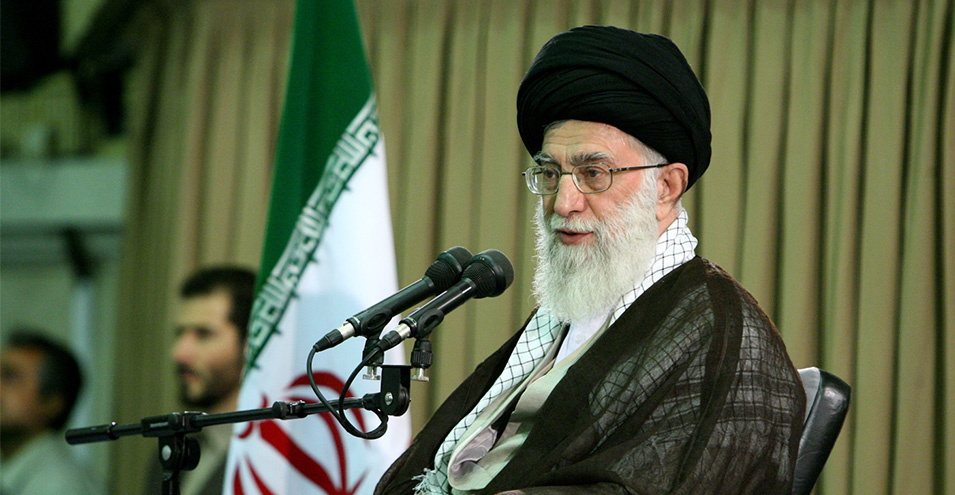
These undeniable realities tell a part of the conditions prevailing in Iranian society. Therefore, to prevent the exacerbation of these harms, it is expected that the supreme leader, as the first person of the country, will go beyond mere recommendations and issue decrees to identify the factors affecting the development of these harms. So that those who deliberately and perhaps to gain enormous profits fuel these harms are identified and punished.
Of course, it cannot be overlooked that the future is uncertain and the performance of our country’s authorities in recent decades does not provide much hope for the realization of these wishes.
To the point that every year we say: too bad compared to last year, and the growing regrettable development of harms has caused despair about controlling the situation. In other words, there is a fear that the development of corruption and addiction in Iran will follow an ascending trend at an incredible speed, and we will reach a point that has no proportion to the identity and capabilities of Iran and Iranians.