FC NN Interview with Arbaeen Pilgrims Returning from Iraq
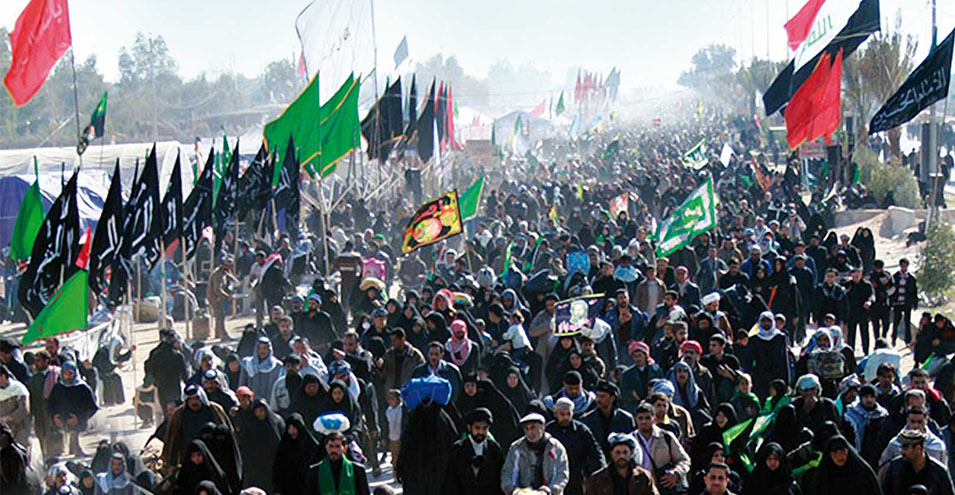
Sohila.Kh. FC NN News Agency: A number of our compatriots consider the political objectives and self-interest of certain individuals as the main factor in inciting people’s sentiments to participate in the Arbaeen procession and travel to the holy shrines of Iraq at this time.
In conversations with FC NN, they claimed that the authorities of the Islamic Republic have exploited people’s religious sentiments and inclinations, and without proper planning, have sent millions of people to Iraq.
The increase in transportation costs for travel in Iran and Iraq was another criticism raised in this discussion.
These compatriots consider their objective in participating in the Arbaeen ceremonies to be the preservation of unity for the realization of the goals of the third Imam of the Shiites, and they emphasize that such a sacred goal should not become a political tool for the rulers of the Islamic Republic system and a means for opportunists to exploit opportunities.
Of course, some government officials have also criticized the provision of services to pilgrims during the Arbaeen journey.
The head of the oversight commission of Tehran City Council is one of them. According to him, the provision of government services in this journey has been uncoordinated this year.
According to Nasim Online report, an official also criticized the increase in travel costs and the collection of mandatory insurance fees from pilgrims to the holy shrines.
In his view, this government action was a step to revitalize the country’s insurance industry, especially since Arbaeen travelers did not even receive insurance certificates, while each one was forced to pay approximately 25,000 tomans.
Officials’ Indifference to Pilgrims’ Problems
Ibrahim, an Azerbaijani citizen, went on this pilgrimage journey with his family and returned. He believes that Iranian officials are not honest with people in this pilgrimage program and want to send large crowds to Iraq every year at any cost, without paying attention to the consequences and costs that fall on people’s shoulders.
The staggering costs of Iranian services in Iraq and their ineffectiveness in ensuring pilgrims’ welfare, according to this compatriot, indicate the indifference of Islamic Republic officials in this regard.
People’s Problems on the Return Route
The return of Arbaeen travelers began from the end of last week from the three borders of Shalamcheh, Chazabeh, and Mehran and is expected to continue until the tenth of Azar of the current year.
While the commander of Law Enforcement has claimed that the conditions for passage and people’s return are appropriate at all these borders, Ibrahim emphasized in his conversation with FC NN that traffic on narrow road axes, overcrowding beyond the capacity of the route, and unbearable delays have caused problems for people.
According to this Azerbaijani compatriot, the photos that people have posted on social networks clearly reflect the reality of the roads, and it is not inappropriate for the Islamic Republic officials to accept the reality when they see these and stop denying the problems.
Rising Costs of Travel to Iraq
The difference in travel costs this year compared to last year for trips to Iraq has also been criticized by a number of our compatriots.
Mojtaba, a citizen from Shiraz, said in this regard: “This year, every Iranian was forced to pay 40 dollars for visa costs, 24,800 tomans for insurance costs, and 10,000 tomans for agency fees. Individual and group visa costs were the same. Whereas last year, this amount was 30 dollars for group visas. In 1393 (2014), there was no mention of mandatory insurance costs and everyone was exempt.
Of course, in 1393 (2014), emergency free visas were also given to people, which sometimes involved three-day delays at the border. However, it was an incentive solution for those who did not have financial means, which they eliminated with the rush of people for this journey. In that year, exit fees at the Shalamcheh and Chazabeh borders were also waived.
Last year, exit fees from land borders were also waived. But this year, to exit from the land border, we had to pay 12,500 tomans, and these changes, in the opinion of many of my fellow travelers, have only one indication, and that is the officials’ exploitation of people’s enthusiasm for this journey.
Unfortunately, officials encourage people to take this journey on one hand and empty their pockets on the other.”
Travel to Iraq: A Compensation Route for the Hajj and Pilgrimage Organization
Omid, another citizen who traveled by air to Iraq, criticized the lack of planning by the officials of the Hajj and Pilgrimage Organization and said: “In my opinion, this journey is only a way to fill the pockets and consolidate the power of gentlemen who have been shaken by the suspension of hajj travel. Otherwise, they are not at all thinking about the development of spirituality and the implementation of Imam Hussein’s goals.”
Omid added: “The irresponsibility in this year’s journey was such that border officials designated my exit border as Mehran and my wife’s exit border as Shalamcheh, and the crossing time had no coordination with our flight date and time. For this reason, we faced many problems and no one was accountable. I don’t know in which part of Imam Hussein’s teachings it says that a man should abandon his wife in a war-torn country for pilgrimage.”
Of course, this compatriot also criticized the provision of opportunities for various forms of exploitation in this journey and said: “The announcement of an official rate of 1,100,000 tomans for flights to Iraq by government officials caused prices to rise. Whereas some pilgrims had managed to get return tickets for 900,000 tomans.”
According to this Arbaeen traveler, these exploitations were extensive enough that even pilgrims’ vehicle parking in a desert called a parking lot brought income to officials. Of course, according to him, it doesn’t make much difference whether this money went into the pockets of the Iraqi side or the Iranian side.
Pilgrims Lost in Iraq
Maryam, a citizen from Shiraz, considers the significant difference between pilgrimage programs in Iraq and tour advertisements as debatable.
According to her, the advertisements claimed that pilgrims could visit the shrines of prophets including Adam, Noah, Hood, Salih, and even the status of Gabriel in Najaf, Kufa, and Karbala. Viewing the place where Prophet Noah’s ship was built and the status of 124,000 divine prophets in the Suheilah Mosque were part of these advertisements, which according to Maryam had no traces in Iraq.
This compatriot, criticizing this marketing method, emphasizes that some Iranian pilgrims, alongside respecting the Shiite Imams in their journey to Iraq, also intend to visit other sites and even historical attractions. Therefore, they should not face fraud and become lost in Iraq.
Consequences of Statistical Growth of Travel Seekers from Another Perspective
Comparing the statistics of 2,100,000 Arbaeen travelers this year with 1,600,000 last year indicates the enthusiasm of Iranian Shiites to participate in this ceremony and perhaps also the success of the Islamic Republic officials in arousing people’s sentiments.
Sadegheh, an Isfahan compatriot, evaluates this growth from a different perspective.
She believes that the increase in the number of Arbaeen travelers indicates an increase in revenue from this route that benefits Iraqi officials.
She says: “Apart from the outflow of this volume of currency from Iran, the ancillary services from Iranians’ pockets in Iraq are also noteworthy. For this reason, while poverty is raging in our country and even in the capital, millions of people in the southern city sleep with empty stomachs, it is expected that people will judge such programs with a more realistic perspective.”
Tehran Municipality Spends from People’s Pockets in Iraq
The head of the Arbaeen headquarters of Tehran Municipality announced that this municipality, with ten thousand personnel in Karbala and Najaf, has taken responsibility for cleaning these cities.
According to Mehr News Agency, in addition to this, more than one thousand buses belonging to the municipality also transported pilgrims on Iraqi soil, so that Tehran Municipality had taken full responsibility for transportation in Iraq.
Of course, this official, simultaneously with the pilgrims’ return programs, emphasized that in future years, more efforts should be made to provide health services, drinking water, and suitable accommodation for pilgrims on Iraqi soil.
Sadegheh continued this conversation by criticizing officials and their efforts to spend from people’s pockets in Iraq and added: “The mayor of Tehran spends money that belongs to the people of this metropolis in Najaf and Karbala without considering the consent of the owners of this money and considering himself responsible before them. Of course, perhaps Mr. Qalibaf is forced to gain the satisfaction of superiors in this way for upcoming election programs.”
The journey of Iranian Shiites to religious cities in Iraq began after the end of the Ba’thist regime’s rule in that country and has intensified in recent years. Government planning for the Arbaeen procession has doubled people’s enthusiasm for traveling to Iraq during this period. According to FC NN News Agency report, the presence of elderly people and even young children among the procession participants indicates this enthusiasm. Therefore, it is expected that those in charge, by utilizing religious teachings, will prevent any exploitation of people’s religious beliefs, and our compatriots will also choose the most effective option for their spiritual and religious development and that of their children with full awareness.