Lut Desert Becomes a World Heritage Site
On July 27 of the current year, the UNESCO World Committee selected Lut Desert as Iran’s first natural heritage site.
Lut Desert, covering an area of approximately 175,000 square kilometers, is a vast expanse of sand and sandy plains located among three provinces: South Khorasan, Sistan and Baluchestan, and Kerman, encompassing 10 percent of the country’s total area.
The Reg Yalan region in the east of Lut Desert was recognized as the hottest point on Earth between 2004 and 2009, recording the highest temperature on all land in 2005 with 70 degrees Celsius.
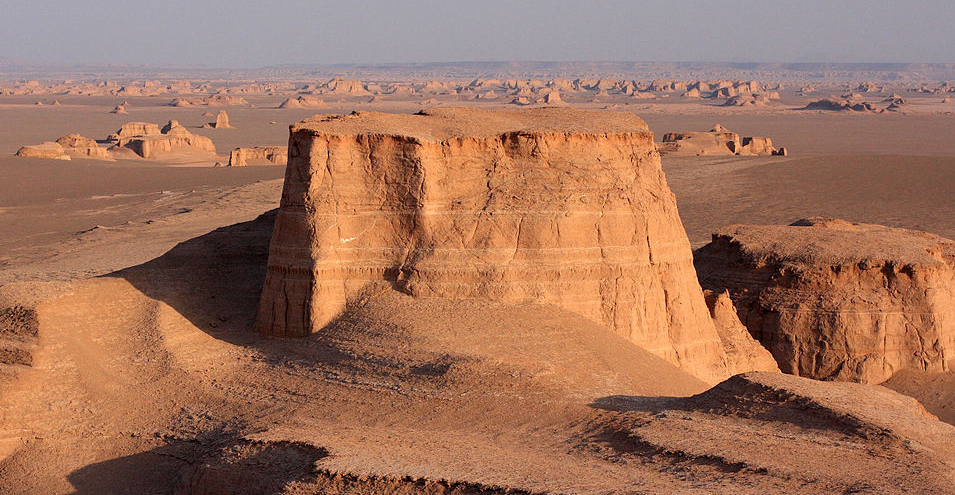
Lut Desert is an extraordinary plain that includes desert features such as kaluts, also known as the world’s largest mud city, the highest sand pyramids in the world, volcanic cones, plains of basaltic lava flows with valleys, ridges, sandy hills covered with vegetation called nika, and Kuh-e Pashteri desert.
Lut Desert is divided into three geographical regions named North Lut, Central Lut, and South Lut, with South Lut being the richest part of the desert in terms of vegetation cover.
Among its most important cities is Shahdad, which has a history of several thousand years, and the five-thousand-year-old flag of Shahdad is among thousands of historical artifacts discovered in the Lut Desert region.