Ban Ki-moon: End the Madness of Nuclear Tests
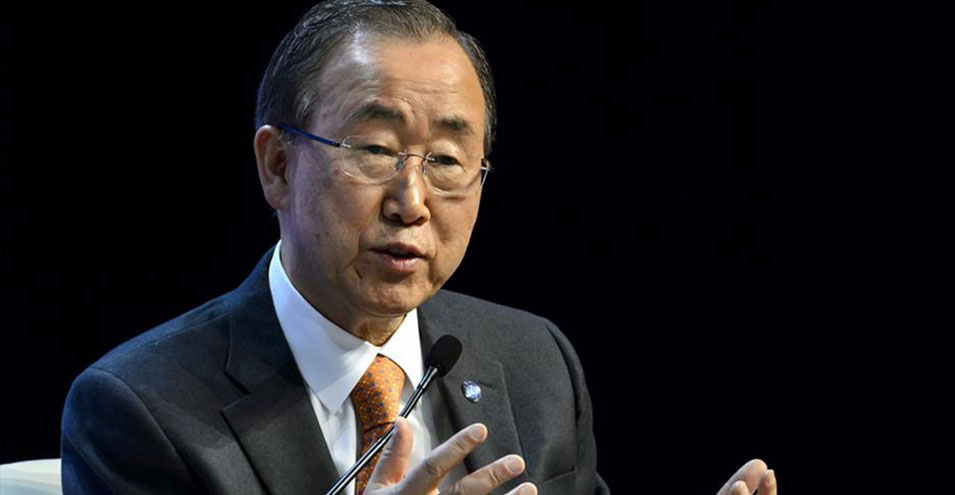
The Secretary-General of the United Nations called on the United States, Iran, Israel, and five other countries to end the “madness” of nuclear testing by joining the “Comprehensive Nuclear-Test-Ban Treaty,” which is marking its 20th anniversary this year.
The UN Secretary-General, on Wednesday (April 27/May 8), called on eight countries that have not yet signed the “Comprehensive Nuclear-Test-Ban Treaty” to halt the “madness” of nuclear tests by ratifying the treaty. Iran, China, the United States, Pakistan, North Korea, and Israel are among the countries that have not yet acceded to this treaty.
According to the French news agency, Ban Ki-moon, who is in Vienna for the twentieth anniversary of the adoption of this treaty, said: “Missile tests contaminate water, cause cancer, and leave behind an environment polluted with radioactive radiation for future generations.”
Ban Ki-moon added: “We have gathered here to honor the memory of the victims, and the best tribute to them is appropriate action; action toward the prohibition and complete cessation of nuclear testing.” According to him: “The suffering of the victims must teach the world that stopping this madness is necessary.”
The Comprehensive Nuclear-Test-Ban Treaty, which was approved by the UN General Assembly in September 1996, has banned all forms of nuclear explosions. 183 countries in the world have signed this treaty, and 164 countries, including Russia, France, and Britain—three of the nine countries that either possess nuclear weapons or are believed to possess them—have ratified it in their respective parliaments.
However, for this treaty to be formally implemented, it must be ratified by 44 countries that are “nuclear technology holders.” Eight countries, six of which are members of the nuclear club, have not yet acceded to this treaty: the United States, China, India, Pakistan, North Korea, Egypt, Iran, and Israel.
The United States, China, Egypt, Iran, and Israel—a country that almost certainly possesses nuclear weapons but has never officially confirmed it—have signed this treaty but have not ratified it in their respective parliaments.
Barack Obama, the President of the United States, in his famous speech against nuclear weapons in 2009 in Prague, said: “I will pursue ratification of this treaty” in the United States; a promise that has not been fulfilled even after more than seven years due to Republican opposition.
From the first nuclear test in July 1945 in New Mexico until September 1996 when this treaty was drafted, more than two thousand nuclear tests were conducted worldwide.
The United States conducted its last nuclear test in 1992, Russia in 1990, Britain in 1991, and China and France in 1996. The world’s last nuclear test was North Korea’s test on January 6, 2016. China has promised to ratify this treaty in the “National People’s Congress” soon.